

AI Insurance Verification: How It Works and Why It Matters
Published
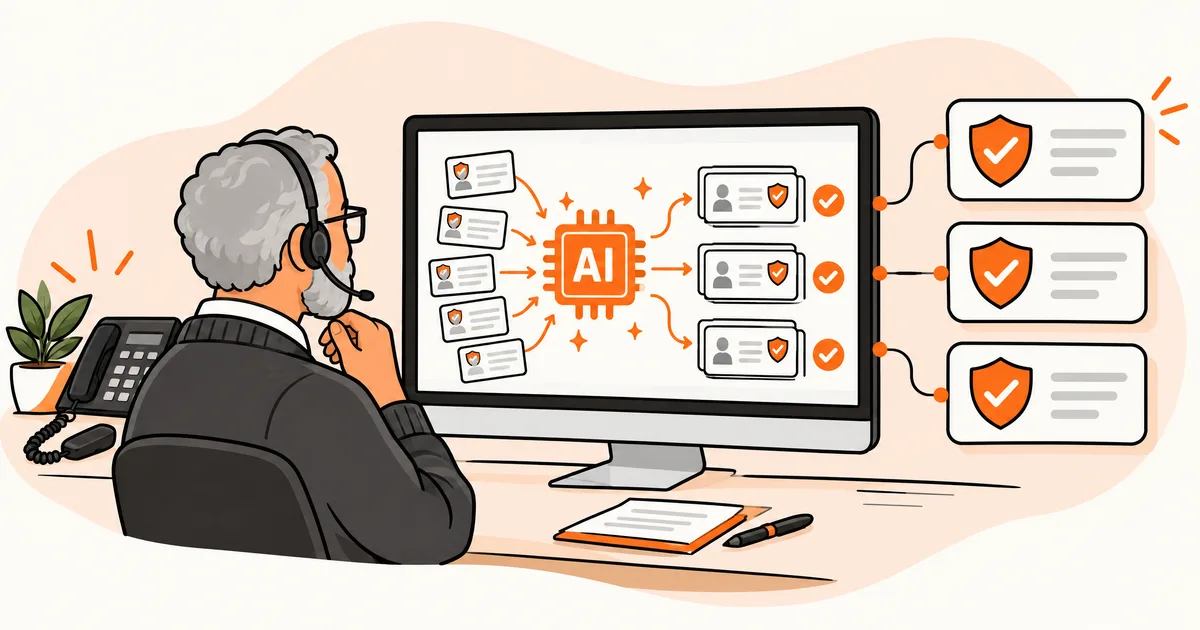
Table Of Contents
Quick Summary
AI insurance verification replaces manual payer portal checks with automated, real-time eligibility lookups. It pulls coverage, benefits, and lapse status the moment a patient is entered, removing repetitive portal work and catching lapsed policies before they cause denials. It stops coverage gaps from becoming lost revenue.
Losing Admissions to Slow Insurance Verification?
A prospect calls ready to start today, and your team can't confirm coverage on the spot. The call ends with "we'll get back to you." By the time verification comes through, they've called somewhere else.
The problem starts with how behavioral health coverage works. Benefits are frequently carved out to a separate administrator from the patient's main medical plan. Checking the card on file only gets you halfway. Your team has to track down the actual behavioral health payer and navigate their portal. Then comes confirming coverage details, session limits, and prior authorization rules before intake can begin.
That extra step adds up fast. Nationally, claims adjudication cost providers $25.7 billion in 2023 across hospitals and health systems. Nearly 70% of denials were eventually overturned and paid, after multiple, costly rounds of review. Every extra portal and payer contact behavioral health verification requires is another chance for that kind of denial. RCM denial management tools that automate payer connections and interpret coverage rules catch those errors before they turn into a denial.
The Growing Role of AI in Insurance Verification
AI-powered verification tools connect to payer databases through electronic data interchange (EDI) and return eligibility results in seconds. But speed is only part of what makes them useful. They also interpret payer-specific rules, flag behavioral health carve-outs, and identify when a patient's benefits are managed by a different entity than their primary insurer. That includes Medicaid variations by state, Medicare Advantage rules, and BCBS alpha prefixes. It's the same ground a seasoned biller would cover, just without the hundred different portal logins. That's the layer that prevents denials. A basic "active or inactive" check misses coverage details that matter.
Experian Health's 2025 State of Claims survey found that 67% of providers believe AI can improve the claims process, but only 14% have implemented it. CAQH's 2025 Index found a remaining $21 billion savings opportunity across the industry if healthcare fully automated its manual and partially manual transactions. Eligibility and benefit verification included.
Behavioral health has more riding on that gap than most specialties. You can call the number on the patient's insurance card and still get the wrong answer. Their medical insurer might not manage behavioral health coverage at all. AI tools built to handle that split are what close it.
Benefits of Using AI in Insurance Verification
Faster Verification on the First Call
Manual verification means calling a payer, navigating a phone tree, and waiting on hold. AI tools return results in seconds by querying payer databases electronically. Your admissions team can confirm coverage while the patient's still on the intake call. That speed matters because 60% of medical group leaders reported a year-over-year increase in denial rates. It's the most direct way to turn that around.
Fewer Denials and Less Revenue Leakage
Eligibility errors are one of the biggest drivers of denied claims. AI tools confirm whether a policy's active. They also check for carve-outs, authorization requirements, and benefit limits tied to the service you're providing. That's the level of detail that prevents surprise denials weeks after admission. By then, it's too late to fix the issue without a costly rework.
Less Staff Burnout and Lower Labor Costs
Verification staff who spend hours each day logging into payer portals are doing repetitive, mentally draining work. It's one of the most common reasons admissions and billing employees burn out and leave. AI tools handle the routine checks automatically, freeing your team to focus on patients and complex cases.
Continuous Coverage Monitoring
A patient's insurance can lapse at any point during treatment, regardless of payer type. Batch verification tools re-check your entire patient census on a schedule. This flags policy changes or lapses before they turn into unpaid claims. The pattern shows up clearly in Medicaid data specifically. VerifyTreatment reports that facilities running Medicaid census monitoring on its platform find at least one lapsed policy a week on average. At an assumed reimbursement rate of $1,000 per day, seven days of potentially uncovered residential treatment represents $7,000 in gross revenue exposure. Actual reimbursement and losses vary by payer and circumstance.
The same mechanism applies across commercial and other payers. It matters most in residential treatment, where stays commonly run 30, 60, or 90 days. That's long enough for a lot to change with a patient's coverage before discharge.
Use Case Examples of AI in Insurance Verification
Catching a Lapsed Policy Before it Costs You
A residential facility admits a patient with active coverage on day one. Three weeks into a 60-day stay, the patient's employer switches insurance carriers. Without automated monitoring, the billing team doesn't find out until the claim comes back denied weeks later. With batch verification running nightly, the system flags the lapse within 24 hours, giving the facility time to contact the patient, update the records, and adjust billing before the gap grows.
Finding Coverage When Patient Data is Incomplete
It's common for patients arriving at behavioral health facilities to show up without complete insurance information. They won't always have their card, might not know their policy number, or could be on a plan they aren't even aware of. Insurance discovery tools search across commercial, Medicaid, and Medicare Advantage payers using just a name and date of birth to find active coverage. Admissions teams can verify patients on the first call instead of stalling intake.
Navigating Behavioral Health Carve-outs
A patient presents a Blue Cross Blue Shield card. A quick portal check shows the plan's active, but the behavioral health benefit is carved out to a managed behavioral health organization with different authorization rules. A basic eligibility tool shows "active coverage" and stops there.
AI tools with deep payer logic recognize the carve-out and pull the correct administrator's information. Payer alerts flag these situations automatically, surfacing the specific benefits, copays, and authorization requirements your team needs before admission.
Get started with AI Insurance verification from VerifyTreatment
Insurance verification becomes more effective when the focus shifts from confirming coverage to preventing denials before they start. Most eligibility errors trace back to intake, before a claim is ever submitted, and behavioral health facilities face more of them because of carved-out benefits and complex payer rules.
By catching those errors at the front end, teams can verify coverage instantly, flag policy changes on a schedule, and read the payer-specific details manual checks miss.
That's where VerifyTX makes a difference. It handles real-time eligibility, insurance discovery, and batch monitoring, so fewer claims get denied and more revenue arrives on schedule.
Ready to catch eligibility errors before they cost you? Get started with VerifyTreatment
FAQs
How is AI insurance verification different from a standard eligibility check?
A standard eligibility check confirms whether a policy's active or inactive. AI verification goes further by interpreting payer-specific rules, identifying carve-outs, and flagging issues like authorization requirements or benefit limits. It also runs continuously, catching changes between the initial check and the date of service.
Can AI verification tools work with Medicaid and Medicare plans?
Yes. Most AI verification platforms connect to Medicaid and Medicare databases, including Medicare Advantage plans. These programs have state-level and plan-level variations, and the AI layer applies the correct rules automatically instead of leaving staff to track each one manually.
How long does it take to set up an AI verification tool?
Most platforms that connect through standard EDI infrastructure can be up and running within days. VerifyTreatment moves faster than that, with setup in 24 hours on its standard plans and guided onboarding included. More complex integrations with an EMR or CRM may take longer, depending on the systems involved.
Is AI insurance verification HIPAA compliant?
HIPAA compliance is worth confirming before committing to any platform. VerifyTreatment encrypts data in transit and at rest, backs it up regularly, and requires every user to agree to a business associate agreement, standard practice for tools handling protected health information.
Does AI insurance verification replace the billing team?
No. AI verification automates the repetitive, data-heavy parts of the eligibility check. Your billing and admissions staff still handle exceptions, patient communication, and complex cases, the work that actually needs human judgment.

Luis Perdomo, Head of Growth, leads go-to-market strategy, demand generation, and growth initiatives at VerifyTreatment. With a background spanning digital marketing, revenue growth, and business strategy, he focuses on connecting the platform’s capabilities to the real operational challenges facing behavioral health providers, helping teams improve admissions, strengthen revenue performance, and make faster, more informed decisions.
Meet the TeamRelated post:
 Technology & Automation
How To Automate Insurance Eligibility Verification For Behavioral Health
Automated insurance eligibility verification checks coverage and benefits with payers in real time. It cuts the calls...
Read the full article → Technology & Automation
7 Thoughtful AI Competitors for RCM in 2026
Looking for an alternative to Thoughtful AI’s enterprise bots? We compare the top revenue cycle automation competi...
Read the full article → Technology & Automation
Patient Verification Automation: How to Automate Patient Verification With VerifyTreatment
Learn how patient verification automation can reduce manual eligibility checks, accelerate intake, improve VOB workflows...
Read the full article →