

What is Insurance Eligibility Verification? Definition, Workflow, and Best Practices
Published

Table Of Contents
- Quick Summary
- What is Insurance Eligibility Verification?
- What Does an Insurance Eligibility Verification Workflow Look Like?
- Methods of Insurance Eligibility Verification
- Best Practices for Insurance Eligibility Verification
- The Future of Insurance Eligibility Verification
- Build a Cleaner Claims Process with VerifyTreatment
- Frequently Asked Questions
Quick Summary
Insurance eligibility verification confirms a patient's coverage is active and what it pays for before admission. It helps prevent eligibility-related denials caused by lapsed coverage and wrong member IDs. For behavioral health providers, it can also catch carve-outs, where a separate company manages mental health benefits..
What is Insurance Eligibility Verification?
Insurance eligibility verification is a two-part check before admission. Behavioral health teams often call it a verification of benefits (VOB). Eligibility confirms the patient's coverage is active on the admission date. Benefits verification confirms what the plan pays for, including cost sharing and prior authorization requirements. In behavioral health, those benefits can differ by level of care, such as detox or residential.
Behavioral health adds one more thing to verify, which is who manages the benefits. Some plans use carve-outs. A company separate from the insurer on the card manages the mental health and substance use benefits under its own rules. Both commercial and Medicaid plans use carve-outs.
A patient might hand you an Anthem card while Carelon Behavioral Health manages their mental health and substance use benefits. Optum and Magellan are two other carve-out managers. A check run only against the insurer on the card can return active coverage and miss the company that manages those benefits. The payer can deny the claim after admission.
What Does an Insurance Eligibility Verification Workflow Look Like?
An eligibility verification workflow runs in four steps.
Step 1: Collect Patient Insurance Information
Gather the basics from the patient's insurance card and intake forms. You'll need the member ID, group number, payer name, policyholder name, date of birth, and relationship to the policyholder. For behavioral health, also ask whether the patient has a separate card for mental health or substance use services.
Step 2: Run the Eligibility Check
You'll submit what's called a 270/271 EDI transaction, the electronic request-and-response format insurance companies use. The 270 is your question: is this patient covered? The 271 is the payer's answer. It can include active or inactive status, effective dates, copay and deductible amounts, and prior authorization requirements. Real-time verification tools like instant VOB run this step in seconds instead of a phone call.
Step 3: Check for Behavioral Health Carve-outs
The 271 can come back thin. It might confirm active coverage but give limited mental health benefit detail. Or it might not address behavioral health at all. That's your signal to dig further. A separate company manages those benefits. Identify that company and run a second eligibility check against them. Miss this step, and the plan can still look active. The claim denies only after it's submitted. By then, it may be a hard denial, one that has to go to a different payer entirely.
Step 4: Document and Share the Results
Record the verified benefits in your practice management system or EHR, logging the copay, coinsurance, deductible remaining, out-of-pocket maximum, and any authorization numbers. Confirm session limits separately, by phone or payer portal, since they don't come through the 271. Then make all of it available to your admissions, clinical, and billing teams, so everyone's working from the same verified data.
Methods of Insurance Eligibility Verification
Manual Verification
Manual verification means calling the payer's provider services line or logging into their web portal to check benefits one patient at a time.
That's still how most small practices operate, and it works, but it's slow and expensive. The 2024 CAQH Index puts the provider cost of a manual eligibility check at $8.57 per transaction. For a facility verifying 500 patients per month, that's $4,285 in labor costs on verification alone.
The bigger issue is accuracy, because a manual check depends entirely on the person making the call. Hold times stretch past 20 minutes on some payer lines, and the rep might give you incomplete benefit details. On top of that, handwritten notes from a phone call introduce transcription errors that don't surface until the claim gets denied weeks later.
Manual verification still has a role for unusual plan types or when a payer's electronic system is down. But as your primary method for every patient, it doesn't scale.
Automated Verification
Automated eligibility verification uses electronic data interchange (EDI) to submit and receive eligibility checks in seconds. You submit a batch of patient records, the system queries each payer electronically, and you get structured benefit responses back without a single phone call.
The cost savings are dramatic. The same CAQH Index puts the provider cost of a fully electronic check at $2.00 per transaction. That same facility verifying 500 patients monthly spends $1,000 instead of $4,285. That's $3,285 back in the budget every month.
Speed matters too. Automated systems return results in seconds. Your admissions team can verify coverage while the patient's still on the phone or in the lobby, without a hold-and-callback cycle first.
For behavioral health specifically, platforms like VerifyTreatment can identify carve-out risk during the check and alert your team to verify the secondary payer before admission.
Best Practices for Insurance Eligibility Verification
Verify at Scheduling, Then 24-48 Hours Before Appointment
An initial check confirms coverage exists. A second check closer to the visit catches anything that changed in between, a new employer, a lapsed policy, a plan swap. That gives your team time to resolve problems, contact the patient about coverage gaps, or get prior authorizations before the patient arrives. Verifying at check-in is too late to fix most issues.
Re-Verify Regularly for Ongoing Treatment
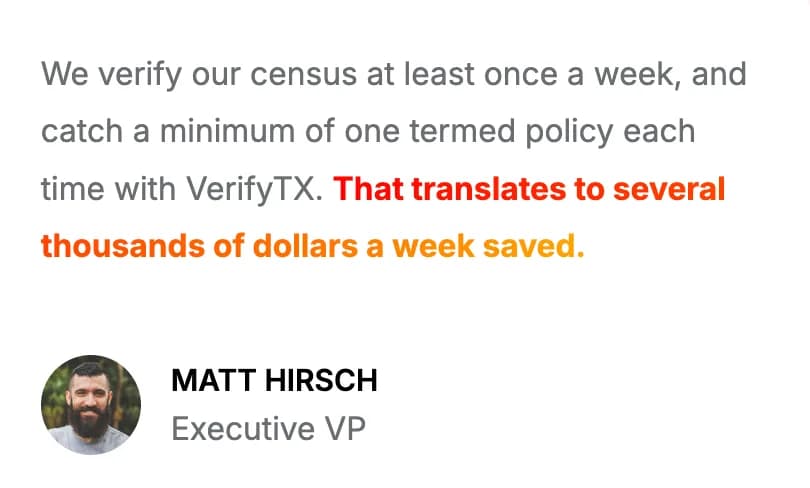
A policy that was active last month can lapse this month. For residential treatment, verify weekly. Job changes, COBRA expirations, and annual plan renewals all happen mid-treatment. Catching a lapsed policy after 30 days of residential care means 30 days of unbillable services. One of our clients says it best:
Check for Behavioral Health Carve-Outs
This should be a standard part of every verification workflow. The 271 response from a commercial payer can show thin or missing mental health benefits. That often signals a carve-out, though it can also mean the plan simply excludes behavioral health coverage. Train your team to check both. Run the secondary check for a carve-out payer. Then verify the plan actually includes mental health benefits.
Centralize Verification Data Across Teams
Admissions, utilization review, clinical staff, and billing all need access to the same verified benefit information. When verification results live in one person's notes or a single spreadsheet, mistakes happen. Use a shared system where every team member sees the same copay amounts, session limits, and authorization numbers.
At VerifyTX, we built our platform around these practices. Our system runs real-time checks with coverage across 1,800+ payers, flags behavioral health carve-outs automatically, and keeps verified benefit data in one place your whole team can access.
The Future of Insurance Eligibility Verification
The eligibility verification market is growing fast. The Business Research Company valued it at $2.39 billion in 2025 and projects $2.57 billion in 2026, growing at a 7.5% annual rate. AI and automation are a growing part of that story.
AI adds a layer basic electronic checks can't. Machine learning can spot patterns in coverage changes and flag them before they turn into denials. That can catch a lapse between the scheduling check and the visit.
Adoption is still early, though. Experian's 2025 State of Claims survey found that only 14 percent of providers currently use AI for denial prevention. Among those who do, 69 percent report it's reduced denials or improved resubmission success.
That gap leaves room to move first. Most providers haven't adopted AI-assisted verification yet.
Build a Cleaner Claims Process with VerifyTreatment
Registration and eligibility errors are the leading cause of claim denials, ahead of authorization and other intake-stage causes. For behavioral health facilities, that risk compounds. Carve-outs and level-of-care nuances are the two things a standard check can miss. That's why catching eligibility errors matters. Lapsed policies and missed carve-outs are two of the most common eligibility errors.
If your facility handles behavioral health billing, VerifyTX was built for exactly this workflow. Our platform checks coverage across 1,800+ payers in real time, flags carve-outs automatically, and keeps your whole team on the same verified data. Book a demo to see how it works with your current intake process.
Frequently Asked Questions
What is the difference between eligibility verification and prior authorization?
Eligibility verification confirms that a patient's insurance plan is active and covers a service. Prior authorization is a separate step where you get the payer's approval before delivering a specific treatment. So verification tells you the plan exists, and authorization tells you the payer agrees to pay for that particular service. Most behavioral health residential stays require both.
How often should you re-verify a patient's eligibility?
For residential treatment, verify weekly. For outpatient sessions, verify at each visit. For intensive outpatient and partial hospitalization programs, cadence depends on the payer. Some require authorization review every few weeks, others every 60 to 90 days. Check requirements at admission, then align your re-verification schedule to them. Patients change jobs, lose COBRA coverage, or switch plans without telling their provider. We cover specific re-verification workflows in our guide to checking patient insurance eligibility. Frequent re-verification catches these changes before they become denied claims.
What is a behavioral health carve-out?
A carve-out means a commercial insurance plan routes mental health and substance abuse benefits through a separate insurer. That insurer isn't the same one handling the patient's medical and surgical benefits. The patient's primary insurance card might show Anthem, but behavioral health claims need to go to a specialty carrier like Carelon or Optum. Verifying against only the primary payer misses the carve-out and leads to denials.
What does a 271 response include?
A 271 is the electronic eligibility response from a payer. It covers the patient's coverage status (active or inactive), effective and termination dates, and copay and coinsurance amounts. You'll also see deductible and out-of-pocket information, covered service categories, and any prior authorization requirements. For behavioral health, it should also indicate whether mental health benefits are included or carved out to another carrier.

Luis Perdomo, Head of Growth, leads go-to-market strategy, demand generation, and growth initiatives at VerifyTreatment. With a background spanning digital marketing, revenue growth, and business strategy, he focuses on connecting the platform’s capabilities to the real operational challenges facing behavioral health providers, helping teams improve admissions, strengthen revenue performance, and make faster, more informed decisions.
Meet the TeamRelated post:
 Admissions
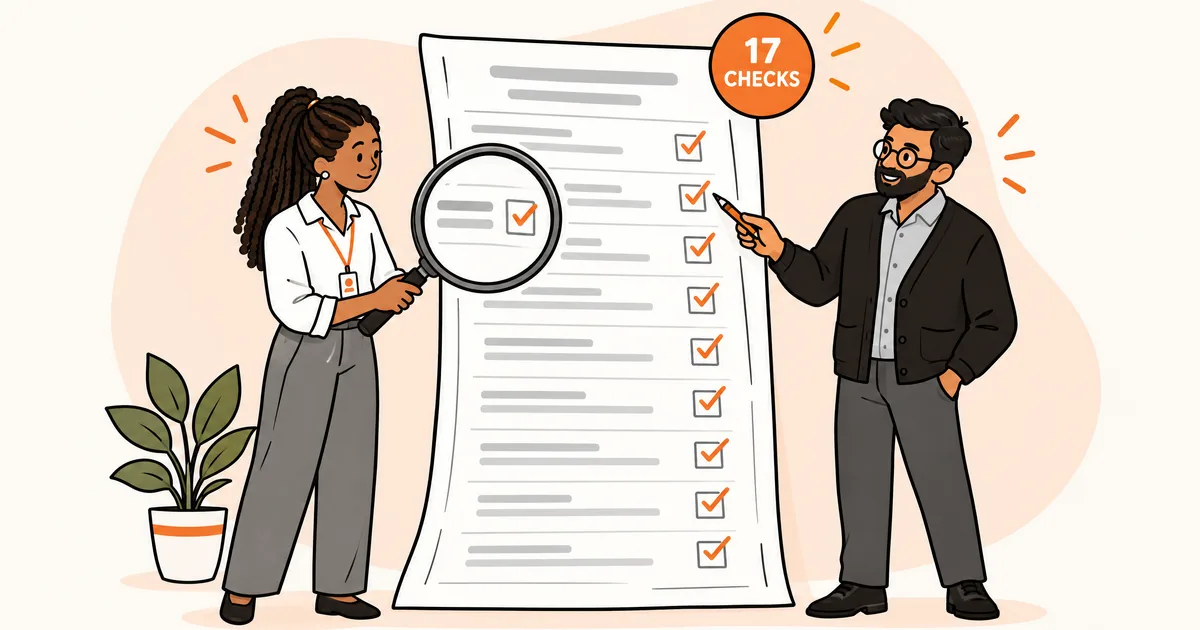
Insurance Verification Cheat Sheet for Behavioral Health: 17 Checks to Read a VOB
This insurance verification cheat sheet shows you how to read a verification of benefits (VOB) in 17 checks. Run them...
Read the full article → Technology & Automation
10 Best Dental Insurance Verification Software in 2026
Quick Summary Verifying coverage and benefits without spending hours on payer calls and portal checks takes the right so...
Read the full article → Admissions
Insurance Verification and Eligibility: A Step-by-Step Guide
Learn the difference between eligibility and benefits verification, what patient, coverage, and authorization details to...
Read the full article →