

5 Best Veritable Alternatives for Insurance Verification in 2026
Published

Table Of Contents
Quick Summary
If Veritable looks good on paper but you’re still unsure it fits your specialty, provides the benefit detail your team needs, or matches the way you verify patients, comparing alternatives makes sense. VerifyTreatment is a strong option for behavioral health teams that need deeper eligibility and benefits, while pVerify, Stedi, Sohar Health, and Claim.MD are better suited to other verification, API, intake, and clearinghouse workflows.
Shortlist
| Software | Best For |
|---|---|
| VerifyTreatment | Behavioral health eligibility and detailed benefits |
| pVerify | Flexible eligibility verification workflows |
| Stedi | API-driven eligibility verification |
Why Trust Us
We have spent years building and refining VerifyTreatment around the realities of insurance verification and benefits checks. That has given us a clear view of what healthcare teams actually need from these platforms, from reliable eligibility data to deeper benefit details and workflows that reduce manual follow-up.
Foundations Recovery Network is one example. After adopting VerifyTreatment, the organization eliminated admissions delays, reduced staffing needs, prevented patient loss during verification, and saved more than $10,000 per month.
That experience shapes how we evaluate the tools on this list. We look beyond feature lists to how well each platform supports the verification work teams actually need to get done.
5 Best Veritable Alternatives
The right Veritable alternative depends on what matters most to your team, whether that’s deeper specialty-specific benefits, a more API-driven setup, streamlined patient intake, or broader clearinghouse capabilities. Here’s how the five options compare.
| Software | Best For | Real-Time Eligibility | Batch Verification | Insurance Discovery | API Access | Claims / Clearinghouse | Payer Coverage |
|---|---|---|---|---|---|---|---|
| VerifyTreatment | Behavioral health eligibility and detailed benefits | Yes | Yes | Yes | Yes | Not a full clearinghouse | Coverage across 1,800+ payers |
| pVerify | Flexible eligibility workflows | Yes | Yes | Yes | 50+ API endpoints | Not a full clearinghouse | 1,500+ payers |
| Stedi | API-driven eligibility and healthcare transactions | Yes | Yes | Yes | Yes, JSON-native APIs | Yes | 3,500+ U.S. payers |
| Sohar Health | Automated patient intake | Yes | Not highlighted | Yes | Yes | Not a full clearinghouse | National and regional payers |
| Claim.MD | Eligibility plus claims workflows | Yes | Not highlighted | Not highlighted | Yes | Yes | Broad payer network |
1. VerifyTreatment: Best for Behavioral Health Eligibility and Benefits
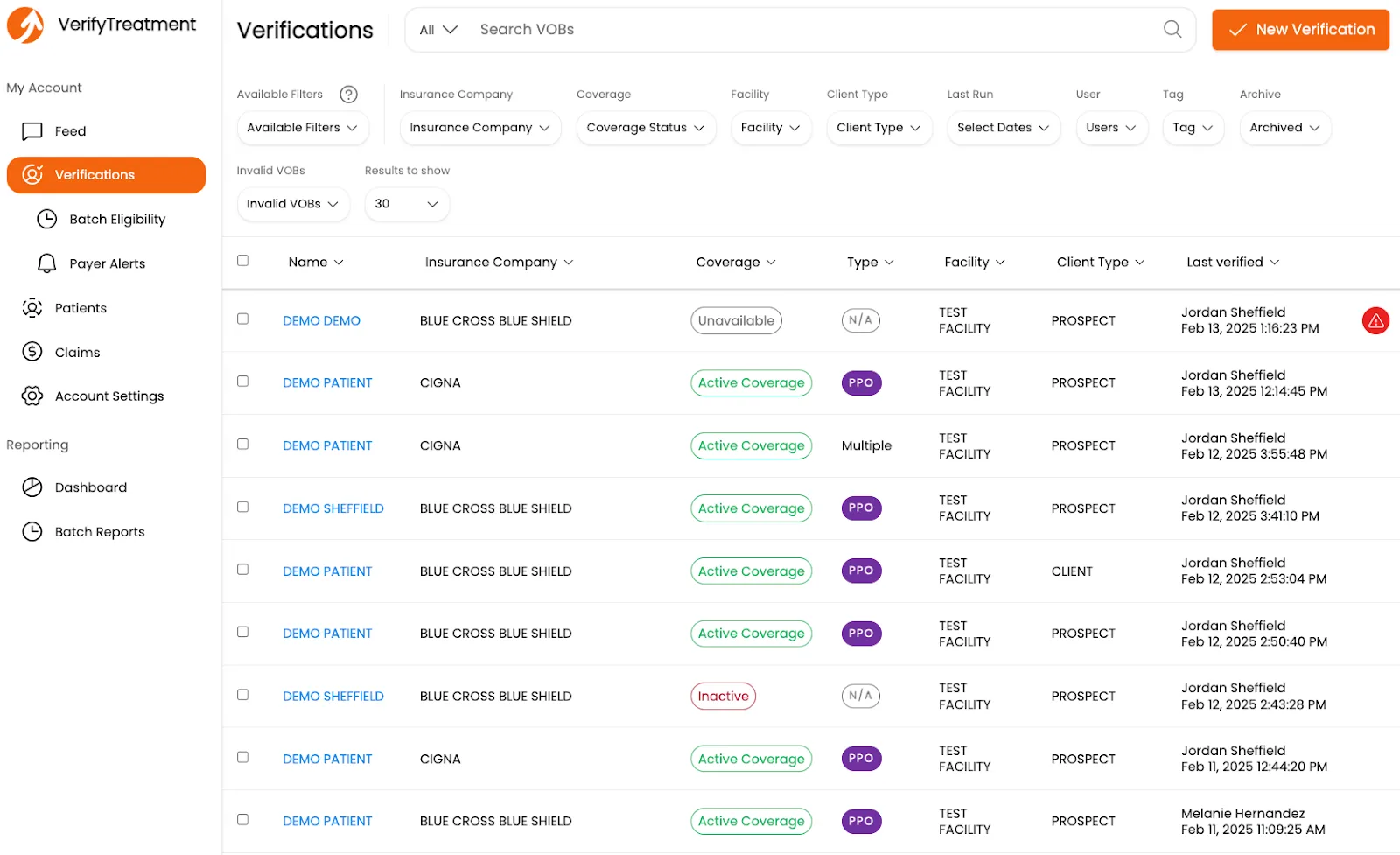
VerifyTreatment is a strong Veritable alternative for behavioral health teams that need detailed benefit information as part of the verification process.
While Veritable supports broad eligibility verification and offers managed services when specialty-specific information requires extra research, VerifyTreatment builds deeper behavioral health benefit checks into the verification workflow itself. Teams can verify eligibility alongside details such as behavioral health carve-outs, authorization requirements, copays, deductibles, and other coverage information that can affect admission and reimbursement.
It also supports ongoing verification. Teams can reverify an active census, flag payer-specific risks, discover coverage when insurance information is missing, and share verification information across admissions and billing workflows.
Key Features
- Real-time eligibility and benefits: Check active coverage alongside deductibles, copays, authorization requirements, behavioral health carve-outs, and other benefit details.
- Payer Alerts: Surface payer-specific requirements and potential coverage issues before they affect admission or reimbursement.
- Batch and scheduled verification: Reverify multiple patients at once and monitor existing patients for coverage changes.
- Insurance discovery: Find active coverage when a patient’s insurance information is incomplete or unavailable.
- Workflow integrations: Use VerifyTreatment through its web and mobile apps or connect verification to existing systems through its API and supported integrations.
Pros
- Purpose-built for the complex benefit requirements behavioral health teams deal with
- Reduces the need to piece together eligibility and benefit information across separate workflows
- Helps teams catch payer and coverage issues before they affect admission
- Makes it easier to monitor coverage for patients already in treatment
- Gives admissions and billing teams access to the same verification information
Cons
- Its behavioral health focus may be more specialized than general medical practices need
- It is not a full clearinghouse for end-to-end claim submission and management
- May not be the best fit for teams primarily looking for a developer-first healthcare API platform
2. pVerify: Best for Flexible Eligibility Verification
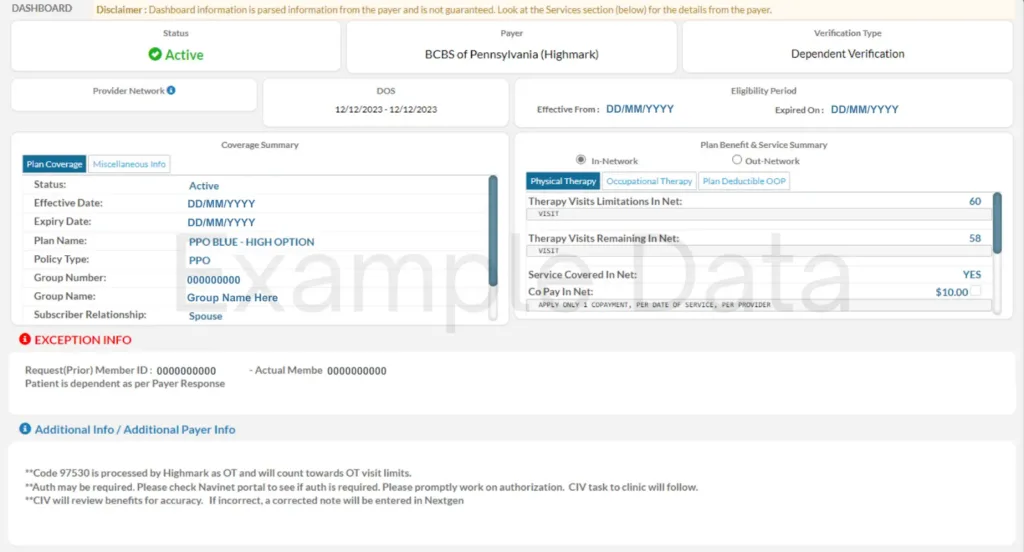
pVerify is worth considering if you want more flexibility in how your team runs eligibility checks. It supports medical, dental, and vision verification, with access to benefits, copays, deductibles, authorizations, coinsurance, and patient responsibility. It also connects with more than 1,500 payers.
Its integration options are another reason it may suit some teams better. pVerify offers 50+ API endpoints for connecting eligibility workflows with EHRs, practice management systems, and billing software.
For a deeper look at its pricing, behavioral health fit, and where it may fall short for treatment centers, read our full pVerify review.
Key Features
- Multi-payer eligibility checks: Verify coverage and pull benefits, copays, deductibles, and authorization details in real time.
- Coverage insights: See additional details such as coinsurance, maximum coverage amounts, and patient responsibility.
- 50+ API endpoints: Build pVerify into EHR, practice management, billing, and other healthcare workflows.
Pros
- Works across medical, dental, and vision use cases
- Connects with more than 1,500 healthcare payers
- Gives teams several options for fitting eligibility verification into their existing software stack
Cons
- Not built specifically around behavioral health verification workflows
- Its broad API and integration options may be more than smaller teams need
- Less suitable if you want eligibility and full clearinghouse workflows from the same platform
3. Stedi: Best for API-Driven Eligibility Verification

Stedi makes more sense than Veritable when eligibility needs to sit inside a product or a larger automated revenue cycle workflow. Its healthcare clearinghouse is API-first, with JSON-based APIs for real-time eligibility, claims, enrollment, payer data, and other transactions.
It also goes well beyond basic 270/271 checks. Teams can run real-time or batch eligibility, discover insurance, look up Medicare Beneficiary Identifiers, check coordination of benefits, submit claims, and check claim status across a network of more than 3,500 payers.
Key Features
- Eligibility APIs: Run real-time or batch eligibility checks, with insurance discovery, MBI lookup, and coordination-of-benefits checks.
- Broader clearinghouse transactions: Submit professional, dental, and institutional claims, receive ERAs, check claim status, and handle claim attachments.
- Developer-first infrastructure: Work with JSON-native APIs, documentation, sandbox access, and API-based transaction enrollment.
Pros
- Covers more than 3,500 U.S. healthcare payers, including Medicare, Medicaid, medical, and dental plans
- Gives development teams one API-driven platform for eligibility and several other clearinghouse transactions
- G2 reviewers consistently praise its documentation, integration experience, and responsive support
Cons
- Can take more time to learn than a straightforward eligibility portal
- Some setup tasks may still require manual work
- Production monitoring may require additional configuration for proactive alerts
4. Sohar Health: Best for Automated Patient Intake
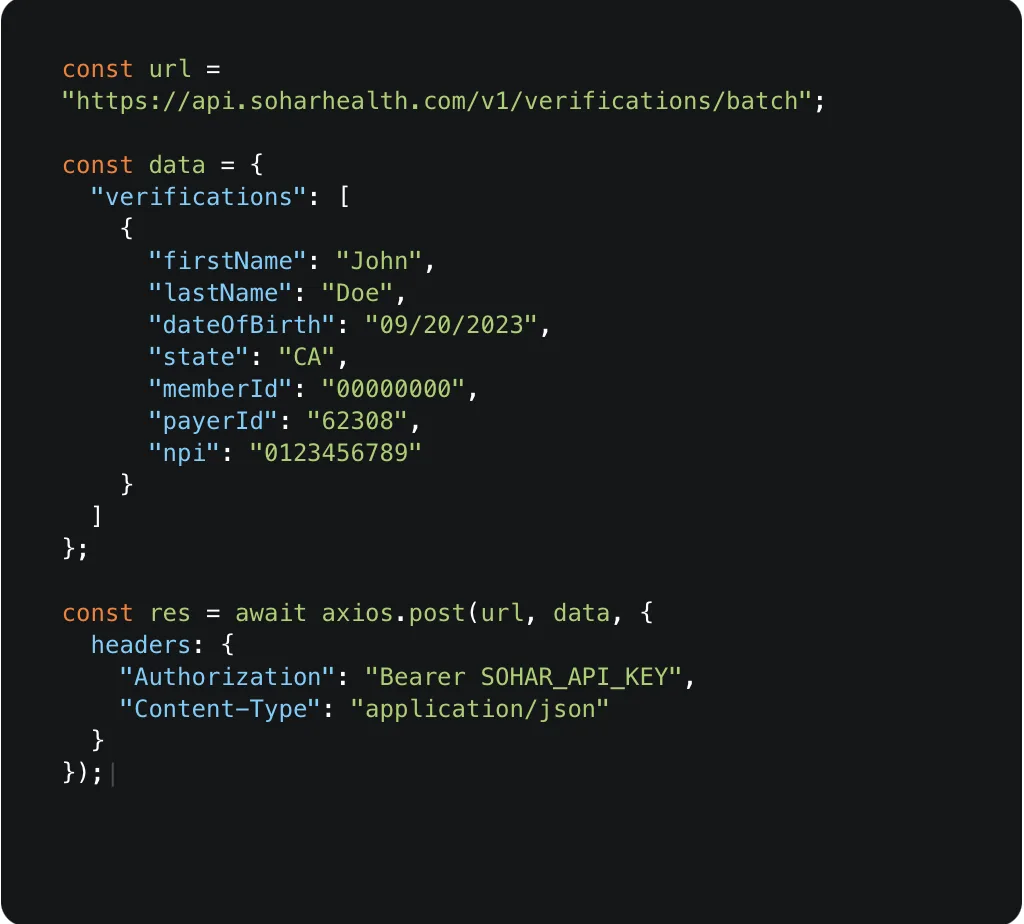
Sohar Health focuses heavily on the front end of the patient journey. It can discover active insurance from a patient’s name, date of birth, and state, then verify eligibility and determine whether the provider is in or out of network.
That makes it a useful Veritable alternative for teams trying to automate insurance checks as part of intake rather than treating verification as a separate administrative step.
Key Features
- Insurance discovery: Find a patient’s active health plan without requiring insurance information upfront.
- Real-time eligibility and VoB: Verify eligibility and benefits through Sohar’s API across national and regional payers.
- Network status: Confirm whether a patient is in or out of network for a particular provider.
Pros
- Brings insurance discovery, eligibility, and network status into the same intake workflow
- Can identify coverage before a patient provides their insurance card or policy details
- API access makes it easier to build verification directly into digital intake experiences
Cons
- Its intake-first approach may be more than teams need if they only want straightforward eligibility checks
- Not as focused on detailed behavioral health benefit workflows as VerifyTreatment
- Teams looking for claim submission and broader clearinghouse transactions may need a more comprehensive RCM platform
5. Claim.MD: Best for Eligibility Plus Clearinghouse Workflows
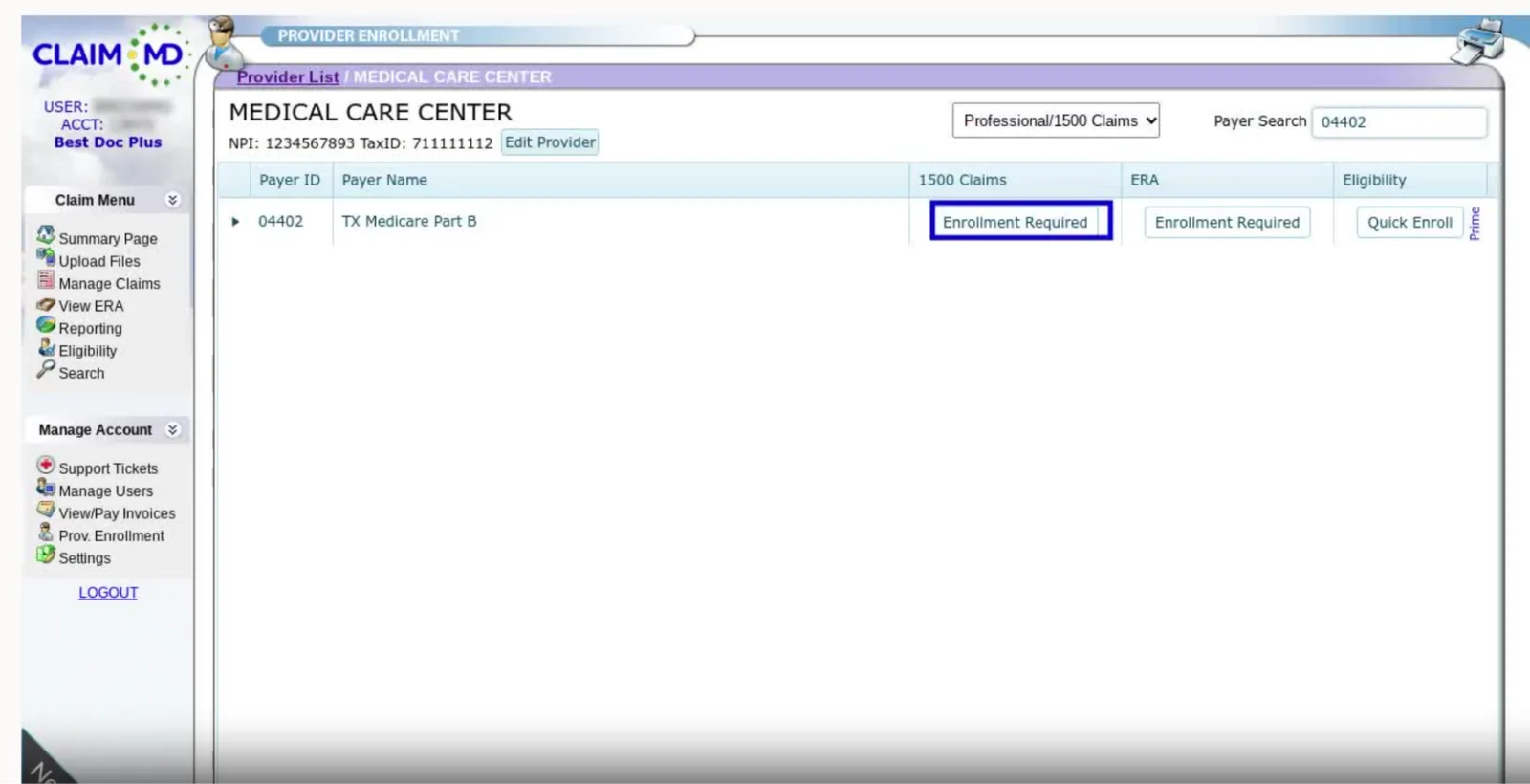
Claim.MD is a better fit if you want eligibility checks alongside claims submission, remittance, and other clearinghouse workflows. You can check real-time eligibility through the web portal or API, submit individual or batch claims, review ERAs, and correct rejected claims without moving between separate systems. For a closer look at pricing and what users say about the platform, read our full Claim.MD review.
Key Features
- Real-time eligibility: Check patient benefits and eligibility through the portal or API.
- Electronic claims: Create claims online or upload batch files in formats including 837P, 837I, CSV, XLS, XML, and NSF.
- Electronic remittance: View payment details or download ERA data in 835, spreadsheet, XML, and PDF formats.
Pros
- Combines eligibility, claims submission, and remittance in one clearinghouse
- Supports both direct claim entry and large batch uploads
- Offers built-in support tickets that can be opened directly from a claim, ERA, or eligibility record
Cons
- Broader clearinghouse functionality may be unnecessary if eligibility is your main priority
- Claim-focused workflows may be more than front-office verification teams need
- Less suited to teams primarily looking for developer-first healthcare infrastructure
How to Choose the Right Veritable Alternative for Your Team
The right Veritable alternative depends on what your team actually needs from the verification process. Instead of comparing feature counts, focus on the parts of the workflow that matter most to you.
Consider How Much Benefit Detail You Need
Some teams only need to confirm active coverage. Others need to understand deductibles, copays, authorization requirements, carve-outs, and other benefit details before a patient moves forward.
If you work in a specialty such as behavioral health, make sure the platform can surface the level of detail your admissions and billing teams rely on.
Decide Whether You Need More Than Eligibility
Some Veritable alternatives stay focused on eligibility and benefits, while others extend into claims submission, remittance, claim status, and other clearinghouse transactions.
If you want one platform to support a broader part of the revenue cycle, tools such as Stedi or Claim.MD may make more sense. If detailed behavioral health eligibility and benefits are the priority, VerifyTreatment is likely the better fit.
Check How Well It Fits Your Existing Systems
Look at the systems your team already uses, including your EHR, practice management software, billing platform, or internal applications. API access and integrations can make a big difference if you want verification data to move through those systems without extra manual work.
Choose VerifyTreatment for Behavioral Health Eligibility and Benefits
If your team needs more than basic eligibility checks, VerifyTreatment gives you a workflow built around the benefit detail behavioral health providers rely on.
You can verify coverage, review behavioral health benefits, catch payer-specific issues, discover active insurance, and reverify patients without piecing the process together across separate tools.
Book a demo to see how VerifyTreatment can support your eligibility and benefits workflow.

Luis Perdomo, Head of Growth, leads go-to-market strategy, demand generation, and growth initiatives at VerifyTreatment. With a background spanning digital marketing, revenue growth, and business strategy, he focuses on connecting the platform’s capabilities to the real operational challenges facing behavioral health providers, helping teams improve admissions, strengthen revenue performance, and make faster, more informed decisions.
Meet the TeamRelated post:
 Revenue Cycle
10 Best Change Healthcare Alternatives for 2026
Change Healthcare, now part of Optum, has long helped healthcare teams manage claims and other revenue cycle workflows....
Read the full article → Revenue Cycle
5 Best Inovalon Competitors for Healthcare RCM Teams
Compare five leading Inovalon competitors for eligibility verification, front-end RCM, API connectivity, claim status, a...
Read the full article → Admissions
pVerify Reviews 2026: Is it the Right Fit for Mental Health Programs and Behavioral Health Providers?
pVerify is a solid, API-driven eligibility tool for general healthcare, but does it hold up for the complexities of beha...
Read the full article →