

pVerify Reviews 2026: Is it the Right Fit for Mental Health Programs and Behavioral Health Providers?
Published Updated

Table Of Contents
- Quick Summary
- Is pVerify Right for Mental Health Programs and Behavioral Providers?
- Why Listen to Us?
- What Is pVerify?
- Is pVerify Right for Behavioral and Mental Health Providers?
- Best Alternative: VerifyTreatment
- Side-by-Side Comparison: VerifyTreatment vs. pVerify
- Final Verdict: Who Should Use pVerify and Who Should Seek Alternatives?
- FAQs
Quick Summary
pVerify is a capable API-driven eligibility platform, reliable for general healthcare, weak on behavioral health depth. It has no lapse detection, no BH-specific payer logic, and no admissions-to-billing handoff. For treatment centers scaling intake or fighting eligibility-driven denials, VerifyTX is the purpose-built alternative.
Is pVerify Right for Mental Health Programs and Behavioral Providers?
pVerify does what it says: real-time eligibility checks, a broad payer network, flexible API architecture. For general healthcare verification, it’s a solid platform with a well-earned reputation.
However, for behavioral health, the question isn’t whether pVerify is good. It’s whether it’s the right fit. Carve-outs, SUD authorization requirements, Medicaid managed care nuances, and admissions-to-billing handoffs aren’t edge cases in behavioral health..
They’re the core of how reimbursement works. A platform built for breadth across healthcare specialties handles them differently than one built specifically for this vertical.
This review breaks down what pVerify does well, the fit gets complicated for treatment centers, and why VerifyTX has become a leading alternative for behavioral health providers who need more depth.
Why Listen to Us?
Many eligibility verification reviews are written by people who understand billing software. This one is written by people who understand behavioral health billing.
VerifyTX is the best! Makes life so much easier in the behavioral health space. Much more efficient than any other platform I’ve used in 10 years. Big shout out to Melanie Hernandez that manages our account! She is always there to help support promptly if I ever have any questions.
 Chris BurtonChief Business Officer
VerifyTreatment works daily with admissions directors, billing and RCM leaders, and multi-state operators navigating the full complexity of behavioral health reimbursement — carve-outs, Medicare Advantage shifts, Medicaid managed care, and everything in between.
That’s the lens this review is written through — not a feature checklist, but the operational realities that determine whether a verification platform actually fits behavioral health.
What Is pVerify?
pVerify is an API-driven SaaS platform for real-time insurance eligibility and benefits verification. It connects healthcare providers to a broad payer network and returns coverage data electronically.
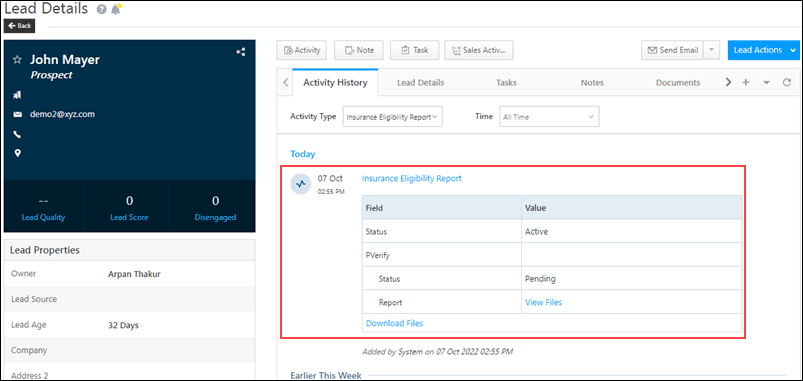
The platform supports multiple provider specialties, including primary care practices, hospitals, revenue cycle teams, and multi-specialty clinics. It’s designed to serve diverse healthcare environments rather than go deep on any single vertical. That breadth is strength in the right context. But for behavioral and mental health admissions teams, it can be a real limitation.
Key Features
- Real-time eligibility verification: Provides electronic eligibility, insurance discovery, and benefits checks through API connections to a broad payer network
- API and system integrations: 50–140+ APIs (REST, HL7, FHIR, ANSI X12) for EHR and practice management integration, custom business rules, and webhook/email notifications
- Patient demographic validator and financial estimator: Supports data accuracy and estimates out-of-pocket costs, coverage limits, and patient responsibility
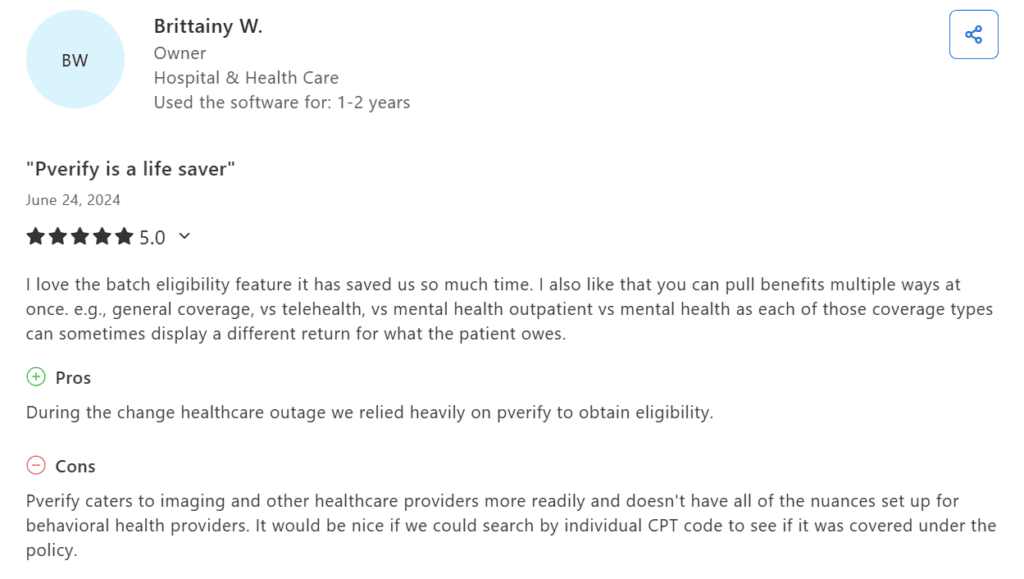
- Batch verification: Run multiple eligibility checks simultaneously for higher-volume workflows
- Reporting and analytics: Track verification activity and eligibility-related trends across the platform
Pricing
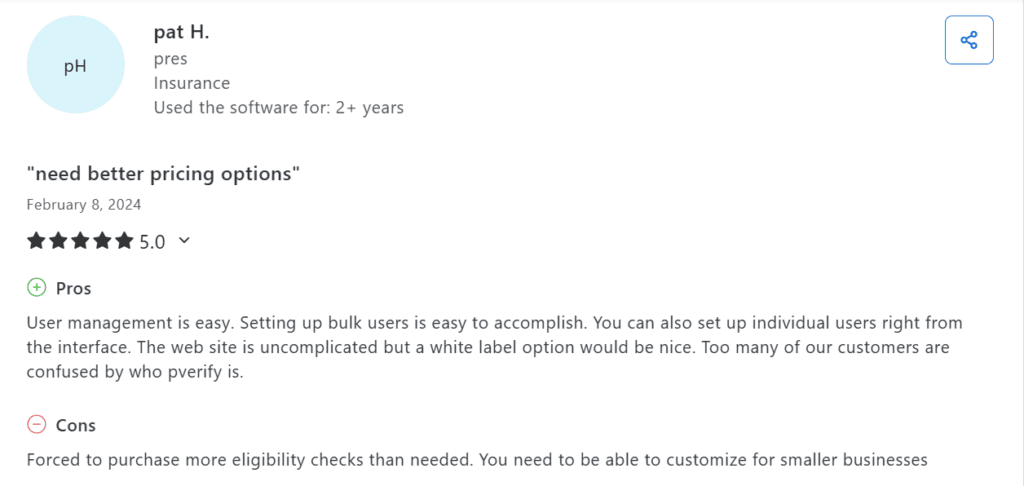
pVerify uses a modular, transactional pricing model with tiered plans and optional add-ons. However, there are no standardized or fixed public tiers. Organizations receive custom quotes based on selected modules, transaction volume, and integration requirements.
Here’s what the standard starting prices look like:
| Module | Standard Starting Price(Transactions/Month) | Enterprise Starting Price(Transactions/Month) |
|---|---|---|
| Advanced Eligibility | $125 (500) | Higher volume/custom |
| Insurance Discovery | $120 (80) | Higher volume/custom |
| MBI Lookup | $50 (75) | Higher volume/custom |
| Same or Similar | $190 (250) | Higher volume/custom |
| Certificate of Medical Necessity (CMN) | $100 (125) | Higher volume/custom |
| Claim Status | $40 (150) | Higher volume/custom |
| Skilled Nursing | $120 (150) | Higher volume/custom |
Because pVerify does not have fixed pricing tiers for behavioral health specifically, smaller and mid-sized treatment facilities may find it difficult to forecast total subscription costs without engaging directly with sales.
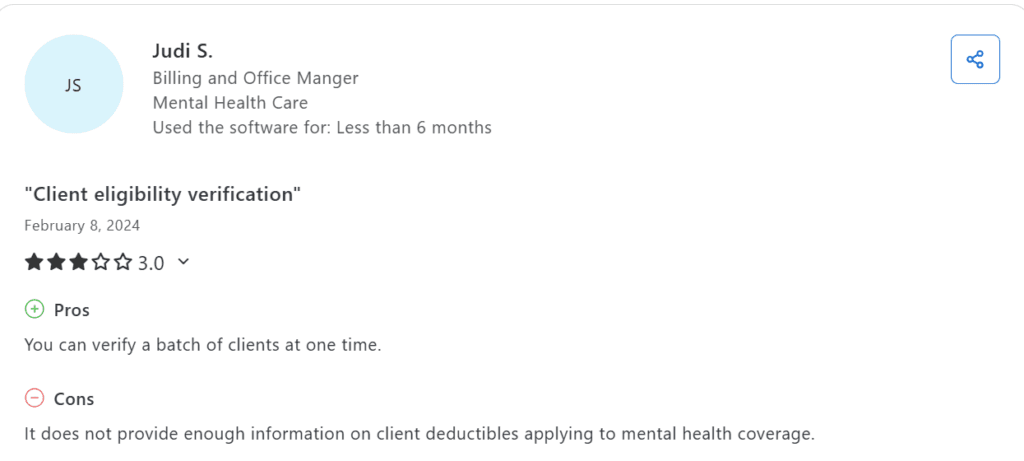
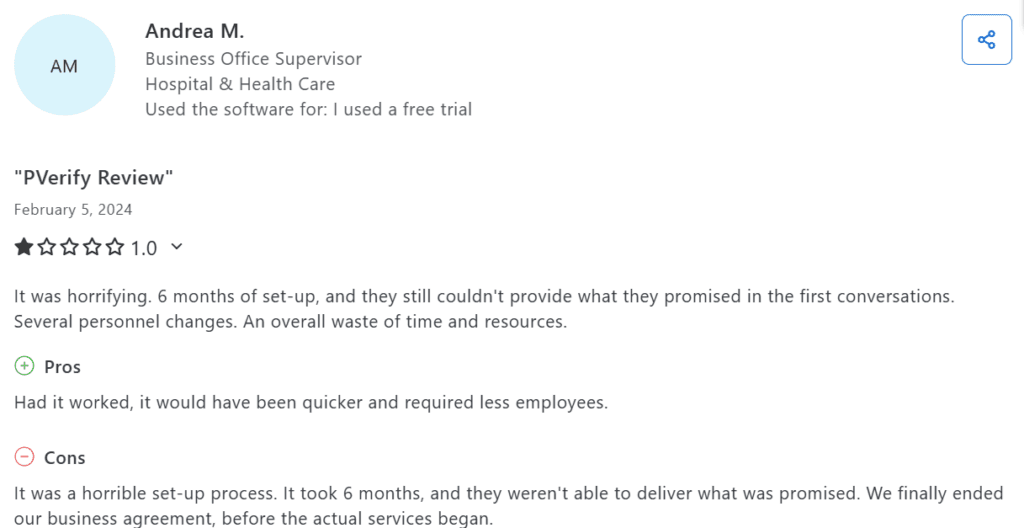
User reviews occasionally reference pricing surprises tied to additional modules or expanded usage.
Pros:
- Broad payer coverage across general healthcare
- Quick eligibility responses through API connections
- Flexible API architecture for organizations with internal developer resources
- Modular structure allows organizations to activate only what they need
Limitations:
- Built for general healthcare — behavioral health workflows require additional manual interpretation outside the platform
- No native admissions-to-billing handoff, creating financial visibility gaps between intake and claims
- Behavioral health providers often need multiple modules to cover their actual workflow, increasing cost and complexity
- The platform returns eligibility data but is not structured around behavioral health admissions decision workflows
- Smaller behavioral health facilities without dedicated IT or developer support can find setup more involved than expected
- No automated lapse detection. Eligibility reflects coverage at the moment of the check, not ongoing policy status
Is pVerify Right for Behavioral and Mental Health Providers?
That answer depends on how your organization operates.
pVerify works well for:
- Multi-specialty clinics needing modular eligibility infrastructure across diverse provider types
- Integration-heavy organizations with developer resources to configure and maintain API workflows
- Teams that don’t require BH-specific carve-out logic or ongoing policy monitoring
In environments where eligibility is one component of a broader medical billing ecosystem, pVerify can function effectively.
pVerify is not built specifically for:
- Residential treatment programs or multi-state SUD networks navigating complex Medicaid carve-outs and managed care shifts
- Admissions teams that need to verify on the first call and make immediate financial decisions
- Operations that need clean, structured financial data flowing from intake to billing
- COOs and CFOs demanding real-time visibility and proactive denial prevention
Behavioral health reimbursement introduces layers of nuance that go beyond confirming active coverage. Those nuances are tipping points that actively drive BH providers to search for alternatives.
Tipping Points that Drive BH Providers to Look Elsewhere
Many behavioral health teams tend to start searching for alternatives when:
- The facility expands into new states and payer complexity outpaces the existing workflows
- The admissions team needs financial clarity on the first call and the current platform can’t deliver it
- The billing team flags rising denials tied to eligibility gaps
- Staff burns out chasing carve-out checks across multiple payer portals. Portal fatigue sets in
- A coverage surprise kills or overly delays an admission
- The COO or CFO demands automation and real-time visibility, and manual workflows can’t keep up
When these moments happen, it stops being a search for faster automation. It becomes a search for the right fit — a platform built around how behavioral health reimbursement actually works.
Best Alternative: VerifyTreatment
VerifyTreatment is a real-time insurance eligibility and RCM automation platform built specifically for behavioral health and mental health treatment centers. Not adapted from general medical billing, but built from the ground up for the payer logic and workflow complexity that BH providers deal with every day.
I demoed other platforms, and they were all medical-focused with limited behavioral health benefits. VerifyTreatment was the only one built specifically for inpatient psych and residential behavioral health. That’s what stood out—it was tailored to us.
 JoElle VincentBusiness Office Director
Low Country Behavioral Health (UHS), Charleston, SC
.
Where pVerify gives you eligibility data, VerifyTreatment structures that data around the decisions your admissions and billing teams need to make. The result is fewer coverage surprises, cleaner handoffs, and stronger financial visibility from intake through reimbursement.
Key Features
- Real-Time VOB with deep payer logic: Goes beyond active/inactive status to surface behavioral health carve-outs, managed care nuances, Medicaid and Medicare Advantage quirks, BCBS alpha prefix variations, and level-of-care coverage details across 1,800+ payers
- Automatic lapse detection: Continuously monitors and flags policies if inactive or lapsing before they result in denials, helping you prevent revenue leakage rather than reacting to it later
- Insurance discovery: Locates coverage even when patient data is incomplete, a common scenario in behavioral health intake workflows that most platforms can’t handle
- Admissions-to-billing handoff: Connects intake verification directly to RCM workflows, closing the financial blind spots that form when admissions and billing operate in silos
- Salesforce/CRM integration: Built for real admissions workflows, not bolted on as a secondary integration
- Batch Verification: Runs bulk verifications and gives clean eligibility data in minutes
- Modern UI and fast implementation: Deploys quickly, adopted easily, backed by a team that understands behavioral health operations
Side-by-Side Comparison: VerifyTreatment vs. pVerify
| Capability | pVerify | VerifyTreatment |
|---|---|---|
| Behavioral Health Specialization | Built for general healthcare providers across multiple specialties | Built specifically for behavioral health, SUD, and mental health workflows |
| Verification Depth | Real-time eligibility checks returning coverage data | Real-time VOB with BH-specific payer logic and structured summaries |
| Carve-Out & Authorization Logic | Requires manual interpretation of benefit data | Surfaces carve-outs, managed care nuances, and authorization indicators within workflow |
| Lapse Detection | Point-in-time eligibility checks | Automatic policy lapse detection and monitoring + payer alerts |
| Insurance Discovery | Coverage discovery using partial data | Advanced coverage discovery built for real-world BH intake scenarios |
| Payer Network | 1,000+ payers | 1,800+ payers with deep BH payer logic |
| Admissions-to-Billing Handoff | Eligibility exists separately from RCM workflows | Verification connects directly to billing and financial workflows |
| Workflow Integration | API-driven; integration dependent on internal setup | Salesforce/CRM-native integration designed for admissions teams |
| Pricing Structure | Modular, custom-quoted, variable by configuration | Transparent behavioral health–specific tiers |
| Implementation Experience | May require technical configuration | Fast deployment with BH-focused onboarding support |
Final Verdict: Who Should Use pVerify and Who Should Seek Alternatives?
pVerify earns its reputation. For multi-specialty medical groups and integration-heavy organizations that need modular eligibility infrastructure across general healthcare, it’s a capable, well-supported platform.
But for behavioral health providers scaling intake, expanding across multiple states, or actively fighting eligibility-driven denials, it can leave critical gaps. Behavioral health reimbursement carries payer nuances, carve-outs, and authorization requirements that VerifyTreatment is purpose-built for.
If your admissions team verifies on the first call and your billing team tracks eligibility-driven denials, it’s worth seeing how a purpose-built platform handles it differently.
FAQs
Is pVerify good for behavioral health providers?
pVerify can work for behavioral health organizations that run similarly to multi-specialty medical groups and don’t need BH-specific payer logic. But treatment centers managing SUD programs, Medicaid carve-outs, IOP authorizations, or multi-state expansion often find that general eligibility data leaves gaps that show up in denial rates and admissions conversion.
Does pVerify have lapse detection?
No. pVerify runs point-in-time eligibility checks. It doesn’t monitor policies continuously or flag coverage lapses between intake and admission. If your team needs proactive alerts before an inactive policy becomes a denied claim, that’s a gap worth factoring in.
What is the best pVerify alternative for treatment centers?
VerifyTreatment is the strongest alternative for behavioral health treatment centers. It’s built specifically for SUD programs and mental health workflows, including carve-out logic, structured VOB summaries, lapse detection, and admissions-to-billing integration across 1,800+ payers.
Can pVerify verify Medicaid and Medicare Advantage coverage?
pVerify connects to a broad payer network and can return eligibility data for many commercial and government plans. However, behavioral health providers should evaluate whether the returned data is structured in a way that supports Medicaid carve-outs, managed care nuances, and authorization requirements specific to their programs.
Why do behavioral health providers switch from pVerify?
Usually because workflow gaps start hitting admissions and revenue.
Rising eligibility-driven denials, coverage surprises that delay or kill admissions, expansion into new states, and staff burnout from portal fatigue are the most common triggers. At that point, teams stop looking for faster automation and start looking for a platform built around behavioral health workflows.
Disclaimer: All trademarks, logos, and brand names are the property of their respective owners. The use of any third-party trademarks, logos, or brand names in this article is for informational and comparative purposes only, and constitutes nominative fair use. This article was published by VerifyTreatment, and while we strive for objective comparisons, VerifyTreatment is included as an option within this list.

Luis Perdomo, Head of Growth, leads go-to-market strategy, demand generation, and growth initiatives at VerifyTreatment. With a background spanning digital marketing, revenue growth, and business strategy, he focuses on connecting the platform’s capabilities to the real operational challenges facing behavioral health providers, helping teams improve admissions, strengthen revenue performance, and make faster, more informed decisions.
Meet the TeamRelated post:
 Admissions
VOB in Medical Billing: Process, Best Practices & Challenges
Before you bill for a patient’s care, you must know what their insurance will actually cover. That means checking their...
Read the full article → Admissions
Automated Prior Authorization: How Automation Improves the Process
Automated prior authorization helps healthcare teams catch payer requirements earlier, reduce repetitive administrative...
Read the full article → Admissions
How to Verify Insurance Eligibility in Real Time and Why It Matters
Real-time insurance eligibility verification helps healthcare providers confirm coverage and benefits faster, reduce man...
Read the full article →