
Technology & Automation
Claim.MD Reviews: Pros, Cons, Pricing & Best Alternative
Read our Claim.MD review covering features, pricing, pros, cons, and user feedback, plus when VerifyTreatment may be a b...
Read the full article →


Revenue cycle management automation reduces errors, improves claim accuracy, and speeds up payments by removing manual bottlenecks. Its biggest impact is in eligibility verification, prior authorizations, claims submission, and denial follow-ups—where most revenue loss begins.
Manual RCM might seem cost-effective at first because there is no upfront software expense. But in practice, it drains revenue, consumes staff time, and limits long-term financial performance. Industry data reflects this: 5–10% of healthcare claims are denied each year, often due to preventable errors.
That outcome is expected because when tasks like eligibility verification, claim submission, and denial follow-ups are handled manually, the likelihood of missed checks, incorrect payer details, and incomplete data increases significantly.
So how do you break this cycle without losing visibility or control?
The answer is revenue cycle management automation. In this article, we will show you where automation has the most impact, what to prioritize first, and how VerifyTreatment can help build a more efficient, resilient revenue cycle.
Not every organization is at the same point when it comes to automation. Some are still relying heavily on manual processes, while others have started introducing tools but haven’t fully optimized how everything works together.
Understanding where you stand is the first step toward improving your revenue cycle.
At this stage, your team handles verification, claims, and follow-ups manually. Workflows depend on staff effort, and errors or delays are common. In addition to that, denials, rework, and slower collections are frequent challenges.
What to do next: Start by automating high-impact, repetitive tasks like eligibility verification and data checks to reduce errors early.
Some parts of your revenue cycle are automated, but processes are still fragmented. You may use different tools for billing, claims, or reporting, but they don’t always work together smoothly.
What to do next: Focus on connecting workflows and automating the points where breakdowns still happen, especially where data moves between systems.
Here, automation is in place across key areas, and your team has visibility into performance. However, improvements are still reactive rather than proactive, with issues being fixed after they occur.
What to do next: Shift toward automation that prevents errors before they happen, such as real-time verification, alerts, and smarter workflow controls.
No matter where you are today, the goal is not to automate everything at once. It is to identify where automation will have the greatest impact and start there.
Trying to automate everything at once usually leads to more complexity. The better approach is to start where errors happen most often and where they have the biggest impact on revenue.

This is where many revenue issues begin. If eligibility or coverage details are incomplete, outdated, or misunderstood, patients may be admitted under the wrong assumptions, leading to denied claims, underpayments, or unexpected billing gaps.
Automating both eligibility and coverage checks helps ensure that accurate information is captured before care is delivered. An easy way to do this is by using VerifyTreatment, which provides real-time verification, detailed benefit insights, and payer-specific requirements so your team can catch issues early and avoid downstream revenue loss.
Claim scrubbing is one of the most critical parts of the revenue cycle, yet it is still often handled inconsistently. Claim submission, on the other hand, can be time-consuming, especially when teams are manually checking for errors or missing information.
Automating both processes helps identify issues before claims are submitted, improving clean claim rates and reducing rework. This leads to faster reimbursements and fewer delays caused by preventable errors.
It is one thing for claims to be denied, but another to track and follow up on them effectively. These processes are time-consuming and often inconsistent when handled manually, which can result in missed opportunities to recover revenue.
Automating denial tracking and follow-ups helps prioritize high-impact claims, ensures nothing slips through the cracks, and improves overall recovery rates.
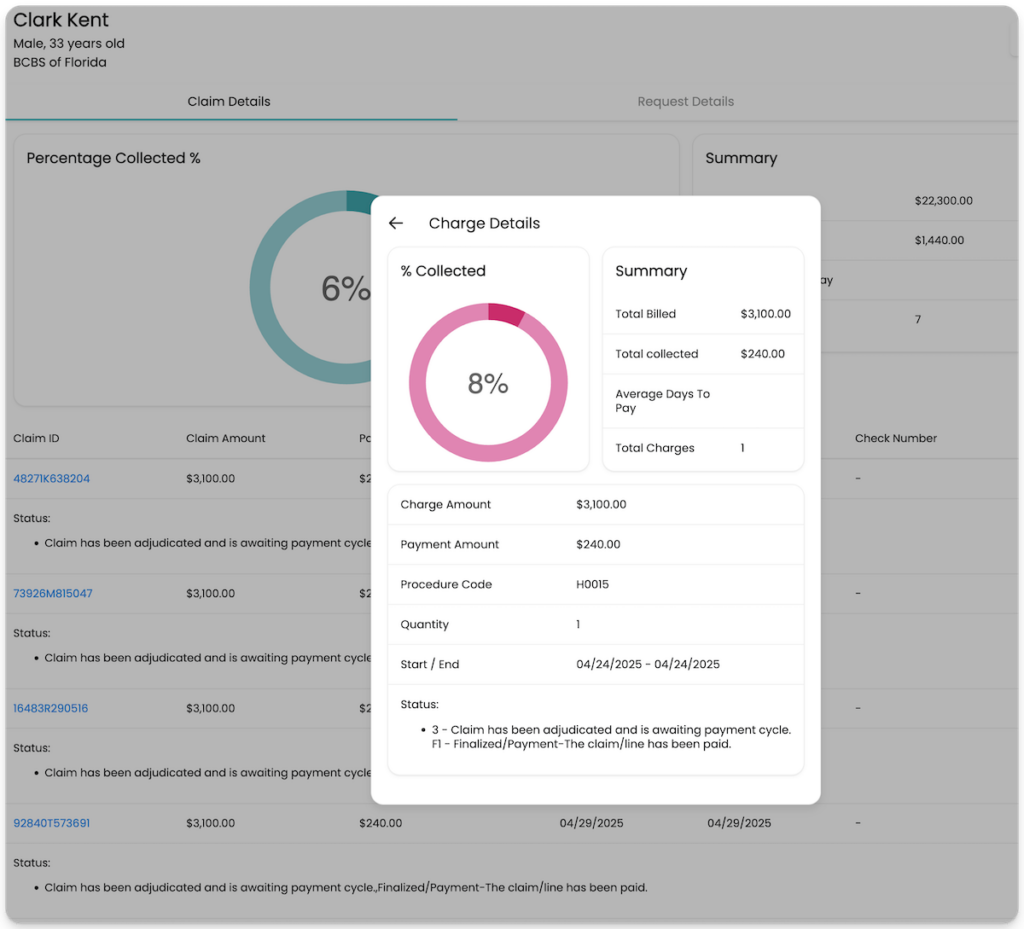
Posting payments manually can slow down your workflow and introduce errors into your financial records. It also makes it harder to maintain accurate, real-time visibility into your revenue. By automating payment posting and reconciliation, you improve accuracy, reduce administrative workload, and gain a clearer view of your financial performance.
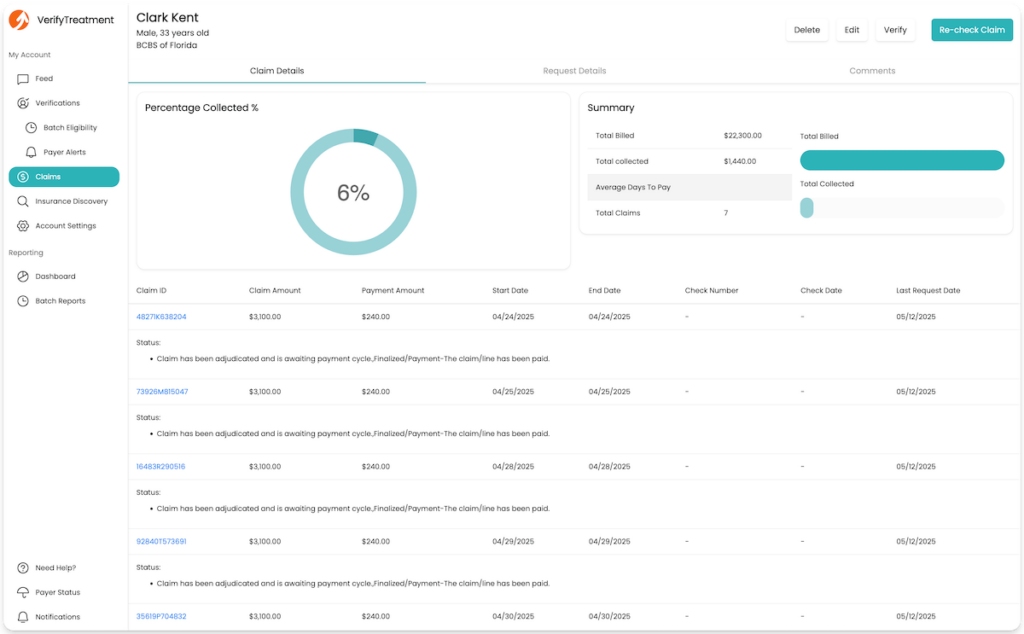
Automation goes beyond just about tasks, it is also about visibility. Setting up alerts for changes in coverage, claim status, or payer behavior helps your team act before issues escalate.
This is where automation shifts from reactive to proactive. For example, VerifyTreatment’s payer alerts help flag high-risk plans, coverage changes, and authorization requirements early, allowing your team to take action before those issues turn into denials or delays.
The value of RCM automation shows up in how much revenue you keep, how quickly you get paid, and how efficiently your team operates.
When key steps like eligibility verification and claim checks are automated, errors are caught before they turn into denied claims. This directly improves clean claim rates and reduces revenue leakage.
Automation removes delays between each stage of the revenue cycle. Claims are submitted faster, follow-ups are more consistent, and payments are processed sooner, reducing days in accounts receivable.
Manual workflows require more staff time and repeated effort. Automation reduces the need for rework, allowing teams to handle more volume without increasing headcount. CAQH reports that billions in administrative costs are tied to processes that could be automated using existing electronic standards.
Instead of spending time on repetitive tasks, your team can focus on higher-value work like resolving complex cases, improving patient experience, and optimizing performance. This shift also helps reduce operational strain, especially in environments facing staffing shortages and burnout.
Automation provides real-time insights into claims, payments, and workflow performance. This makes it easier to identify issues early and make informed decisions that improve financial outcomes. Organizations with stronger revenue cycle visibility, as noted by Medical Group Management Association, consistently achieve higher collection rates and more predictable cash flow.
Related: check our list of the best RCM software.
RCM automation is no longer just about reducing manual work. It’s becoming a core driver of how healthcare organizations operate and scale.
Workflows are shifting toward real-time processing, with eligibility checks, claims, and payments moving faster and with fewer delays. At the same time, automation is becoming more proactive, helping teams identify risks early—before they turn into denials or lost revenue.
This shift is also changing how teams work. Instead of fixing issues after the fact, staff can focus on preventing them. As systems become more integrated, data flows more seamlessly across the revenue cycle, improving visibility and reducing friction.
The direction is clear: RCM is becoming faster, more accurate, and increasingly proactive.
If your current process still relies on manual steps or disconnected tools, the biggest gains often come from automating high-impact areas like eligibility and front-end workflows.
VerifyTreatment helps you automate verification, reduce denials, and protect revenue before issues reach claims—so your team can move faster with more confidence.
Get started with VerifyTreatment here.
Don’t let manual workflows stall your cash flow. VerifyTreatment plugs real-time eligibility verification and proactive alerts directly into your front end, stopping denials before they ever hit claims.
Takes less than 60 seconds to secure a spot with an RCM integration specialist.Disclaimer: All trademarks, logos, and brand names are the property of their respective owners. The use of any third-party trademarks, logos, or brand names in this article is for informational and comparative purposes only, and constitutes nominative fair use. This article was published by VerifyTreatment, and while we strive for objective comparisons, VerifyTreatment is included as an option within this list.


Samantha is a dynamic marketing professional dedicated to making a difference in the behavioral health industry through her work at VerifyTreatment. With a strong background in digital marketing and brand advocacy, she helps elevate the platform’s presence by fostering authentic connections with treatment centers and healthcare providers. Her expertise in content creation and community engagement ensures that VerifyTreatment’s value is communicated effectively, helping centers streamline operations and improve patient care. Samantha’s focus on building trust and driving awareness positions VerifyTreatment as a key resource in the healthcare landscape.

Nicole is a versatile healthcare professional with a Bachelor’s degree in Health Administration and a solid background in managing healthcare systems and operations. Her experience spans healthcare management, compliance, and regulations, making her adept at navigating complex healthcare environments. In addition to her administrative expertise, Nicole holds certifications in Functional Nutrition and Personal Training, giving her a well-rounded perspective on health and wellness. She is committed to using her skills to improve healthcare settings and ensure effective, patient-centered care.

Tara is a dedicated leader who leverages her Master's degree in Information Technology (Florida Tech) and deep company knowledge (since 2018) to drive our community awareness. She is the central figure for managing social engagement and ensuring the community is immediately and effectively informed of all new product launches and company updates.

JoAnn has a strong background in the mental health and substance abuse industry, with expertise in billing, coding, facility credentialing, and contracting. She is passionate about team education and public speaking, always striving to make a positive impact. With a solid foundation in accounting, JoAnn also holds an Associate of Arts in Biblical Studies from Liberty University, blending her professional skills with her personal values.

For 11+ years, Melanie has been dedicated to helping clients access quality mental health care, with a special focus on grief, loss, and substance abuse. With expertise in healthcare, community outreach, patient advocacy, and leadership development, Melanie is passionate about making a positive impact in the lives of others.

Jordan is a dedicated advocate for behavioral health and is passionate about improving sales strategies and business processes. With a focus on helping businesses, particularly in healthcare, Jordan believes that streamlining operations is a way to positively impact more people indirectly. A strong leader, both personally and professionally, Jordan is committed to making a difference in the world by doing good business and serving a higher purpose.