Technology & Automation
Claim.MD Reviews: Pros, Cons, Pricing & Best Alternative
Read our Claim.MD review covering features, pricing, pros, cons, and user feedback, plus when VerifyTreatment may be a b...
Read the full article →


Choosing the right healthcare claims management software can directly impact your revenue, but not every tool solves the same problem. Some focus on claim submission and tracking, others on automation and scale, while a few help prevent issues before claims are even submitted. In this guide, we break down the 6 best options based on real-world use cases.
| Software | Best For |
| VerifyTreatment | Preventing denials before claims are submitted |
| Waystar | Managing high-volume claims at scale |
| athenahealth | AI-driven claims optimization and payer insights |
Claims management directly impacts your cash flow. One single error can result in a denial, a delayed payment, or hours of rework. And when your process relies on manual entry, disconnected systems, and limited visibility, those delays and inefficiencies add up fast.
The good news? Modern claims management software can automate submissions, reduce errors, flag issues before they happen, and give you real-time visibility into your claims pipeline. What once took hours of back-and-forth can now be handled faster and with far fewer mistakes.
But here’s the catch: not all tools solve the same problem.
The key is to identify your biggest bottleneck and choose software built to fix it. That’s exactly what this guide will help you do.
At VerifyTreatment, we help healthcare providers streamline claims and admissions, reduce inefficiencies, and recover lost revenue. We’ve seen how small workflow gaps, like missed verifications or delays, can quietly cost thousands each month.
For example, our partner Foundation Recovery Network eliminated admissions delays, eased staff workload, and prevented losing nearly 1 in 10 patients, recovering over $10,000 monthly with VerifyTreatment.
This article is grounded in real-world experience solving the same challenges you face.
Great Product, Ease of Use, Added Efficiency for Our Team. Automating and bringing in health insurance verifications to our instance was a game changer.

The product is lightning fast, and so easy to use. In terms of instant verification, there is nothing more comprehensive in my experience.

Your choice of claims management software shapes how your claims, billing, and reimbursements run. Get it wrong, and the inefficiencies you’re trying to fix only get worse.
Here’s how to get it right.
Before comparing features, identify where your current process is breaking down.
Different tools solve different problems. The best software for you is the one built to fix your specific bottleneck, not the one with the most features.
Not all “claims management software” does the same thing.
Choosing the wrong category is one of the fastest ways to overpay or underperform.
The right software should take repetitive and error-prone tasks off your plate. That includes things like automated claim scrubbing, pre-submission error detection, and reducing the need for manual data entry.
If your team is still redoing work or chasing avoidable errors, then the software isn’t doing enough heavy lifting.
You should never have to guess what’s happening with your claims. The right software enables you to track claims in real time, understand why denials happen, and see exactly where your revenue stands at any point. Without that level of visibility, you’re operating reactively instead of proactively.
Switching systems entirely is expensive, time-consuming, and often risky. Most providers don’t have the luxury of starting from scratch.
That’s why integration matters.
Your claims management software should work seamlessly with your existing EHR or practice management system, connect easily with clearinghouses, and fit into your current workflow without forcing a complete overhaul. The smoother the integration, the faster you’ll see value.
With so many options on the market, it’s easy to choose based on popularity or features, but that’s rarely the right approach. The tools below are selected based on real-world use cases, so you can quickly find what fits your workflow.
| Software | What It Does Best | Where It Fits in Your Workflow | Best For |
| VerifyTreatment | Prevents denials before they happen | Before claim submission (eligibility, admissions, payer checks) | Teams losing revenue early in the process |
| Waystar | Handles claims at scale with strong infrastructure | Claim submission, monitoring, and payments | Large organizations with high claim volume |
| Office Ally | Keeps claim submission simple and affordable | Basic claim submission and tracking | Small practices that want simplicity |
| AdvancedMD | Connects billing with full practice workflows | End-to-end practice management and billing | Practices wanting everything in one system |
| athenahealth | Uses AI and network data to improve claims | Claim optimization and follow-up | Teams that want smarter automation |
| NextGen Healthcare | Supports complex billing and specialty workflows | Multi-layered billing and reporting environments | Specialty practices with complex operations |
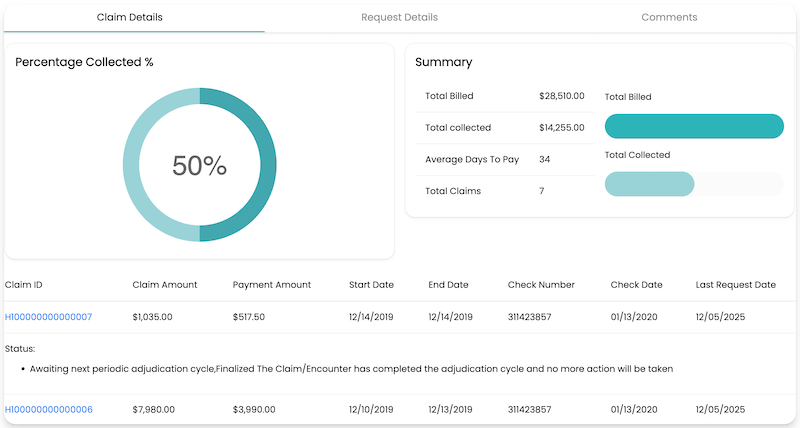
VerifyTreatment is built around one core goal: protecting your revenue before a claim is ever submitted.
Most delays and denials don’t start at submission. They happen earlier during eligibility checks, admissions, and payer verification. This is the stage where wrong member IDs, missing benefits data, or unclear coverage details quietly set claims up to fail. And that’s where VerifyTreatment comes in.
With VerifyTreatment, you can automate eligibility checks across commercial plans, Medicaid, and Medicare Advantage. You can uncover active coverage even from incomplete patient details. You also see key payer requirements like carve-outs, visit limits, and precertification needs upfront.
Custom pricing based on organization size and workflow needs
Behavioral health providers and healthcare organizations looking to reduce denials, improve admissions accuracy, and protect revenue before claims are submitted.
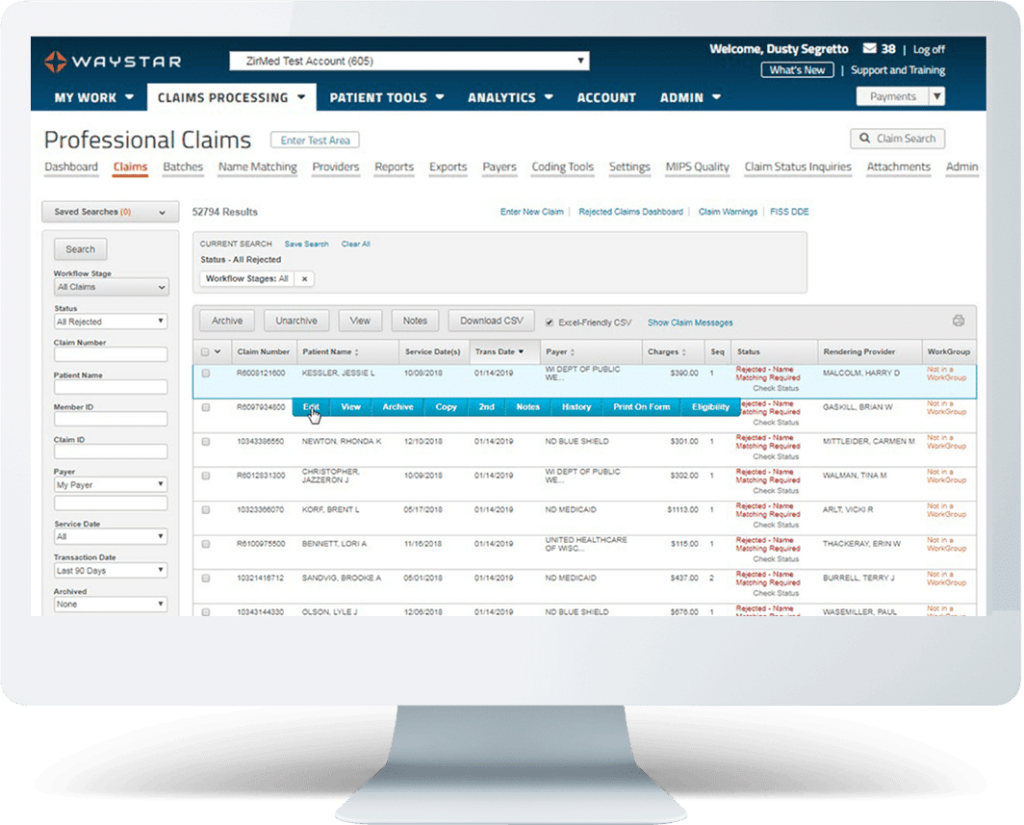
Waystar brings claims, payments, and reporting into one connected workflow, giving larger organizations a clearer view of the entire revenue cycle.
Its strength is in scale and structure. Claims go through a large library of continuously updated edits, helping teams catch issues before submission and improve first-pass acceptance rates. For organizations handling high volumes, that level of consistency matters.
Custom pricing based on organization size and usage
Mid-to-large healthcare organizations that need structured, high-volume claims processing with centralized control.
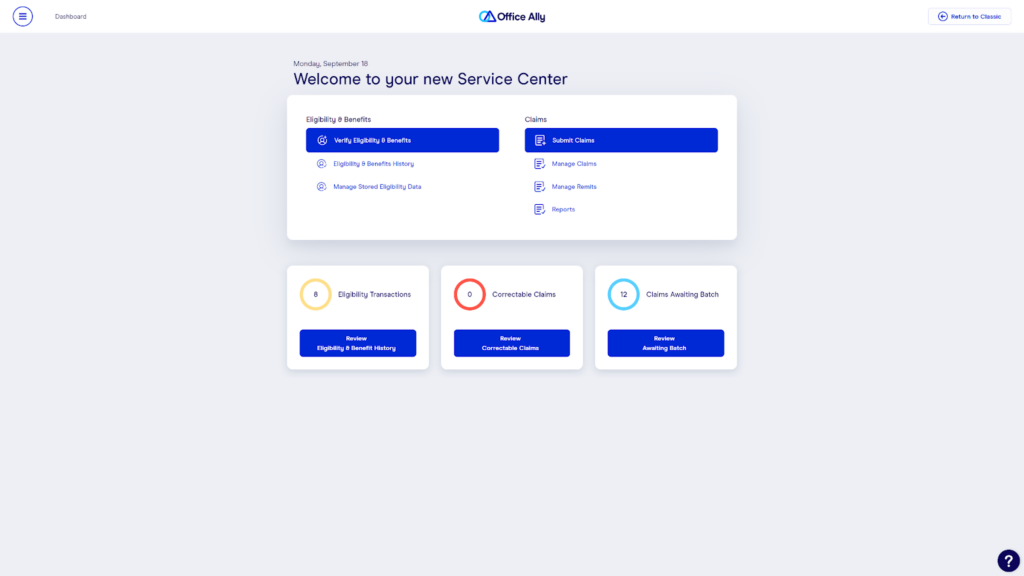
Office Ally focuses on helping practices submit claims, track responses, and manage basic billing tasks without the complexity of a full RCM system.
Everything is built around ease of use. Claims can be uploaded quickly, templates help speed up repetitive submissions, and teams can download EOBs and track claim progress without switching tools. For smaller practices, that simplicity makes a big difference in daily workflow.
Free and low-cost plans available depending on usage
Small practices or providers looking for a simple, affordable way to submit claims and manage basic billing without added complexity.
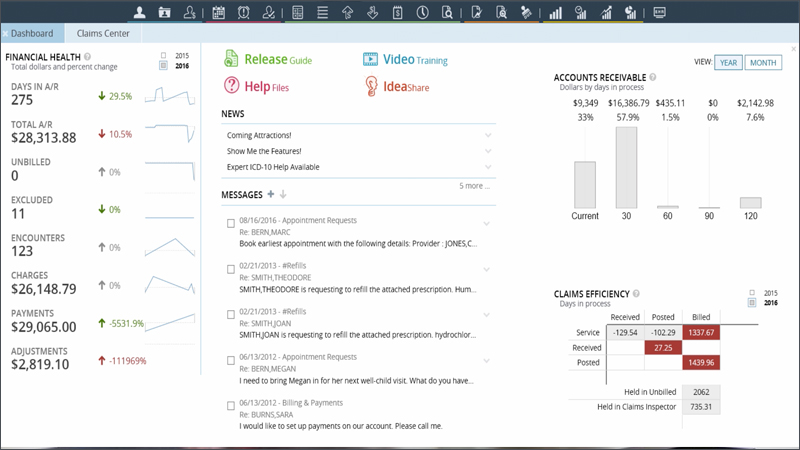
AdvancedMD combines billing, EHR, and scheduling into one system, helping practices manage claims without switching between multiple tools.
Instead of treating claims as a separate workflow, it connects everything. Charges, patient data, and billing all flow from the same system. That makes it easier to track claims from creation to payment without losing context.
Subscription-based, varies by features and practice size
Small to mid-sized practices that want a single platform to manage clinical workflows, billing, and claims together.
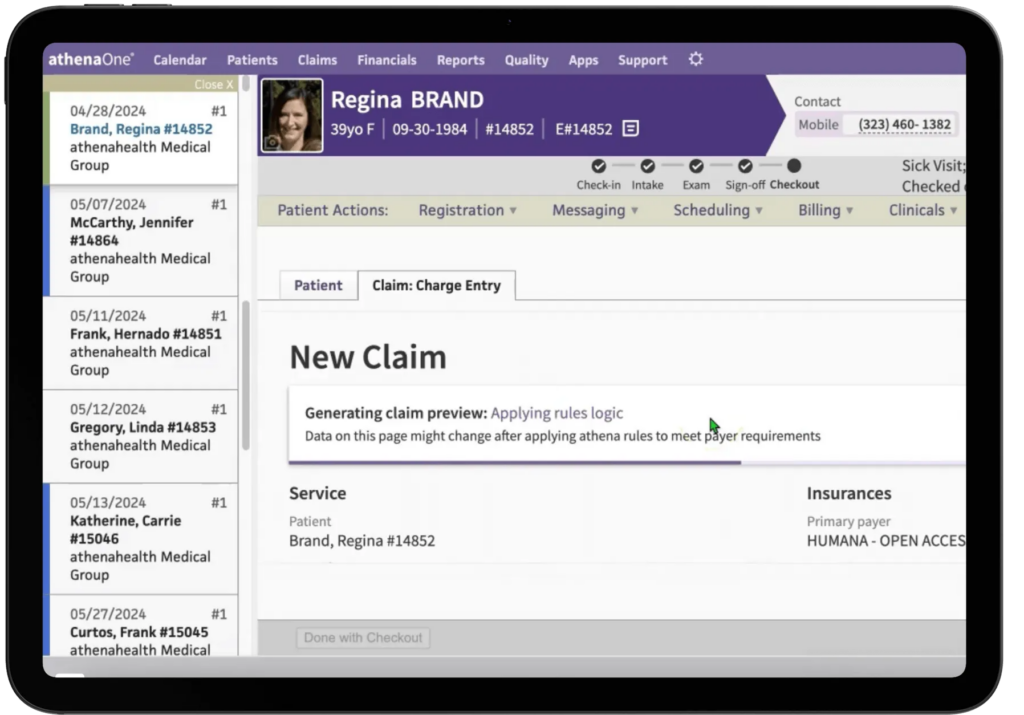
athenahealth uses AI and network-driven insights to improve how claims are submitted, followed up, and paid.
Instead of relying only on static rules, its system continuously learns from payer behavior across its network. That means claims are not just scrubbed before submission. They are optimized based on what actually gets approved, helping reduce denials and speed up reimbursements.
Custom pricing based on organization size and services
Practices and organizations that want AI-driven claims optimization with built-in payer intelligence and automation.
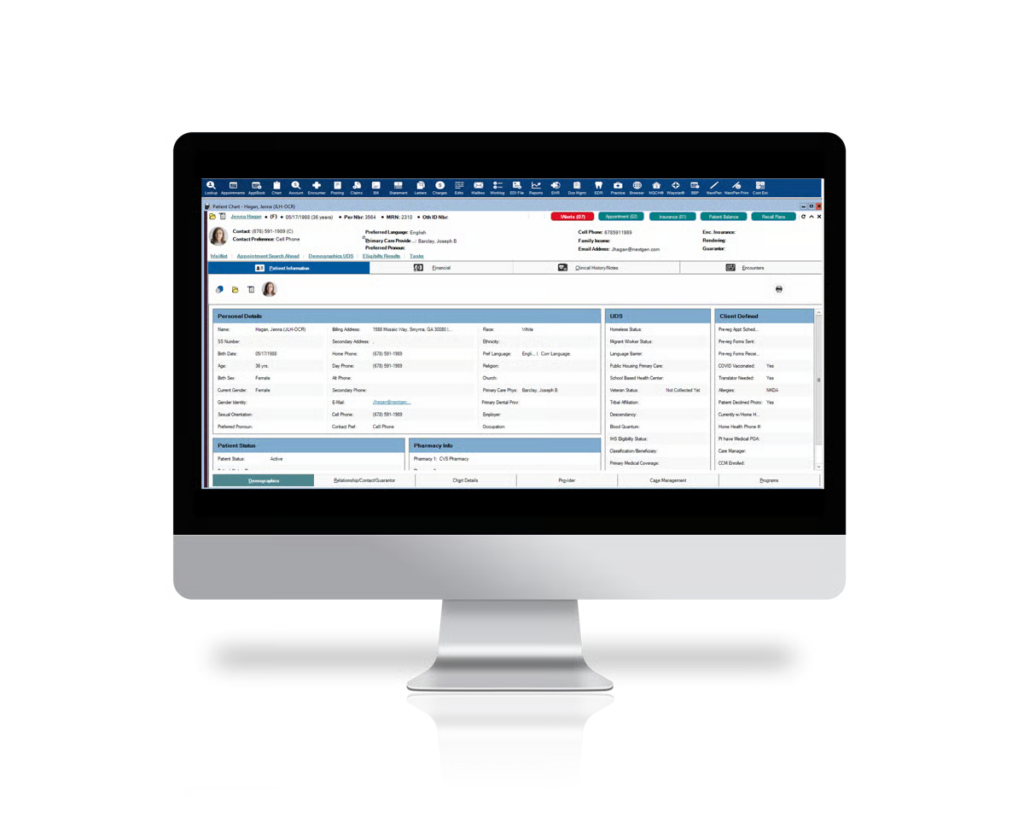
NextGen Healthcare brings scheduling, eligibility, billing, and claims processing into one system, giving practices a unified view of operations and revenue.
It leans heavily into automation. Claims are scrubbed with customizable edits before submission, helping teams catch errors early and reduce denials. At the same time, reporting and analytics give a clearer picture of cash flow and performance across the practice.
Custom pricing based on organization size and configuration
Specialty practices and larger medical groups that need structured workflows, customization, and detailed control over billing and claims.
The best healthcare claims management software fixes where your revenue starts slipping, not just the symptoms.
For many providers, the breakdown happens before submission, during eligibility checks, admissions, and payer verification. That’s where small gaps turn into denials, delays, and lost revenue.
If that’s your challenge, go beyond managing claims. Prevent issues before they start. That’s where VerifyTreatment stands out. With it, you can verify coverage accurately, catch payer requirements early, and gain visibility before problems escalate.
Get started with VerifyTreatment.
Healthcare claims management software helps providers create, submit, track, and manage insurance claims from start to finish. It reduces manual work, improves accuracy, and speeds up reimbursements by automating key parts of the billing process.
Most denials come from preventable issues like incorrect patient information, missing documentation, coding errors, or unmet payer requirements. Many of these problems start before the claim is submitted, during eligibility checks and verification. And that’s exactly what VerifyTreatment is built to prevent.
Good software catches errors early through claim scrubbing, automation, and validation checks. More advanced tools also surface payer requirements upfront and flag issues before submission, helping teams avoid rework and delays.
A clearinghouse focuses on transmitting claims between providers and payers. Claims management software goes further by helping you prepare, track, and optimize claims throughout the entire process.
Most software manages claims after submission. VerifyTreatment fixes them at the source by automating eligibility checks and catching hidden payer rules before a claim is ever created.
Schedule a workflow audit to see how we prevent the front-end errors that set claims up to fail.Disclaimer: All trademarks, logos, and brand names are the property of their respective owners. The use of any third-party trademarks, logos, or brand names in this article is for informational and comparative purposes only, and constitutes nominative fair use. This article was published by VerifyTreatment, and while we strive for objective comparisons, VerifyTreatment is included as an option within this list.


Samantha is a dynamic marketing professional dedicated to making a difference in the behavioral health industry through her work at VerifyTreatment. With a strong background in digital marketing and brand advocacy, she helps elevate the platform’s presence by fostering authentic connections with treatment centers and healthcare providers. Her expertise in content creation and community engagement ensures that VerifyTreatment’s value is communicated effectively, helping centers streamline operations and improve patient care. Samantha’s focus on building trust and driving awareness positions VerifyTreatment as a key resource in the healthcare landscape.

Nicole is a versatile healthcare professional with a Bachelor’s degree in Health Administration and a solid background in managing healthcare systems and operations. Her experience spans healthcare management, compliance, and regulations, making her adept at navigating complex healthcare environments. In addition to her administrative expertise, Nicole holds certifications in Functional Nutrition and Personal Training, giving her a well-rounded perspective on health and wellness. She is committed to using her skills to improve healthcare settings and ensure effective, patient-centered care.

Tara is a dedicated leader who leverages her Master's degree in Information Technology (Florida Tech) and deep company knowledge (since 2018) to drive our community awareness. She is the central figure for managing social engagement and ensuring the community is immediately and effectively informed of all new product launches and company updates.

JoAnn has a strong background in the mental health and substance abuse industry, with expertise in billing, coding, facility credentialing, and contracting. She is passionate about team education and public speaking, always striving to make a positive impact. With a solid foundation in accounting, JoAnn also holds an Associate of Arts in Biblical Studies from Liberty University, blending her professional skills with her personal values.

For 11+ years, Melanie has been dedicated to helping clients access quality mental health care, with a special focus on grief, loss, and substance abuse. With expertise in healthcare, community outreach, patient advocacy, and leadership development, Melanie is passionate about making a positive impact in the lives of others.

Jordan is a dedicated advocate for behavioral health and is passionate about improving sales strategies and business processes. With a focus on helping businesses, particularly in healthcare, Jordan believes that streamlining operations is a way to positively impact more people indirectly. A strong leader, both personally and professionally, Jordan is committed to making a difference in the world by doing good business and serving a higher purpose.