
Technology & Automation
Claim.MD Reviews: Pros, Cons, Pricing & Best Alternative
Read our Claim.MD review covering features, pricing, pros, cons, and user feedback, plus when VerifyTreatment may be a b...
Read the full article →


Not every RCM platform can handle the realities of addiction treatment billing. The best options help providers strengthen the parts of the revenue cycle that often create problems, from verifying behavioral health benefits before admission to managing authorizations, preventing denials, and keeping unpaid claims from piling up in A/R. This list features VerifyTreatment, Kipu RCM, Qualifacts, Valant, and BestNotes.
| Platform | Best for |
| VerifyTreatment | Faster behavioral health benefit verification and clearer coverage decisions before admission |
| Kipu RCM | Addiction treatment centers that want billing, utilization review, and clinical workflows connected in one system |
| Qualifacts | Larger or multi-location behavioral health organizations that need more configurable billing and reporting |
At VerifyTreatment, we help behavioral health and addiction treatment providers get clearer insurance information before it turns into an admissions delay, a coverage issue, or lost revenue.
Unlike general RCM tools focused mainly on claim submission, we work on the earlier part of the revenue cycle: helping teams verify benefits, understand coverage, and make more informed intake decisions when timing matters.
Dairo R., Admissions Director at Behavioral Health of the Palm Beaches, shared his experience using VerifyTreatment with us:
 “
“I was very active with VerifyTX since the beta testing stages. Even then the value of a user friendly and mobile verification tool that gave you access to so many insurance companies’ databases was obvious. On several instances, VerifyTX allowed me to quickly get an addict the help they needed when otherwise I would’ve had to wait until insurance companies opened the next day to make any decisions.
Chris Burton Dairo R.
So, you can trust that this list comes from people who see how delayed verification, unclear coverage, and payer requirements affect addiction treatment providers every day.
While putting this list together, we also looked beyond vendor feature claims and assessed how well each platform supports the revenue-cycle gaps treatment providers are actually trying to fix, from benefit verification and authorization management to billing, denial prevention, reporting, and unpaid revenue.
Below, we break down each platform and where it fits best. Some of the options below are dedicated RCM tools, while others are behavioral health EHRs with RCM features. The right fit depends on whether you need to fix a specific revenue gap or connect revenue work to wider clinical operations.
| Platform | Key RCM strengths | Best-fit treatment setup | Keep in mind |
| VerifyTreatment | Real-time VOB, behavioral health and SUD benefits, authorization requirements, payer alerts, coverage monitoring | Providers trying to prevent admission delays, bad VOBs, and missed coverage changes | Not a full EHR |
| Kipu RCM | Eligibility checks, utilization review, attendance-based claim creation, claims | Detox, residential, PHP, IOP, and other centers already using or considering Kipu EMR | Delivers the most value within the Kipu ecosystem |
| Qualifacts | Configurable EHR and billing workflows, claims tools, analytics | Organizations managing multiple programs, payers, locations, or service lines | Features can vary depending on the Qualifacts product and add-ons selected |
| Valant | Utilization review, eligibility, group scheduling, optional RCM services | Outpatient addiction treatment providers running IOP or PHP programs | Less clearly suited to residential or detox operations |
| BestNotes | CRM, referral tracking, documentation, invoicing, medication management | Small or growing programs that need admissions, clinical, and billing support without a heavier setup | May not be the strongest fit for advanced enterprise reporting or complex RCM operations |
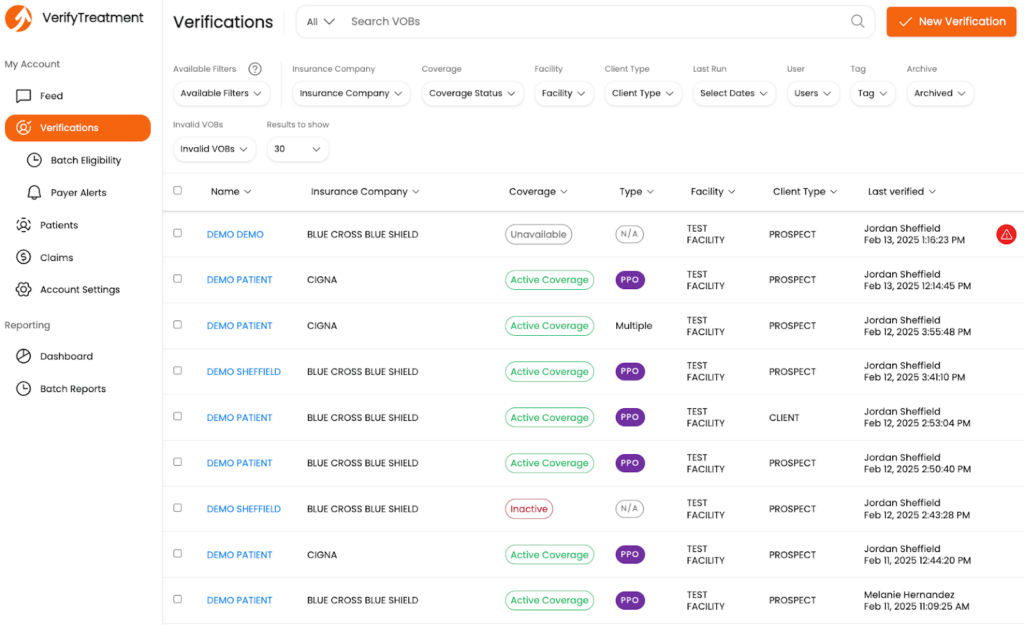
VerifyTreatment is built to help addiction treatment providers avoid the surprises that start with incomplete coverage data.
With VerifyTreatment’s Real-Time Eligibility, Comprehensive Coverage Verification, and Payer Alerts, admissions and RCM teams can get the information they need before moving a prospective patient forward. That means less time piecing details together from calls and separate payer portals.
There’s also Batch Verification, which lets teams recheck active policies across their census and catch coverage changes before they become a bigger revenue problem.
Matt Hirsch, Executive VP at Transformations Treatment Center, puts that value plainly: “We verify our census at least once a week, and catch a minimum of one termed policy each time with VerifyTX. That translates to several thousands of dollars a week saved.”
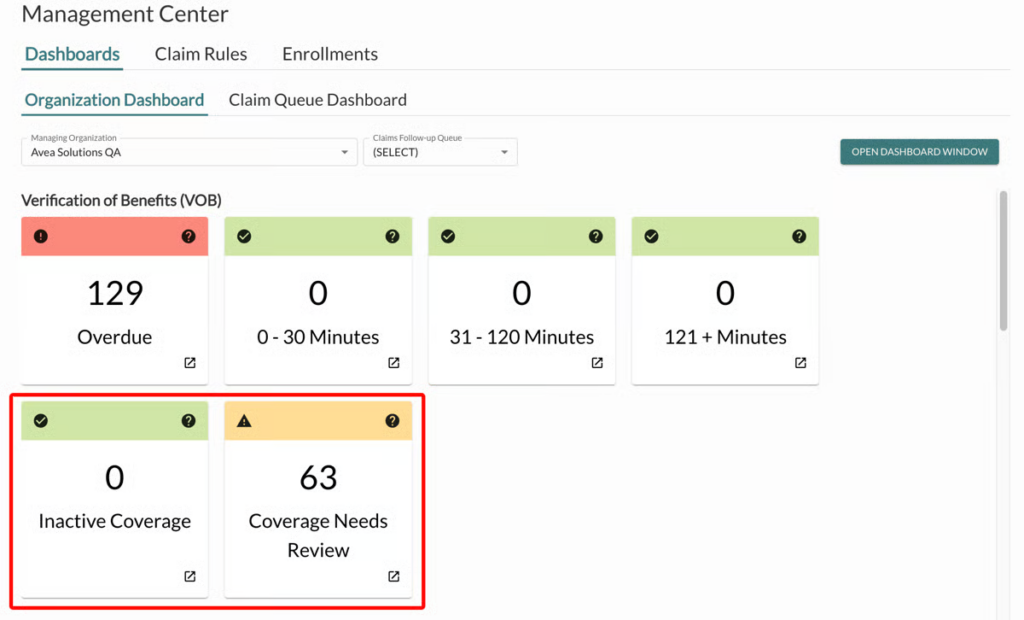
Kipu RCM takes a more connected approach to RCM. Rather than handling eligibility, authorizations, attendance, billing, and collections as separate tasks, it brings them into the Kipu EMR workflow.
Teams can move patient demographics and charges from Kipu EMR into billing with one click. They can also track the details that affect reimbursement, including benefit exceptions, expiring authorizations, attendance, claims, and patient balances.
Kipu does not publish RCM pricing publicly. You will need to request a quote based on the Kipu products, workflows, and implementation support your treatment center needs.
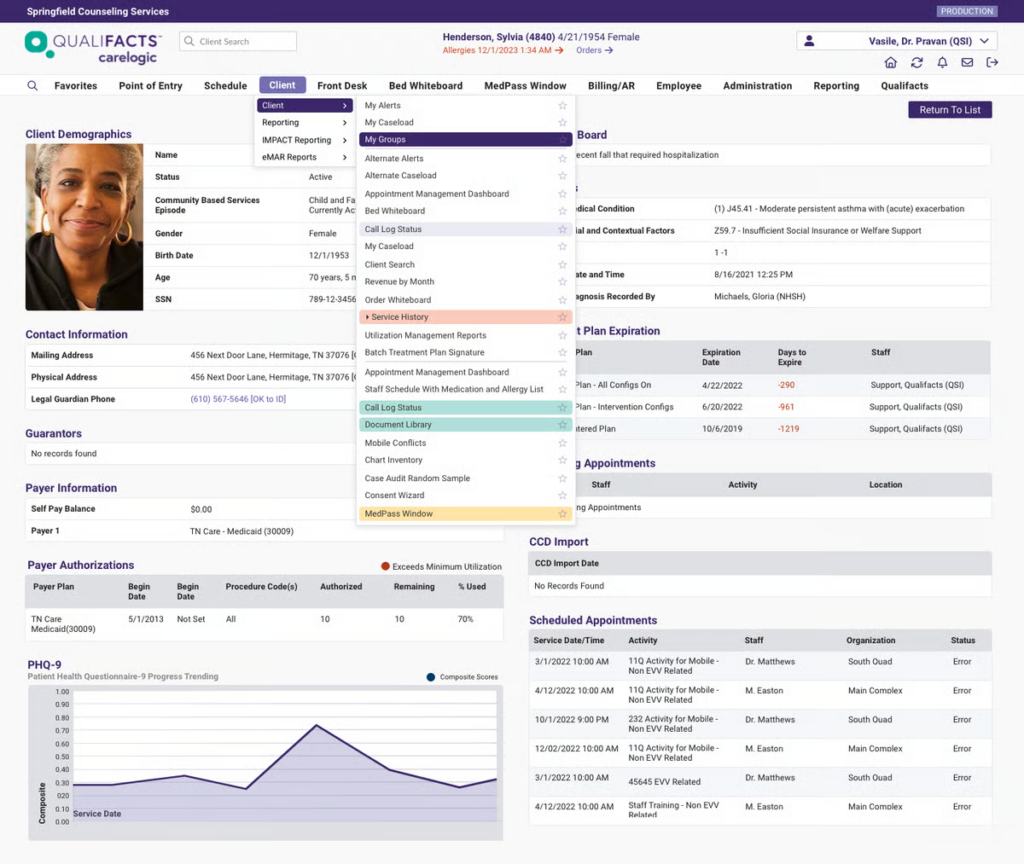
Qualifacts gives larger addiction treatment organizations more room to shape their clinical and revenue workflows around how they actually operate.
Instead of forcing every provider into one default setup, Qualifacts offers CareLogic, Credible, and InSync. That can be useful when you run multiple locations, service lines, or levels of care and need billing, reporting, documentation, and compliance workflows that can handle more complexity.
Qualifacts does not publish public pricing for its EHR platforms, claims tools, or RCM services. You will need to request a custom quote based on the platform you choose.
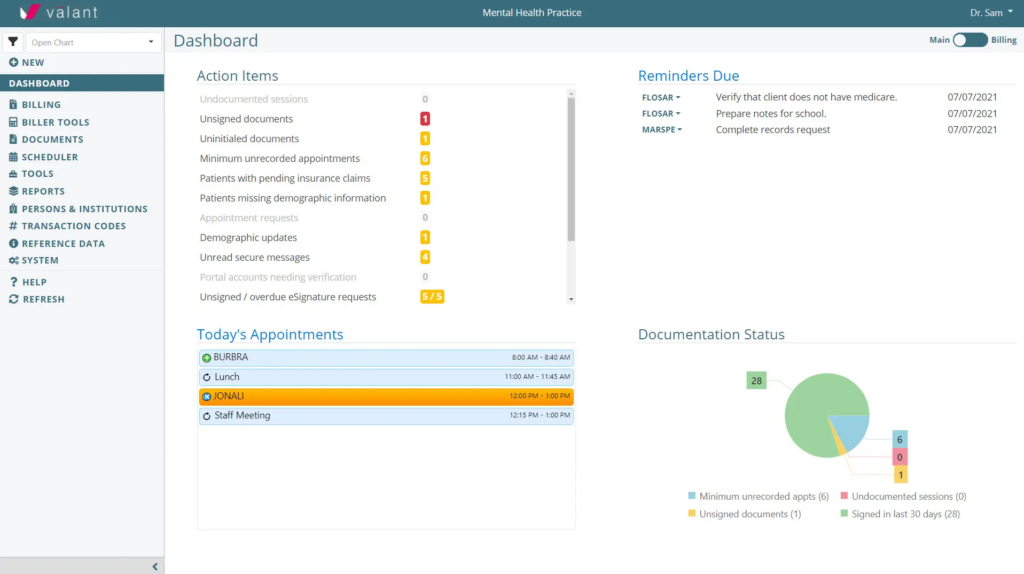
Valant helps IOP and PHP providers keep their clinical work and billing connected.
For example, teams can track whether a patient attended treatment, whether the right documentation is complete, and whether the program still has authorization to bill. Valant keeps those details tied to eligibility, billing, and patient payments in its behavioral health EHR.
Valant uses custom pricing. Your quote will depend on your provider count, practice setup, and the features or services you need.
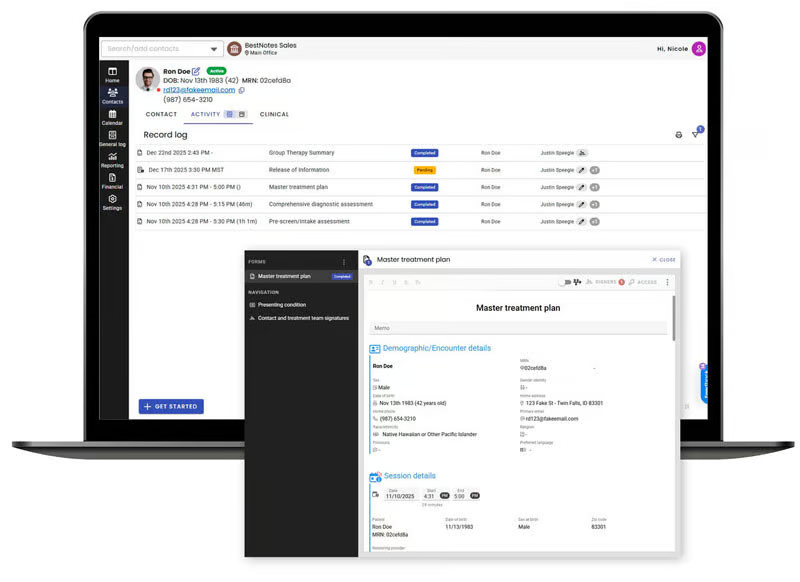
BestNotes combines clinical documentation, CRM, medication management, invoicing, and billing support for smaller addiction treatment teams.
On the admissions side, its CRM can help teams track leads, referral sources, calls, and follow-up. On the revenue side, it supports invoicing and connects with CollaborateMD for RCM billing workflows, including claims, eligibility checks, and reporting.
BestNotes also charges a $100 one-time setup fee.
The right choice comes down to where your revenue cycle needs the most help.
Choose a connected EHR and RCM setup when your biggest issues are tied to documentation, attendance, authorizations, billing, and reporting. Choose a more configurable platform when you manage multiple locations, programs, or payer arrangements.
But when the problem starts before admission, with unclear benefits, missed payer requirements, or coverage changes your team catches too late, VerifyTreatment can help.
Get started with VerifyTreatment here.
Disclaimer: All trademarks, logos, and brand names are the property of their respective owners. The use of any third-party trademarks, logos, or brand names in this article is for informational and comparative purposes only, and constitutes nominative fair use. This article was published by VerifyTreatment, and while we strive for objective comparisons, VerifyTreatment is included as an option within this list.



Samantha is a dynamic marketing professional dedicated to making a difference in the behavioral health industry through her work at VerifyTreatment. With a strong background in digital marketing and brand advocacy, she helps elevate the platform’s presence by fostering authentic connections with treatment centers and healthcare providers. Her expertise in content creation and community engagement ensures that VerifyTreatment’s value is communicated effectively, helping centers streamline operations and improve patient care. Samantha’s focus on building trust and driving awareness positions VerifyTreatment as a key resource in the healthcare landscape.

Nicole is a versatile healthcare professional with a Bachelor’s degree in Health Administration and a solid background in managing healthcare systems and operations. Her experience spans healthcare management, compliance, and regulations, making her adept at navigating complex healthcare environments. In addition to her administrative expertise, Nicole holds certifications in Functional Nutrition and Personal Training, giving her a well-rounded perspective on health and wellness. She is committed to using her skills to improve healthcare settings and ensure effective, patient-centered care.

Tara is a dedicated leader who leverages her Master's degree in Information Technology (Florida Tech) and deep company knowledge (since 2018) to drive our community awareness. She is the central figure for managing social engagement and ensuring the community is immediately and effectively informed of all new product launches and company updates.

JoAnn has a strong background in the mental health and substance abuse industry, with expertise in billing, coding, facility credentialing, and contracting. She is passionate about team education and public speaking, always striving to make a positive impact. With a solid foundation in accounting, JoAnn also holds an Associate of Arts in Biblical Studies from Liberty University, blending her professional skills with her personal values.

For 11+ years, Melanie has been dedicated to helping clients access quality mental health care, with a special focus on grief, loss, and substance abuse. With expertise in healthcare, community outreach, patient advocacy, and leadership development, Melanie is passionate about making a positive impact in the lives of others.

Jordan is a dedicated advocate for behavioral health and is passionate about improving sales strategies and business processes. With a focus on helping businesses, particularly in healthcare, Jordan believes that streamlining operations is a way to positively impact more people indirectly. A strong leader, both personally and professionally, Jordan is committed to making a difference in the world by doing good business and serving a higher purpose.