
Admissions
VOB in Medical Billing: Process, Best Practices & Challenges
Before you bill for a patient’s care, you must know what their insurance will actually cover. That means checking their ...
Read the full article →


Availity offers a free Essentials plan, with paid upgrades starting around $25 per month and clearinghouse services from about $35 per month. Costs can increase with higher claim or eligibility volume, additional users, and checks outside sponsored payers.
That said, while Availity works well as a general payer portal, teams that need deeper, admissions-ready verification during intake often look to specialized tools like VerifyTreatment.
For many healthcare teams, Availity is the hub for everyday payer work. It brings eligibility checks, claims, authorizations, and remittances into one portal, giving staff a single place to manage transactions across multiple health plans.
Part of its appeal is the free Essentials tier. When a patient’s insurer sponsors Availity, you can check benefits and submit transactions at no cost. For many common commercial plans, this covers day-to-day needs.
The catch is that “free” only applies to participating payers. As soon as you need access to non-sponsored plans, higher transaction volumes, or added tools, costs can begin to grow. Paid tiers expand payer access and functionality, and each additional service, user, or transaction can increase your total spend.
Below, we break down how Availity pricing works, what you get at each level, and where the model may start to create extra cost or manual work for admissions and billing teams.
Many of the teams we support have used payer portals like Availity as part of their daily workflow. Because 4,000+ programs rely on our platform and its reach across 1,800+ payers, we see where portal-based verification works, and where manual effort or limited detail starts to create friction.

“Great Product, Ease of Use, Added Efficiency for Our Team. Automating and bringing in health insurance verifications to our instance was a game changer. We have instant verifications for all of our prospects, as well as automated verifications for our clients on a weekly basis.”
You can book a free demo today.
Availity pricing is built around tiers that expand payer access and transaction volume. The platform starts free, then adds monthly fees as your needs grow beyond sponsored payers or basic portal use.
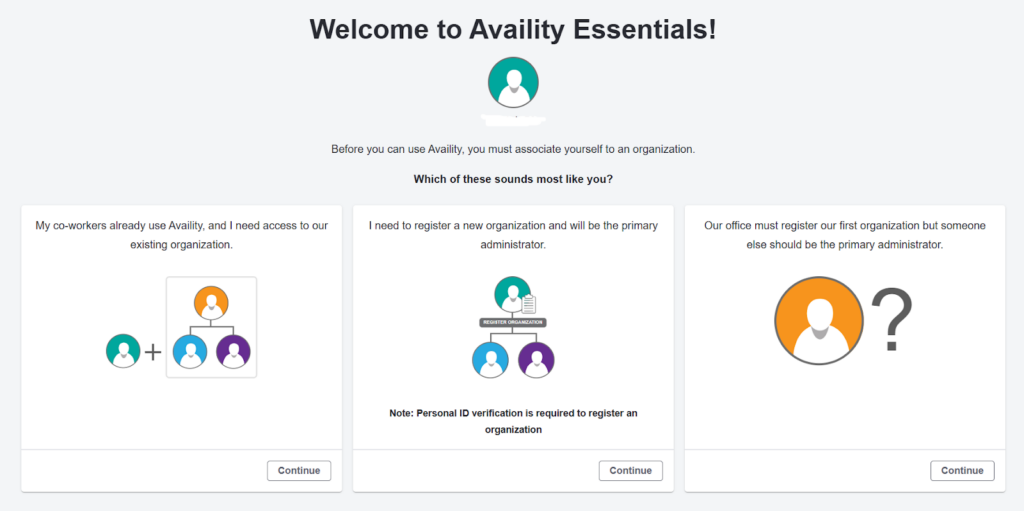
The Essentials tier is free and covers eligibility, claims status, remittance, and authorizations—but only for sponsored payers. If a patient’s insurer participates, you can use the portal at no cost. This works well for common commercial plans, but it stops there. Any payer outside the sponsored list requires an upgrade.
Essentials Plus adds access to non-sponsored payers. The plan typically includes about 250 non-sponsored transactions per month, with small per-transaction fees once you exceed that limit. It’s designed for smaller practices that occasionally need broader payer access without moving to a full clearinghouse.
Organizations with higher claim volume usually need Availity’s EDI clearinghouse. Pricing commonly starts around $35 per month and expands payer reach well beyond the portal network. Plans often include unlimited transactions for participating payers and a set number for others, with fees increasing as volume grows.
Larger health systems typically move to a custom contract. These plans bundle portal access, clearinghouse services, and advanced revenue-cycle tools like batch eligibility and analytics. Pricing isn’t published and varies based on size, volume, and features.
Even after you choose a plan, your total cost depends on how much you use the platform and how complex your setup is.
Key factors include:
In short, the free tier works for small teams with limited payer needs. As your provider count, payer mix, or transaction volume grows, Availity costs tend to rise with it.
A small clinic that mostly bills a few big insurers might stay on the free plan. By contrast, a multi-site treatment center filing thousands of claims across all payer types will likely need Essentials Plus and clearinghouse access – and possibly a Pro-level solution.
Availity gives providers a single portal to manage common revenue-cycle work across multiple payers, reducing the need to log into separate insurer websites.
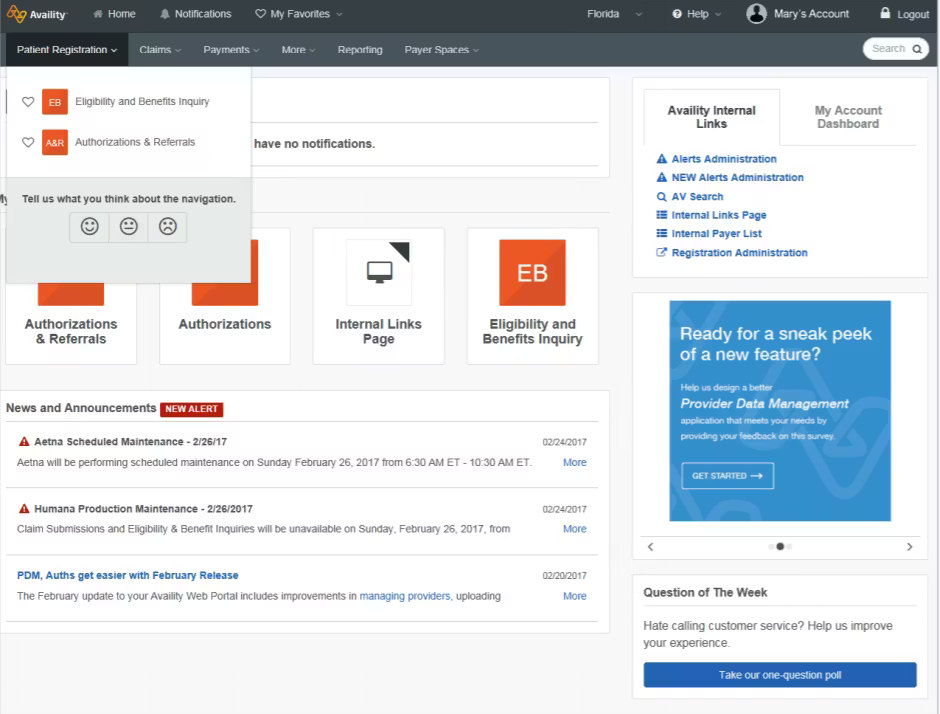
Core capabilities include:
The biggest advantage is convenience and payer reach. No need to have 50 browser tabs open or memorize dozens of login credentials. As one G2 reviewer noted, it’s “incredibly convenient to have multiple insurance companies available on a single online platform”.
The free tier, in particular, offers a low-cost entry for small practices to check eligibility and submit claims to major insurers. In larger organizations, Availity’s integrated clearinghouse can replace other vendors and handle volume more efficiently.
While Availity works well as a multi-payer portal, it can feel slow for teams that need quick, clear answers during admissions. Users often mention that navigation takes multiple steps, which adds time when staff are already moving between screens or systems.
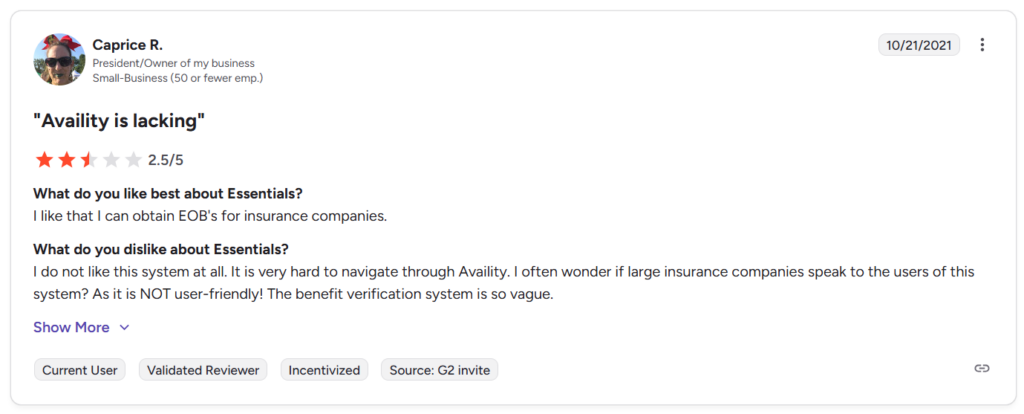
Another limitation is the depth of verification. Results usually confirm basic coverage, but may not include details like service-level carve-outs, prior authorization rules, benefit limits, or clear patient responsibility.
When that information isn’t available, teams often end up calling payers or double-checking outside the portal.
These gaps tend to show up in day-to-day operations:
The platform still improves access across many insurers, but for admissions-driven teams, the extra navigation and limited detail can mean more manual work and less clarity at the moment decisions need to be made.
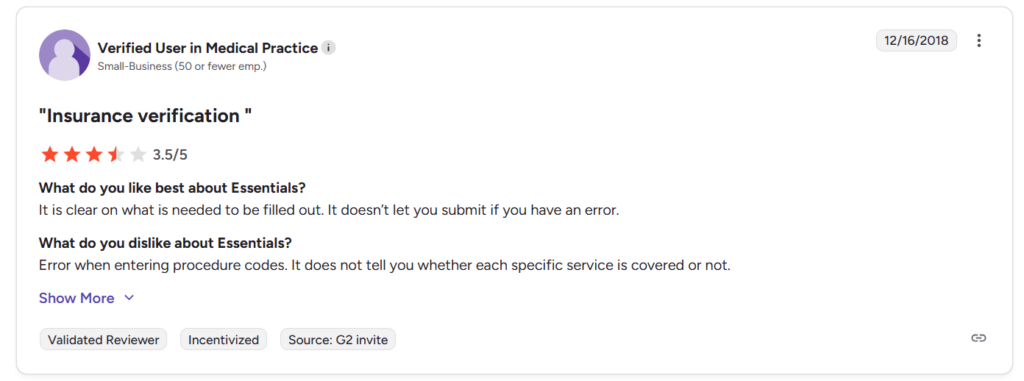
Availity fits well for what it’s designed to do: give providers a single place to check eligibility and manage basic transactions across many payers.
For organizations with straightforward workflows or occasional verification needs, that centralized access can save time and reduce the need to manage multiple payer logins.
But as intake volume grows and decisions need to happen faster, the limits of a portal model become more noticeable. What works for routine checks can start to slow things down when coverage details drive real-time admission decisions.
Common signs that a portal is no longer enough:
Over time, the issue isn’t just access to payer data, but timing and clarity. Intake teams often need answers during the first conversation: Is treatment covered? Are there limits? What will the patient owe?
When those answers come later, the workflow becomes reactive. At that point, many organizations start looking for a way to bring real-time financial clarity into the intake process rather than relying on a portal alone.
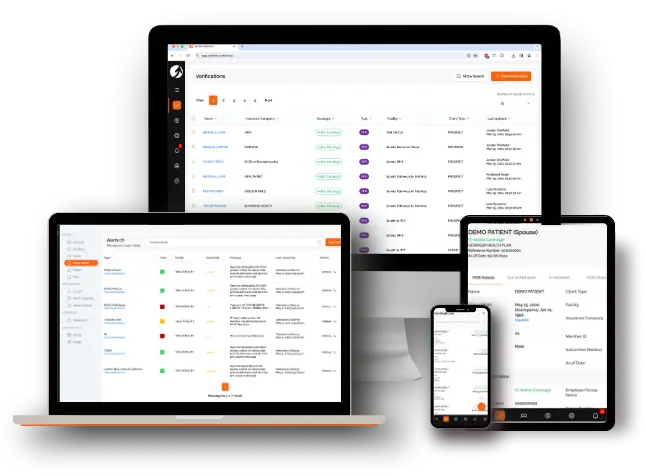
For organizations that make coverage decisions during intake, VerifyTreatment is built to support that moment. The platform focuses on giving admissions teams clear, detailed insurance information right away so they can move forward without delays.
VerifyTreatment returns more than basic status. Admissions teams see service-level details such as behavioral health benefits, deductibles, patient responsibility, authorization requirements, and common carve-outs during the first call.

If a patient does not have an insurance card or full policy details, the platform can often locate active coverage using limited information. This helps reduce delays and prevents missed admissions tied to incomplete data.

Coverage does not stay static. VerifyTreatment regularly checks existing policies and flags changes such as lapses, terminations, or plan updates so teams can address issues before they affect billing.
Verification results live inside existing systems such as Salesforce, so coverage details follow the patient from intake through claims. This reduces rework and helps both teams work from the same information.
Organizations that move away from portal-heavy workflows usually want faster answers and fewer surprises later. With one system instead of multiple payer logins, teams can:
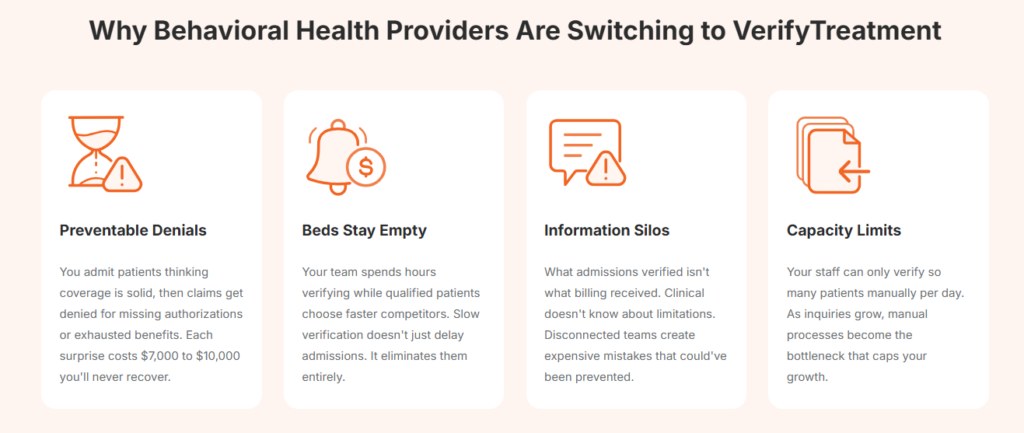
Because the platform is designed for behavioral health, it also reflects the details that matter in that setting, such as level-of-care rules, managed-care requirements, and Medicaid or Medicare variations.
The result is earlier clarity, so admissions decisions can move forward with more confidence and fewer downstream issues.
Availity is a familiar portal for many teams and works well for broad payer access and routine eligibility tasks. But when insurance questions are holding up admissions or surfacing too late in billing, it often helps to look at tools designed specifically for the intake stage.
VerifyTreatment focuses on giving admissions teams clearer insurance answers earlier in the process, when decisions are being made, and expectations are set.
Book a demo to see how VerifyTreatment supports faster intake decisions and clearer handoffs, so insurance questions don’t slow things down when timing matters most. Get started today.
Disclaimer: All trademarks, logos, and brand names are the property of their respective owners. The use of any third-party trademarks, logos, or brand names in this article is for informational and comparative purposes only, and constitutes nominative fair use. This article was published by VerifyTreatment, and while we strive for objective comparisons, VerifyTreatment is included as an option within this list.




Luis Perdomo, Head of Growth, leads go-to-market strategy, demand generation, and growth initiatives at VerifyTreatment. With a background spanning digital marketing, revenue growth, and business strategy, he focuses on connecting the platform’s capabilities to the real operational challenges facing behavioral health providers, helping teams improve admissions, strengthen revenue performance, and make faster, more informed decisions.

Lindsay Morresi, Account Executive, helps healthcare organizations evaluate how VerifyTreatment can improve insurance verification, admissions, and revenue cycle workflows. Bringing a customer-focused approach to the sales process, she works with teams to understand their operational needs, identify opportunities for greater efficiency, and ensure they have the right solutions to make faster, more informed decisions.

Amira Nicol, Account Executive, brings relationship-building, industry knowledge, and a strong connection to the behavioral health community to VerifyTreatment. She works closely with treatment providers to understand the challenges their teams face around insurance verification and access to care, helping organizations identify solutions that reduce administrative barriers and support better operational and financial outcomes.

Matthew Hall, Senior Account Executive, helps behavioral health organizations identify opportunities to simplify insurance verification and protect revenue throughout the patient journey. With a consultative approach and a strong understanding of admissions, billing, and revenue cycle workflows, he works closely with teams to connect their operational challenges with practical solutions inside VerifyTreatment.

Alexander Jones, Product & Integrations Manager, helps translate customer needs into practical product improvements and scalable integrations at VerifyTreatment. With deep experience across Salesforce, APIs, automation, and business operations, he brings a unique ability to connect client workflows with technical execution, helping ensure the platform is both powerful and practical for the teams using it every day.

Nicole is a versatile healthcare professional with a Bachelor’s degree in Health Administration and a solid background in managing healthcare systems and operations. Her experience spans healthcare management, compliance, and regulations, making her adept at navigating complex healthcare environments. In addition to her administrative expertise, Nicole holds certifications in Functional Nutrition and Personal Training, giving her a well-rounded perspective on health and wellness. She is committed to using her skills to improve healthcare settings and ensure effective, patient-centered care.

Tara is a dedicated leader who leverages her Master's degree in Information Technology (Florida Tech) and deep company knowledge (since 2018) to drive our community awareness. She is the central figure for managing social engagement and ensuring the community is immediately and effectively informed of all new product launches and company updates.

JoAnn has a strong background in the mental health and substance abuse industry, with expertise in billing, coding, facility credentialing, and contracting. She is passionate about team education and public speaking, always striving to make a positive impact. With a solid foundation in accounting, JoAnn also holds an Associate of Arts in Biblical Studies from Liberty University, blending her professional skills with her personal values.

For 11+ years, Melanie has been dedicated to helping clients access quality mental health care, with a special focus on grief, loss, and substance abuse. With expertise in healthcare, community outreach, patient advocacy, and leadership development, Melanie is passionate about making a positive impact in the lives of others.