

Best VOB Tools for Treatment Centers: Top 5 Options
Published

Table Of Contents
Quick Summary
Not every VOB tool gives treatment centers the detail they need to make confident admission decisions. The right one should surface what a standard eligibility check can miss. This includes:
- Coverage for detox, residential, PHP, and IOP
- Deductible, copay and coinsurance details to calculate patient responsibility, and remaining benefits
- Network status and coverage limitations
- Prior authorization requirements
VerifyTreatment is the best option for its behavioral health-specific VOB workflow.
Shortlist
| VOB Tool | Best For |
|---|---|
| VerifyTreatment | Behavioral health-focused VOB and admissions decisions |
| Census CRM | Running VOB during the admissions process |
| Kipu | VOB within a broader behavioral health platform |
| Variant | Connecting VOB with EHR and billing |
| Alleva | VOB built into a behavioral health EHR |
VerifyTreatment - Robust VOB Tool for Treatment Providers
VerifyTreatment is built around the VOB questions treatment centers need answered before admission. It goes beyond confirming active coverage to help teams understand behavioral health benefits, patient responsibility, payer requirements, and other coverage details that can affect whether a patient moves forward with treatment.
That difference shows up in customer results. Foundations Recovery Network, for example, used VerifyTreatment to eliminate admissions delays tied to insurance verification, reduce staffing needs, and avoid losing an estimated 1 in 10 prospective patients. The organization reported saving more than $10,000 per month.
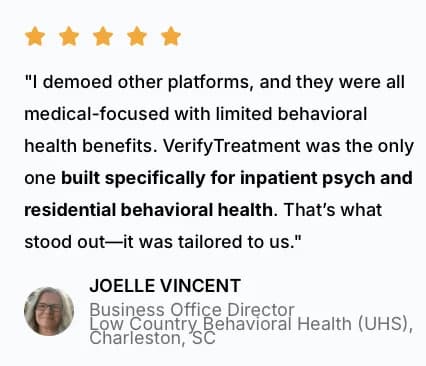
Low Country Behavioral Health too noticed that difference when comparing VerifyTreatment with other platforms:
Beyond the initial VOB, VerifyTreatment can also re-verify coverage throughout treatment, surface payer-specific alerts, and give admissions and RCM teams a shared record of the coverage information they are working from.
That combination of behavioral health-specific VOB detail and proven impact on admissions is why VerifyTreatment comes out on top for treatment providers.
Related: Best RCM Platforms for Addiction Treatment
Top 5 VOB Tools for Treatment Centers
The best VOB tool depends on how much behavioral health detail you need and where verification fits into your admissions workflow. Some tools focus mainly on VOB, while others bundle verification into a broader CRM, EHR, or billing platform.
Here are the five options that stand out most for treatment centers.
| Tool | VOB Approach | Best Fit | Main Tradeoff |
|---|---|---|---|
| VerifyTreatment | Dedicated behavioral health VOB | Treatment centers that want detailed benefit information before admission | Does not replace a full EHR or admissions CRM |
| Census CRM | VOB inside the admissions workflow | Teams that want to verify and place patients during intake | Less focused on standalone and ongoing VOB workflows |
| Kipu | VOB within a broader behavioral health operating system | Organizations managing admissions, clinical care, and billing together | Requires a broader platform implementation |
| Variant | VOB connected to one record from intake through billing | Teams that want verification, EHR, UR, and claims tightly connected | Greatest value comes from using its connected ecosystem |
| Alleva | Self-service VOB inside the EHR | Treatment centers that want verification alongside clinical and billing workflows | Some users report system crashes and customization constraints |
1. VerifyTreatment: Best Overall VOB Tool for Treatment Centers
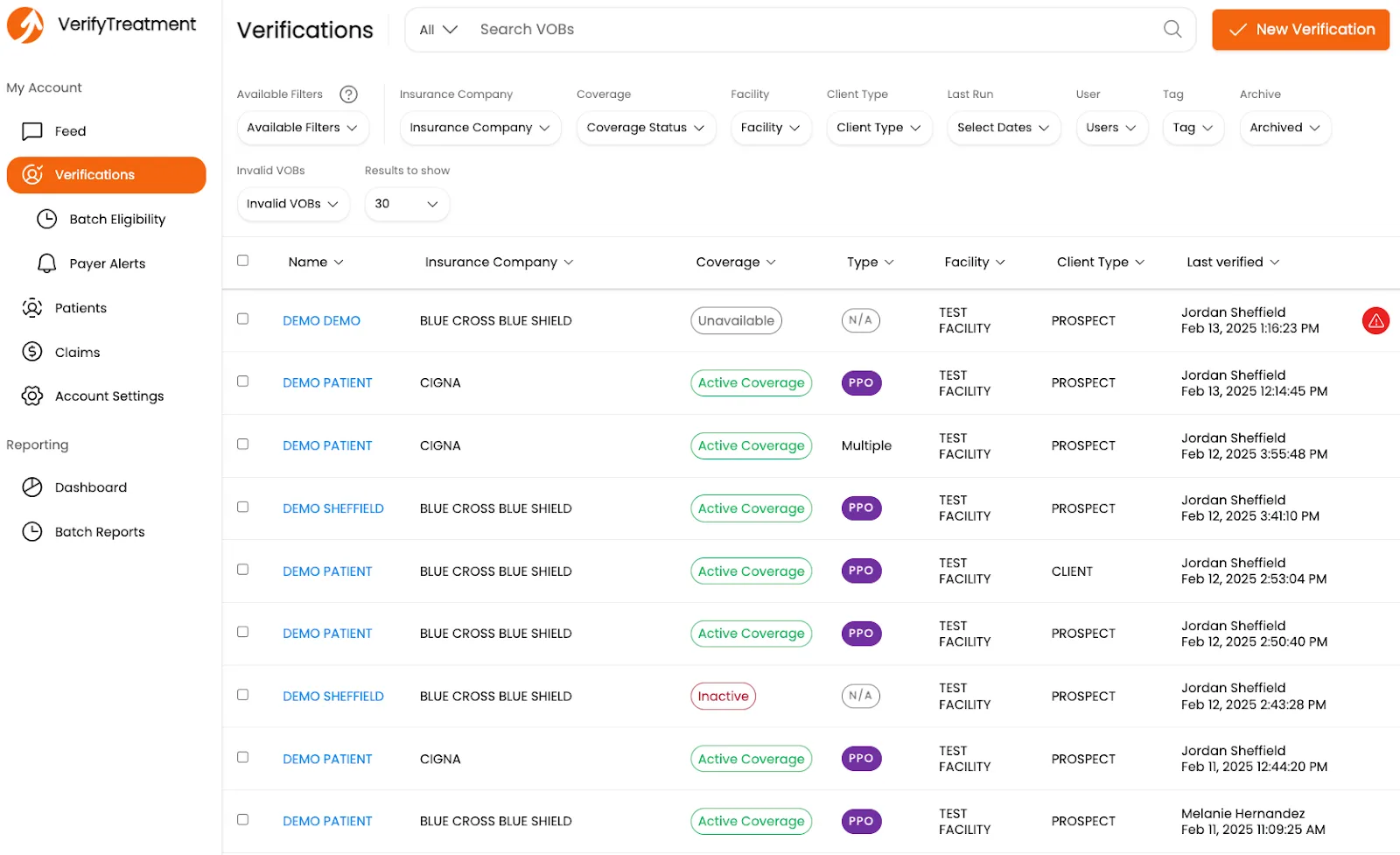
As we covered earlier, VerifyTreatment is our top pick because it is built specifically around behavioral health VOB rather than general medical eligibility. It helps treatment centers move beyond confirming active coverage to understand the benefit and payer details that can affect an admission.
Key Features
- Behavioral health-specific VOB: Surface mental health and substance use benefits alongside deductible, coinsurance, copay, and out-of-pocket information.
- Payer and coverage alerts: Flag payer-specific requirements and coverage issues your team may need to investigate before treatment.
- Automated re-verification: Schedule repeat checks to catch coverage changes while a patient remains in care.
- Broad payer access: Verify coverage across 1,800+ payers.
- Workflow integrations: Connect verification data with Salesforce or other systems through the VerifyTreatment API.
Pros
- Built specifically for behavioral health and substance use treatment providers
- Goes beyond active coverage to surface more admission-relevant benefit details
- Supports both initial VOBs and ongoing re-verification
- Helps admissions and RCM teams work from the same coverage information
- Proven to reduce verification-related admissions delays for treatment providers
Cons
- Does not replace a full behavioral health EHR or admissions CRM
- Its specialized behavioral health focus may be unnecessary for providers that only need basic eligibility checks
Related: Best Health Insurance Verification Platforms
2. Census CRM: Best for VOB During Admissions
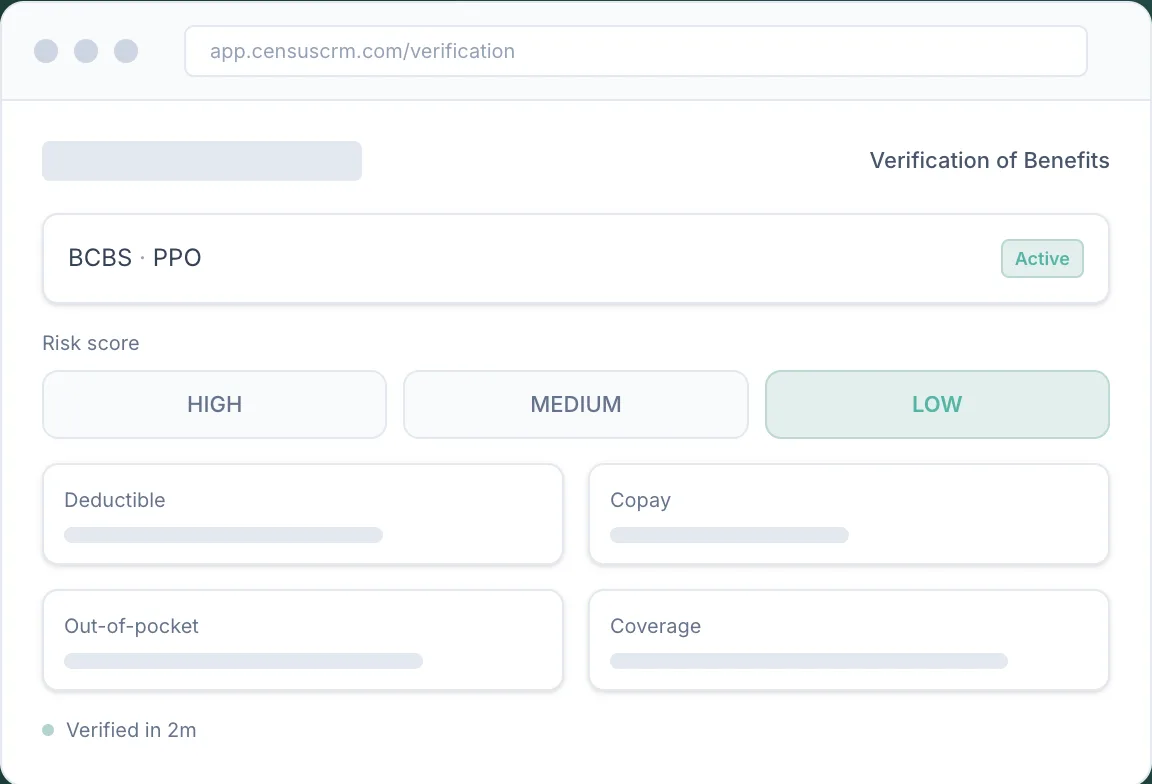
Census CRM brings VOB directly into the behavioral health admissions process. Your team can verify insurance, assess risk, match the patient to the right facility, and keep the referral moving without jumping between separate systems. That makes it a strong fit for treatment centers that want VOB to support the admission decision in real time, rather than function as a standalone back-office check.
Key Features
- Real-time VOB: Verify insurance during admissions and automatically classify cases by risk so your team can quickly identify coverage that may need closer attention.
- Facility matching: Match patients to facilities based on level of care, bed availability, insurance acceptance, exclusions, and specialty programs.
- Guided admissions workflow: Move prospects through qualification, approval, and commitment while using built-in talk tracks and intake workflows.
Pros
- Built specifically for addiction treatment and mental health admissions
- Keeps VOB, intake, facility placement, and admissions in one workflow
- Integrates with behavioral health systems including Kipu and Sunwave
Cons
- VOB is part of a broader admissions CRM, so it may be more platform than teams looking only for insurance verification need
- Less suited to teams that want VOB connected directly to clinical documentation and billing after admission
- Detailed benefit review may still require escalation for higher-risk cases rather than being fully handled by the initial automated check
3. Kipu: Best for VOB Within a Broader Behavioral Health Platform
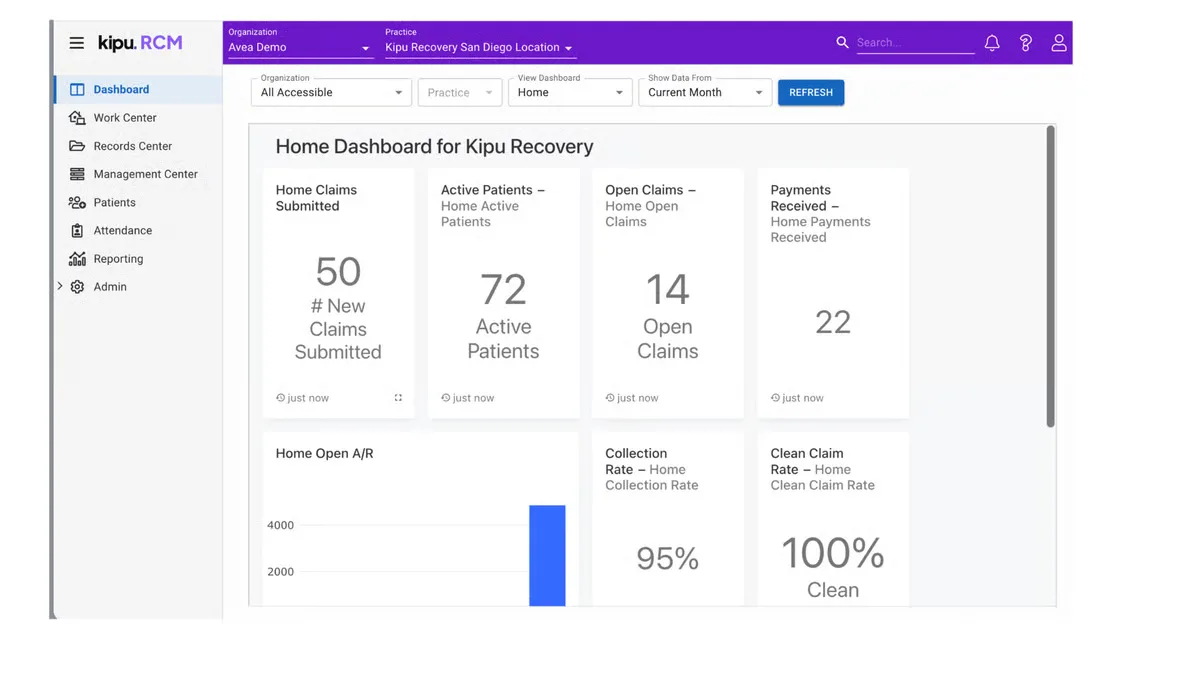
Kipu makes more sense for treatment centers that want insurance verification connected to the rest of their operations. Rather than treating VOB as a standalone workflow, Kipu connects it with admissions, clinical care, billing, and revenue cycle management.
Key Features
- Real-time eligibility and VOB: Verify patient eligibility and benefits as part of the revenue cycle workflow.
- Connected behavioral health workflows: Manage admissions, clinical records, compliance, billing, and analytics across the same platform.
- Behavioral health CRM and EMR: Carry patient information from the initial inquiry and admission into clinical care and billing.
Pros
- Designed specifically for behavioral health and addiction treatment organizations
- Keeps verification connected with admissions, clinical, and billing workflows
- Users frequently praise its customizability and behavioral health-specific workflow design
Cons
- Implementation can require significant onboarding and staff training rather than being plug-and-play
- Some users report dated screens, extra navigation clicks, and occasional performance slowdowns
- Teams looking mainly for VOB may find the broader EMR, CRM, compliance, and billing platform more extensive than they need
Related: Best Behavioral Health Software
4. Variant: Best for Connecting VOB With EHR and Billing
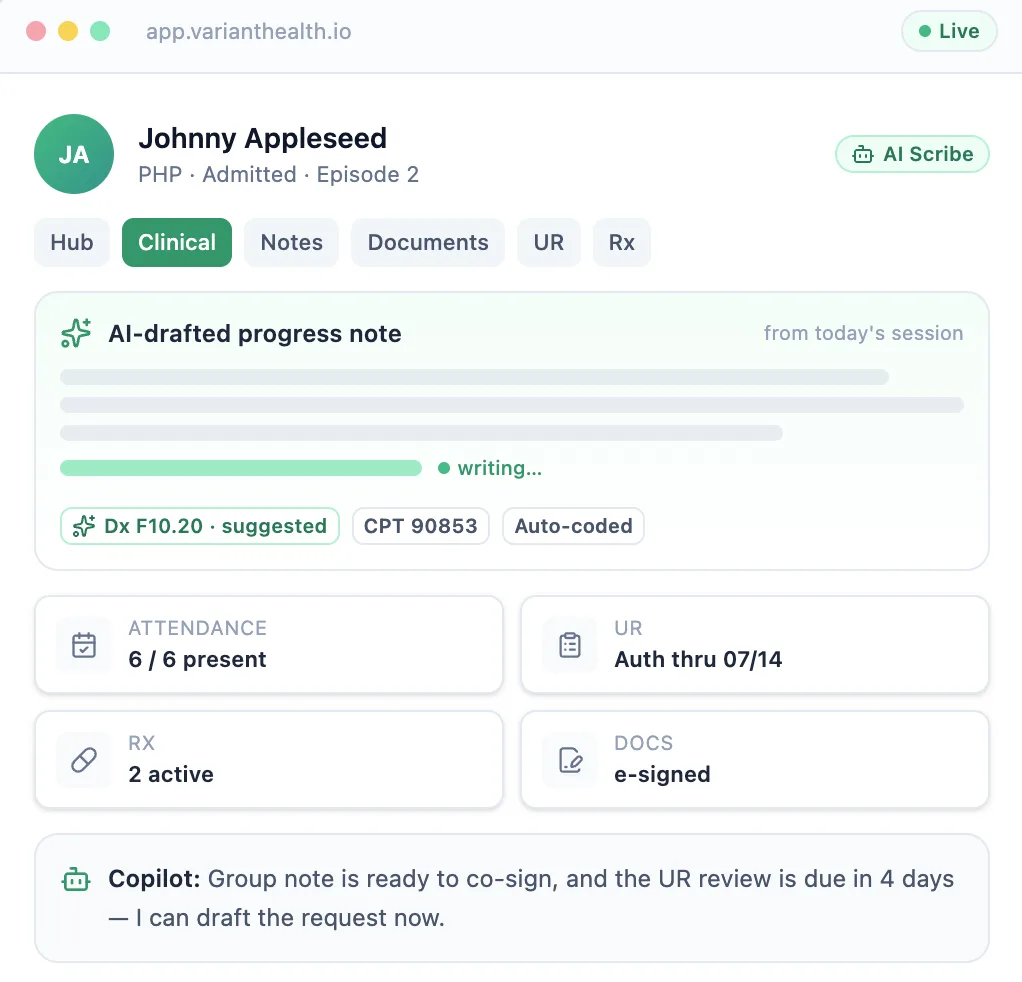
Variant takes VOB beyond the admissions desk. Once benefits are verified, the same patient record can continue into the behavioral health EHR, utilization review, and billing.
That one-record approach is its main advantage. Treatment centers can carry coverage information from the initial VOB through care and reimbursement without repeatedly transferring patient data between separate workflows.
Key Features
- AI-read VOB summaries: Translate eligibility responses into readable coverage summaries showing details such as in-network/out-of-network benefits, coinsurance, patient responsibility, and authorization requirements.
- Level-of-care coverage: See how benefits apply to services such as detox, residential treatment, PHP, and IOP before admission.
- One patient record: Carry verification information into clinical documentation, utilization review, and claims without creating a separate record for each stage.
Pros
- Connects VOB directly with EHR and billing workflows
- Surfaces treatment-specific details including level-of-care coverage and authorization requirements
- Offers VOB, EMR, utilization review, claims, analytics, and referral CRM as connected products
Cons
- The broader platform may be more than teams looking only for a standalone VOB tool need
- Its biggest workflow advantage depends on using more of the Variant ecosystem beyond verification
- Treatment centers already invested in separate EHR and billing systems may get less value from its one-record approach
5. Alleva: Best for VOB Built Into a Behavioral Health EHR
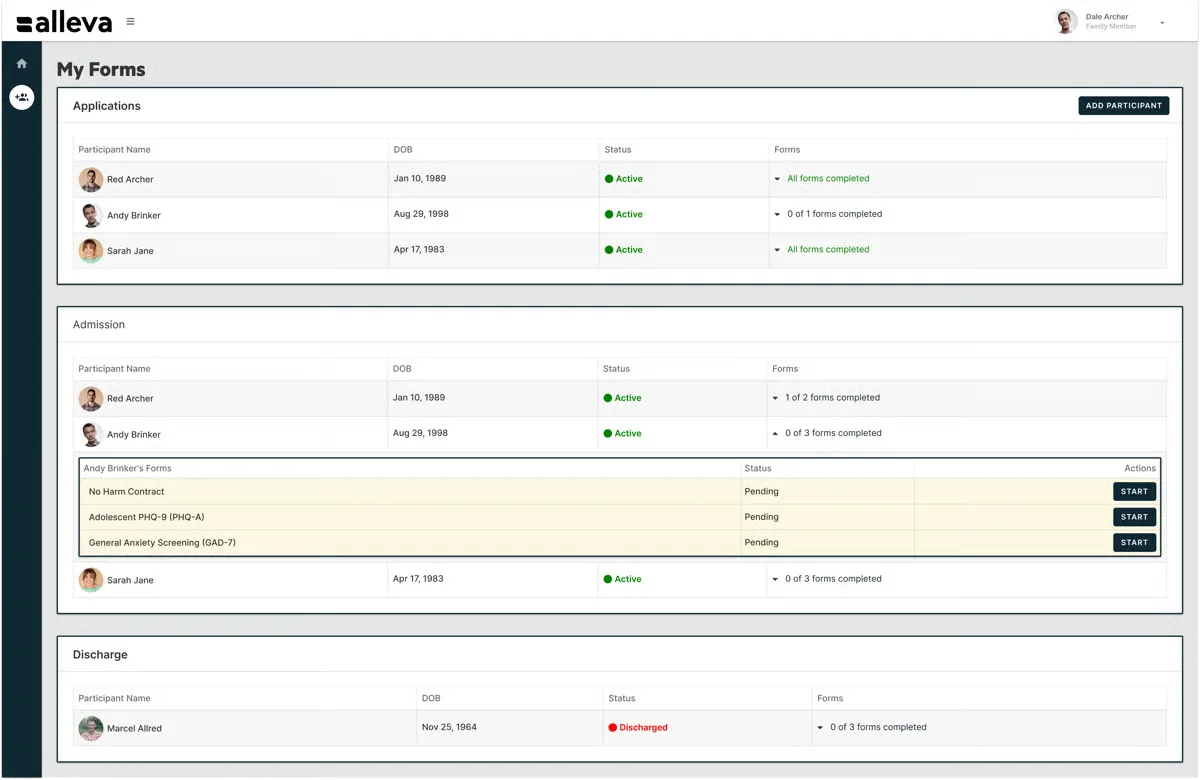
Alleva puts self-service VOB directly inside the behavioral health EHR. Powered by Waystar, its insurance verification works alongside the same platform used for clinical documentation, billing, and patient management.
It is especially relevant for treatment centers that already want their EHR to serve as the center of their clinical and revenue cycle workflow rather than adopting a separate VOB platform.
Key Features
- Built-in VOB: Run self-service insurance verification through Waystar directly within Alleva.
- Integrated billing: Connect verification with charge capture, claims, patient responsibility, and automated ERA posting.
- Behavioral health EHR: Manage admissions, treatment planning, documentation, e-prescribing, outcomes, and billing across the same system.
Pros
- Serves behavioral health treatment programs across IOP, PHP, residential, and detox settings
- Keeps VOB connected with clinical and billing workflows
- Users frequently praise its ease of use, flexibility, reporting, and customer support
Cons
- Some users report system crashes or reliability issues
- Some users report difficulty merging duplicate patient accounts when record details do not match
- One reviewer noted that hard-coded elements can limit how much certain processes can be customized
Simplify VOB for Your Treatment Center
A VOB should give your team enough information to decide whether a patient can move forward with treatment, not just confirm that their insurance is active.
VerifyTreatment helps behavioral health and substance use treatment centers see the benefit details that matter before admission, including the details to calculate patient responsibility, payer requirements, and coverage information tied to the treatment being considered.
Book a demo to see how VerifyTreatment can make VOB faster and more useful for your admissions team.

Luis Perdomo, Head of Growth, leads go-to-market strategy, demand generation, and growth initiatives at VerifyTreatment. With a background spanning digital marketing, revenue growth, and business strategy, he focuses on connecting the platform’s capabilities to the real operational challenges facing behavioral health providers, helping teams improve admissions, strengthen revenue performance, and make faster, more informed decisions.
Meet the TeamRelated post:
 Admissions
AccuReg Alternative for Behavioral Health
AccuReg, now part of Optum, may appeal to teams that want a broad patient access platform. But that broader focus...
Read the full article → Uncategorized
Best Office Ally Alternative for Eligibility Verification
Looking for an Office Ally alternative? See how VerifyTreatment simplifies eligibility verification, reduces payer porta...
Read the full article → Admissions
10 Best Insurance Verification Software for 2026
Compare the top insurance verification software of 2026. See which tools deliver real-time eligibility, deep benefit det...
Read the full article →