
Admissions
VOB in Medical Billing: Process, Best Practices & Challenges
Before you bill for a patient’s care, you must know what their insurance will actually cover. That means checking their ...
Read the full article →


Choosing the right health insurance verification platform can mean the difference between smooth admissions and costly denials. In this guide, we break down the 14 best health insurance verification platforms based on accuracy, workflow fit, automation, and real user feedback. We look beyond basic eligibility checks to show which tools surface critical coverage details early, reduce rework, and protect revenue, so you can choose the platform that actually fits your practice.
| Platform | Why It Stands Out | Best For |
| VerifyTreatment | Prevention-first verification with deep benefit and authorization visibility | Behavioral health & specialty care |
| Availity | Broad payer connectivity and familiar eligibility workflows | General eligibility & claims access |
| maxRTE | Strong insurance discovery to uncover hidden coverage | Self-pay recovery & revenue teams |
Automate health insurance verification with VerifyTreatment
Run real-time VOBs, catch coverage changes before billing does, and give your admissions team back hours every week.
Book Your DemoChances are your current process is already costing you time or revenue. EHR eligibility checks return incomplete data, payer portals are inconsistent, and tools like Availity work until they don’t. What should be a quick verification often turns into portal-hopping, phone calls, and second-guessing the results.
The real issue is that “active coverage” rarely tells you what you actually need to know. Deductibles, copays, coinsurance, and specialty benefits are often missing or inaccurate, and those gaps lead directly to denials and patient frustration.
That’s why we created this list. Below are the 14 best health insurance verification platforms, selected based on real-world accuracy, reliability, and their ability to reduce rework and prevent costly eligibility mistakes.
We’re a team of healthcare operators, revenue leaders, and admissions professionals who built VerifyTreatment after seeing firsthand how often insurance verification breaks down in real workflows.
Customers who use VerifyTreatment consistently report faster admissions decisions, fewer coverage surprises, and meaningful reductions in preventable revenue loss. Here’s a testimonial from one of our customers;

Excellent product and staff, from the CEO down to the account executives and business development reps. The product is lightning fast, and so easy to use. In terms of instant verification, there is nothing faster or more comprehensive in my experience. Highly recommend for billing/admissions departments, and billing companies.
Choosing the wrong health insurance verification platform doesn’t just slow your team down. It creates false confidence that shows up later as denials, write-offs, and patient frustration. Here are the most common mistakes practices make when evaluating their options.
An eligibility check that only confirms a plan is active is not doing the real work. If the platform can’t reliably surface deductibles, copays, coinsurance, benefit limits, and authorization requirements, it’s leaving you exposed at time of service.
Automation can save time, but wrong data is worse than slow data. Platforms that prioritize speed without cross-checking or payer-specific nuance can return confident but incorrect results, leading to denials you don’t see coming.
Many EHRs offer basic eligibility checks, but those checks often stop at confirming whether coverage is active. They don’t reliably surface authorization requirements, benefit limits, carve-outs, or payer-specific rules. When an EHR returns “active coverage” or “limited information,” teams assume verification is complete, even though the most important details are missing.
Many practices stick with tools simply because they’re common or free. Familiarity does not equal reliability. The right platform is the one that fits your workflow, patient volume, and risk tolerance, not the one everyone happens to use.
Behavioral health and specialty benefits behave differently than standard medical plans. Tools that work well for primary care often struggle here. If your platform isn’t built to handle carve-outs, plan nuances, and payer quirks, you’ll be forced back to manual work.
With those pitfalls in mind, here are the 14 health insurance verification platforms that stand out for accuracy, reliability, and real-world workflow fit.
| Platform | Primary Strength | Verification Depth | Best For | Notable Limitation |
| VerifyTreatment | Prevention-first verification | Very High | Behavioral health & specialty care | More robust than basic eligibility tools |
| Availity | Broad payer connectivity | Low–Moderate | General eligibility & claims access | Inconsistent detail for specialty benefits |
| maxRTE | Insurance discovery | Moderate | Recovering self-pay & missed coverage | Limited specialty benefit insight |
| Experian Passport OneSource | Enterprise-scale accuracy | High | Large hospitals & health systems | High cost, long implementations |
| Waystar | RCM & clearinghouse workflows | Moderate | Billing-centric revenue teams | Shallow benefit detail for admissions |
| pVerify | Automation & integrations | Moderate | Embedded eligibility workflows | Benefit accuracy varies by payer |
| Azalea Health | EHR-embedded verification | Low–Moderate | Small practices on Azalea EHR | Locked into Azalea ecosystem |
| Runtalos (Talos) | Eligibility automation | Moderate | Hands-off eligibility verification | No PA or admissions workflows |
| Myndshft | Prior authorization automation | Low (verification) | High PA & utilization volume | Not built for deep verification |
| Stedi | API-first clearinghouse infrastructure | Moderate–High | Health tech & custom workflows | Requires more technical resources |
| Claim.MD | Eligibility + claims clearinghouse | Moderate | Billing teams & smaller practices | Less focused on deep benefit verification |
| Sohar Health | Automated patient intake verification | High | High-volume patient intake | API-driven implementation |
| Infinx | AI-powered patient access & RCM | High | Hospitals & larger organizations | Higher cost and broader implementation |
| Office Ally | Affordable all-payer workflows | Low–Moderate | Small & mid-sized practices | Less specialty-specific benefit depth |
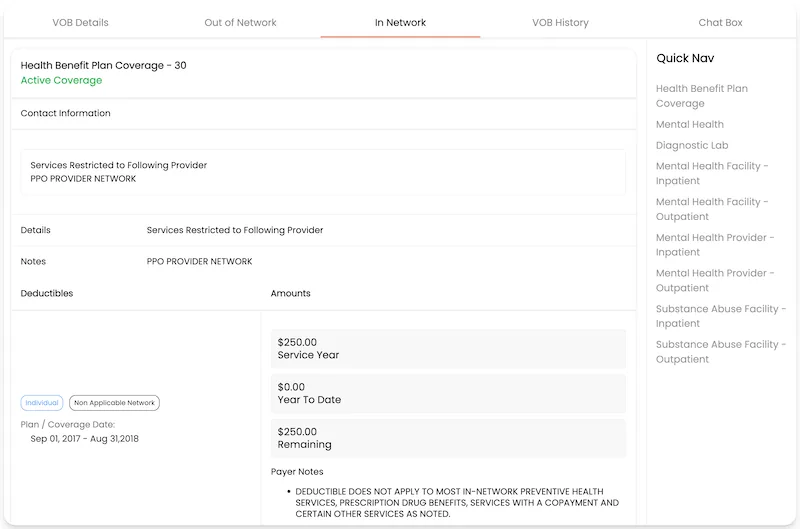
VerifyTreatment tackles one of the most expensive failures in insurance verification: coverage issues that aren’t identified until after a patient has already been admitted. With its real-time eligibility checks, authorization visibility, and proactive monitoring, teams can surface benefit limits earlier, flag high-risk plans, and prevent revenue issues before care begins.
This level of visibility turns verification into a measurable advantage. For example, Foundation Recovery Network was able to prevent the loss of roughly one in ten patients and avoid more than $10,000 per month in preventable revenue loss after implementing VerifyTreatment.
Behavioral health and specialty practices where eligibility accuracy directly impacts admissions and revenue, and where authorization or benefit issues frequently cause denials.

Great Product, Ease of Use, Added Efficiency for Our Team. Automating and bringing in health insurance verifications to our instance was a game changer. We have instant verifications for all of our prospects, as well as automated verifications for our clients on a weekly basis.

Many practices often default to Availity because of its broad payer connectivity and familiarity across billing and admissions teams. The platform provides centralized eligibility and coverage checks for major payers and is frequently praised for being accessible, widely accepted, and free or low-cost for basic verification needs.
But just because Availity is widely used doesn’t mean it’s always sufficient on its own. Its eligibility responses can be inconsistent, limited in detail, or unreliable for specialty and behavioral health benefits. As one user put it plainly: “Availity is my second choice but honestly it’s a little limited sometimes and doesn’t always want to work.”
Practices that need broad payer connectivity and a centralized portal for eligibility and claims, especially for common commercial plans.
Related: check our blog on the best Availity alternatives.

maxRTE addresses one of the most overlooked problems in insurance verification and revenue cycle management. It uncovers coverage that would otherwise be missed and written off as self-pay. This focus on insurance discovery is one of the reasons it’s often used by hospitals and health systems looking to recover uncompensated care and improve cash flow earlier in the intake process.
Even though maxRTE doesn’t have the same volume of public reviews as larger platforms, the feedback that does exist is consistently positive. Users highlight ease of use, smooth integrations, and efficiency gains, reinforcing maxRTE’s position as a reliable solution for insurance discovery and eligibility workflows.
Hospitals, health systems, and revenue teams focused on uncovering hidden coverage and reducing uncompensated care, especially among self-pay or underinsured patients.
Related: check our blog on the best MaxRTE alternatives.

Experian Passport OneSource is positioned as an enterprise-grade eligibility and insurance verification platform, built to deliver real-time coverage data at scale. With access to 900+ payer connections, eligibility normalization, and Medicare-specific tools like automated MBI lookup, the platform is designed to reduce denials caused by incorrect plan codes, missing identifiers, and inconsistent payer responses.
Reddit discussions around Passport OneSource often mention strong coverage and reliability, followed immediately by pricing concerns. As one user put it bluntly, “Used to love Passport OneSource until they hiked the price like crazy.” For many teams, cost becomes the deciding factor rather than capability.
Large health systems, hospitals, and enterprise provider organizations that need highly reliable, normalized eligibility data and can justify the cost.

Waystar is best known as a full revenue cycle management and clearinghouse platform, with insurance verification positioned as part of a broader financial clearance workflow. With Waystar, organizations can verify active coverage, manage claims submission, review ERAs, and handle multiple front-end revenue tasks within a single system.
That consolidation is one of the reasons Waystar is often rated highly. As one G2 reviewer noted, “Waystar is easy to use for verifications and reports… when using it to check for active insurance coverage, the results are almost instantaneous.”
However, while Waystar performs well for confirming coverage status and supporting billing workflows, user feedback consistently shows it is less reliable when deeper payer-specific benefit detail or responsive support is needed.
Organizations looking for a consolidated RCM and clearinghouse platform where eligibility verification supports billing and collections, rather than serving as a prevention-first admissions tool.

pVerify centers on making eligibility checks faster and easier to integrate into existing systems. In practice, it’s used to standardize verification workflows, reduce manual data entry, and help teams handle higher verification volume without jumping between multiple payer portals.
That narrower focus shows up in how teams use the platform. Many users point to smoother daily workflows and better visibility into patient responsibility as clear improvements after adopting pVerify. As one reviewer noted, the platform “provides concise, detailed information within a few keystrokes,” making it easier for staff to keep up with verification volume.
Like most eligibility tools, pVerify also has its limits. Several users caution that benefit details aren’t always fully accurate across all payers, which means complex or high-risk cases still require secondary confirmation through payer portals.
Practices and revenue teams that prioritize automated eligibility workflows and deep system integrations, and are comfortable validating complex benefits through additional checks when needed.
Related: check our blog on the pVerfiy reviews and how it stacks up to VerifyTreatment.
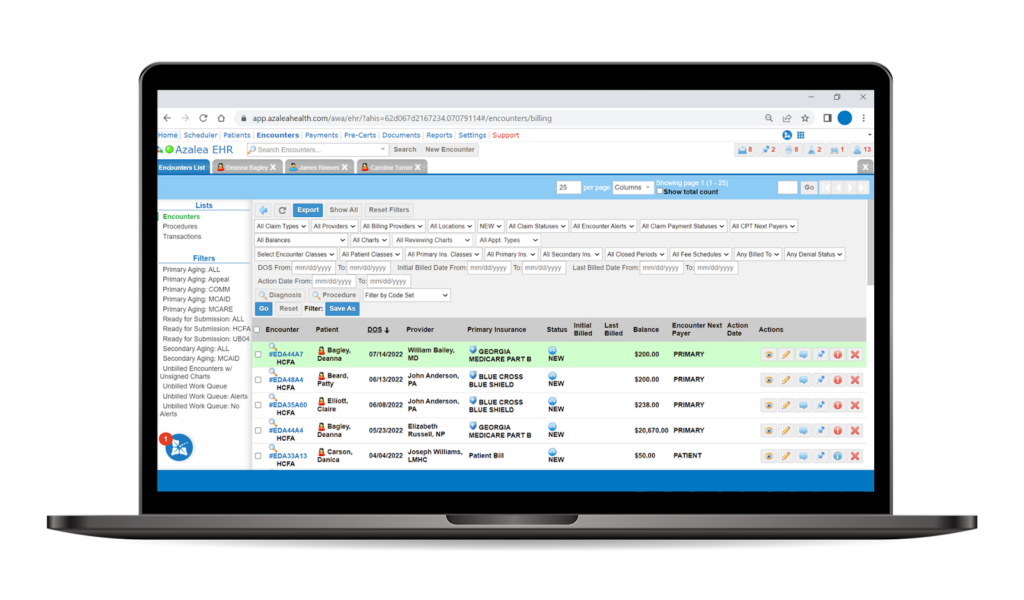
Azalea Health approaches insurance verification as part of a broader EHR and practice management workflow rather than a standalone eligibility solution. For practices already using Azalea’s EHR, eligibility details and prior authorization status live directly inside the patient record, reducing duplicate data entry and keeping staff from jumping between systems.
That tight EHR integration is where Azalea performs best. Users frequently point to ease of use, centralized patient information, and smoother day-to-day workflows once teams are trained. One reviewer summed it up simply: “It is easy to use and keeps all information needed on file for patients.”
For small practices that want verification embedded into their core system, that simplicity can be appealing. However, feedback also highlights clear limitations like performance issues, slow updates, rigid contracts, and uneven customer support.
Small to mid-sized practices already committed to Azalea’s EHR that want basic eligibility and authorization tracking inside a single system.

Runtalos positions insurance verification as an automation problem rather than a staffing one. Instead of relying on portal hopping or manual phone calls, the platform runs eligibility checks through a multi-layered verification pipeline designed to return accurate results even when payer portals fail.
That approach makes Runtalos appealing to teams that want verification to run quietly in the background. However, Runtalos remains narrowly focused on eligibility verification. It doesn’t attempt to handle prior authorizations, admissions workflows, or downstream revenue coordination.
Teams that want insurance verification to run on autopilot and need a reliable eligibility engine without the overhead of a full revenue cycle platform.

Myndshft automates prior authorizations by pulling eligibility verification directly into the point-of-care workflow. Instead of treating verification as a separate step, the platform executes benefit checks, calculates patient responsibility, and submits authorizations automatically while clinicians and staff continue working in their existing systems.
This approach resonates most with organizations facing heavy authorization volume and utilization management friction. But it also defines Myndshft’s limits, since the platform prioritizes authorization outcomes over deep benefit verification.
Organizations with high prior authorization volume that want to automate eligibility and PA decisions directly at the point of care, especially across medical and pharmacy workflows.

Stedi takes an API-first approach to insurance verification, giving healthcare organizations and health tech companies the infrastructure to build eligibility and other clearinghouse workflows directly into their existing systems. Its clearinghouse connects with more than 3,500 U.S. payers and supports real-time and batch eligibility checks, insurance discovery, MBI lookup, and coordination of benefits.
Health tech companies, RCM platforms, and provider organizations with technical teams that want to embed insurance eligibility and broader clearinghouse functionality directly into their existing software or build custom revenue cycle workflows.
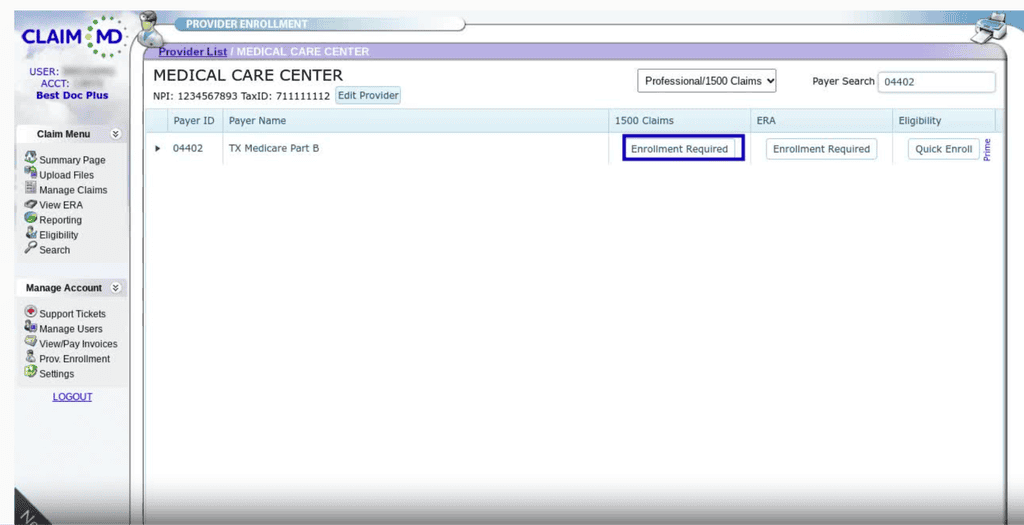
Claim.MD combines insurance eligibility with broader clearinghouse workflows, making it a practical option for providers and billing teams that want to manage claims, remittance, and coverage checks in one place. Its standout feature is the ability to return rejected claims for correction before they are resubmitted, helping reduce delays and unnecessary rebilling.
Healthcare providers, billing companies, and small to mid-sized practices that want eligibility verification alongside claims submission, ERA management, and other clearinghouse workflows.
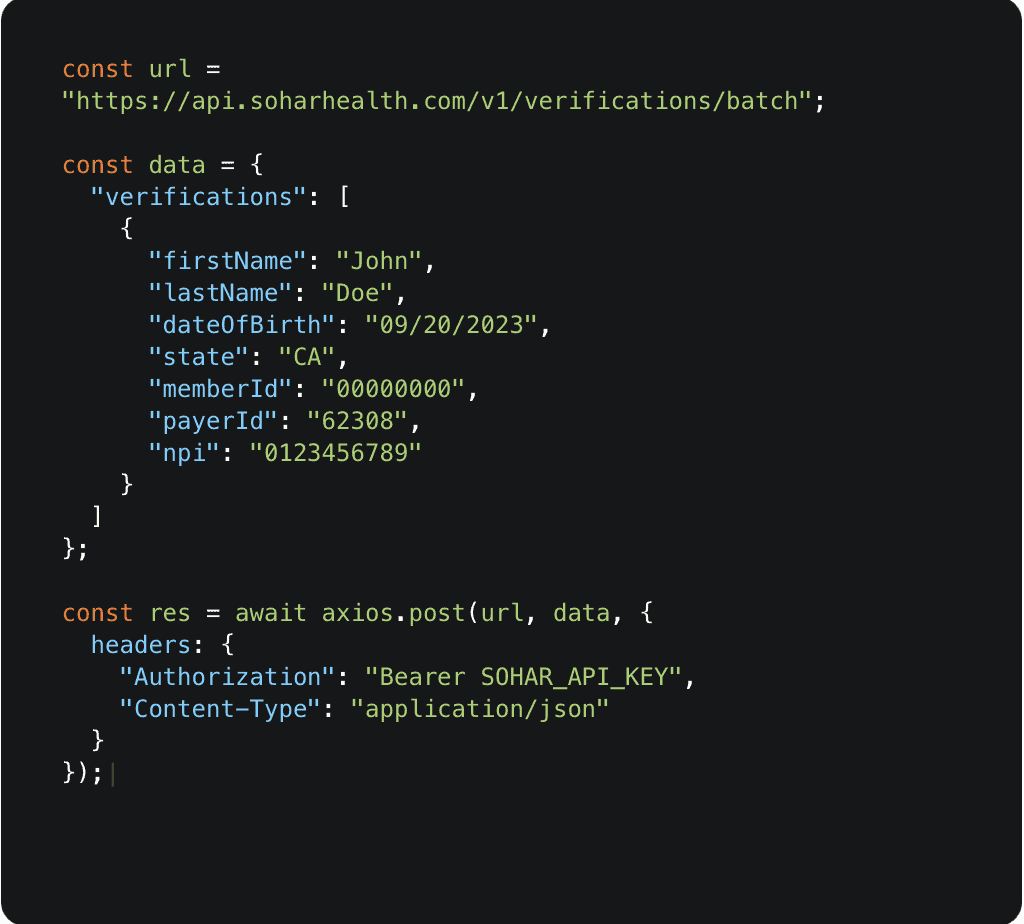
Sohar Health focuses on automating insurance verification early in the patient intake process, helping providers confirm coverage, network status, and benefit details before patients move further into care. The platform combines insurance discovery, real-time eligibility, and network status checks through an API-driven workflow.
Healthcare organizations with high patient intake volumes that want to automate insurance discovery, eligibility, and network status checks while reducing manual verification work and preventable claim denials.
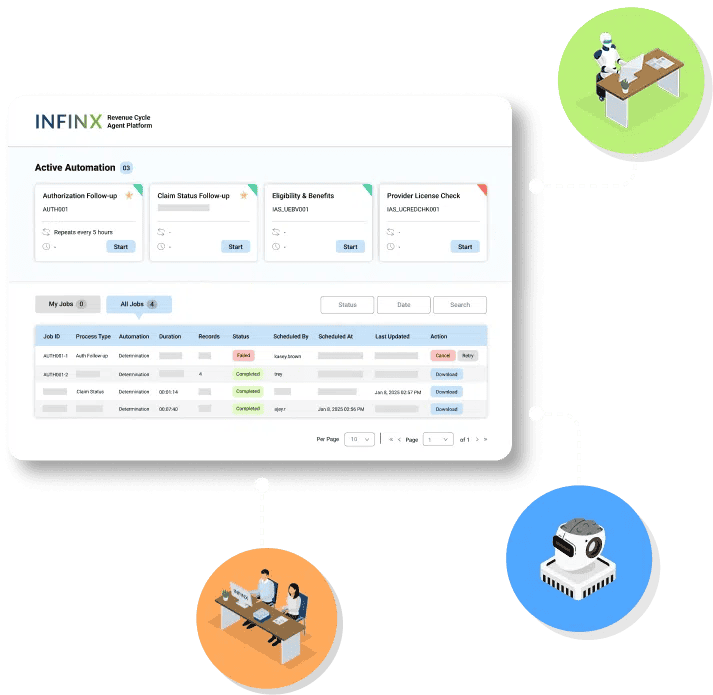
Infinx is much bigger than a standalone insurance verification tool. Its Healthcare Revenue OS is designed to keep work moving across the revenue cycle, with AI agents handling routine tasks and RCM specialists stepping in when a case needs human judgment. For insurance verification specifically, its Patient Access Plus suite covers eligibility checks, benefit verification, patient estimates, and prior authorizations before care.
Larger healthcare organizations that want to improve patient access and revenue cycle operations as a whole, rather than purchase another standalone eligibility checker.
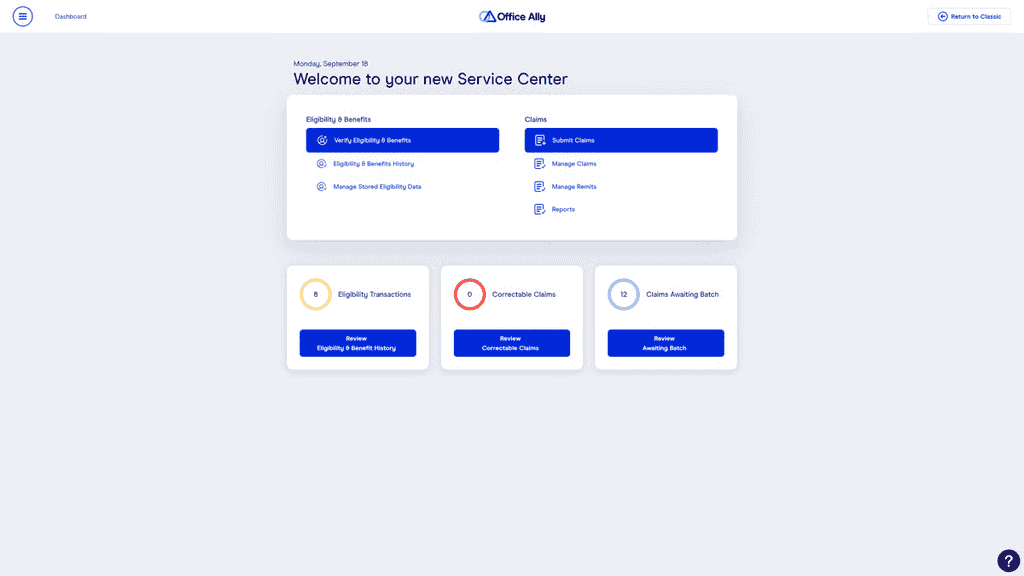
Office Ally is a more practical option for small and mid-sized practices that want insurance verification without buying a specialized standalone platform. Its Service Center brings eligibility checks, claims submission, claim status, and remittance into the same all-payer portal.
Small and mid-sized practices that want an affordable way to handle eligibility, claims, and other routine insurance transactions without investing in a more specialized verification platform.
The right platform should fit the way your team works and solve the specific problems you are trying to fix. Before choosing one, compare how each option performs in the areas that matter most to your workflow.
Not every platform returns the same level of insurance information. Some focus mainly on confirming eligibility, while others also surface benefit details, network status, coverage limits, and authorization requirements.
Compare the actual information each platform provides and how often your staff will still need to use payer portals or make follow-up calls.
A platform can have strong features and still be a poor fit for your team. Some tools are designed for admissions and front-desk staff, while others are built around billing, claims, prior authorization, or API-driven workflows. Look at who will use the platform, where verification happens in your process, and whether the tool supports that workflow without adding unnecessary steps.
Your verification needs may change as patient volume grows, so consider whether the platform can handle larger workloads without adding more manual work. Features such as batch verification, user permissions, reporting, and reliable customer support become more important as more people and locations use the system.
Also look at what happens when something goes wrong. Responsive support can matter just as much as automation when your team is dealing with an unclear eligibility response or a time-sensitive admission.
Consider how easily the platform fits with your EHR, practice management system, billing software, or other tools your team already uses. For some practices, a simple web portal may be enough. Larger organizations or health tech companies may need APIs and deeper integrations that allow verification data to move between systems automatically.
At the end of the day, the right insurance verification platform depends on what you can’t afford to get wrong.
If your practice only needs to confirm active coverage at scale, lighter tools may be enough. If your workflows revolve around prior authorizations, automation-first platforms can remove friction. But if your revenue is most at risk before care even begins, when benefit limits, carve-outs, or authorization rules are missed, then surface-level eligibility checks won’t protect you.
That’s where VerifyTreatment stands apart. It’s built for teams that need clarity early, alignment across admissions and billing, and confidence that coverage details won’t unravel after a patient is admitted.
Get started with VerifyTreatment Here
Because “verified” does not always mean accurate or complete. Eligibility checks can lag behind payer updates, omit benefit limitations, or misreport authorization requirements. In some cases, teams only verify once at intake and never re-check coverage. Platforms designed to flag coverage risk and re-verify when policies change help reduce these downstream surprises.
Some do, many don’t. Behavioral health benefits often involve carve-outs, separate administrators, and plan-specific authorization rules that generic tools struggle to interpret. Platforms like VerifyTreatment built specifically for behavioral health workflows tend to perform better because they account for those nuances instead of treating coverage as a simple yes-or-no check.
Look for platforms that provide detailed benefit information, flag coverage risks before care is delivered, offer audit-ready documentation, and support ongoing verification as coverage changes. Tools that prioritize prevention over speed alone tend to reduce denials and rework more consistently.
Not entirely. Automation works well for batch checks, reporting, and surfacing common issues, but there are still cases that require manual review or payer calls. The goal isn’t full automation, it’s reducing avoidable work while catching high-risk issues early before a patient is admitted or care begins.
Pricing varies widely depending on features, volume, and payer coverage. Some platforms are free but limited, while others charge monthly or per-verification fees. Cost should always be weighed against the revenue lost to denials, rework, delayed admissions, and staff time spent chasing missing information.
Disclaimer: All trademarks, logos, and brand names are the property of their respective owners. The use of any third-party trademarks, logos, or brand names in this article is for informational and comparative purposes only, and constitutes nominative fair use. This article was published by VerifyTreatment, and while we strive for objective comparisons, VerifyTreatment is included as an option within this list.


Luis Perdomo, Head of Growth, leads go-to-market strategy, demand generation, and growth initiatives at VerifyTreatment. With a background spanning digital marketing, revenue growth, and business strategy, he focuses on connecting the platform’s capabilities to the real operational challenges facing behavioral health providers, helping teams improve admissions, strengthen revenue performance, and make faster, more informed decisions.

Lindsay Morresi, Account Executive, helps healthcare organizations evaluate how VerifyTreatment can improve insurance verification, admissions, and revenue cycle workflows. Bringing a customer-focused approach to the sales process, she works with teams to understand their operational needs, identify opportunities for greater efficiency, and ensure they have the right solutions to make faster, more informed decisions.

Amira Nicol, Account Executive, brings relationship-building, industry knowledge, and a strong connection to the behavioral health community to VerifyTreatment. She works closely with treatment providers to understand the challenges their teams face around insurance verification and access to care, helping organizations identify solutions that reduce administrative barriers and support better operational and financial outcomes.

Matthew Hall, Senior Account Executive, helps behavioral health organizations identify opportunities to simplify insurance verification and protect revenue throughout the patient journey. With a consultative approach and a strong understanding of admissions, billing, and revenue cycle workflows, he works closely with teams to connect their operational challenges with practical solutions inside VerifyTreatment.

Alexander Jones, Product & Integrations Manager, helps translate customer needs into practical product improvements and scalable integrations at VerifyTreatment. With deep experience across Salesforce, APIs, automation, and business operations, he brings a unique ability to connect client workflows with technical execution, helping ensure the platform is both powerful and practical for the teams using it every day.

Nicole is a versatile healthcare professional with a Bachelor’s degree in Health Administration and a solid background in managing healthcare systems and operations. Her experience spans healthcare management, compliance, and regulations, making her adept at navigating complex healthcare environments. In addition to her administrative expertise, Nicole holds certifications in Functional Nutrition and Personal Training, giving her a well-rounded perspective on health and wellness. She is committed to using her skills to improve healthcare settings and ensure effective, patient-centered care.

Tara is a dedicated leader who leverages her Master's degree in Information Technology (Florida Tech) and deep company knowledge (since 2018) to drive our community awareness. She is the central figure for managing social engagement and ensuring the community is immediately and effectively informed of all new product launches and company updates.

JoAnn has a strong background in the mental health and substance abuse industry, with expertise in billing, coding, facility credentialing, and contracting. She is passionate about team education and public speaking, always striving to make a positive impact. With a solid foundation in accounting, JoAnn also holds an Associate of Arts in Biblical Studies from Liberty University, blending her professional skills with her personal values.

For 11+ years, Melanie has been dedicated to helping clients access quality mental health care, with a special focus on grief, loss, and substance abuse. With expertise in healthcare, community outreach, patient advocacy, and leadership development, Melanie is passionate about making a positive impact in the lives of others.