
Technology & Automation
10 Best Dental Insurance Verification Software in 2026
Quick Summary Verifying coverage and benefits without spending hours on payer calls and portal checks takes the right so...
Read the full article →


The irony of running a small healthcare company is that you can still end up with big revenue cycle problems.
What starts as a manageable process can quickly become harder to control as patient volume grows. More eligibility checks, claims, denials, and payment follow-ups pile up, while the same small team is expected to keep everything moving.
A common mistake is assuming the solution is to hire more billing staff or invest in a complex RCM system. Often, the better approach is to identify where manual work is slowing your team down and use the right software to simplify those parts of the revenue cycle.
If you run a small healthcare company and want to improve RCM without adding unnecessary complexity or headcount, this guide will show you the key challenges to address, how RCM software can help, and what to look for in the right tool.
Small healthcare companies often have fewer people and resources to keep the revenue cycle running, which can make common RCM problems harder to manage.
Here are some of the biggest challenges they face:
Small practices rarely have separate teams for eligibility verification, billing, claims follow-up, denials, and collections. The same few employees may be responsible for several parts of the revenue cycle while also supporting patients and handling other administrative work. As volume increases, that workload can quickly become difficult to manage.
Spreadsheets, payer portals, and manual data entry may work when patient volume is low. The problem starts when your team has to repeat those same steps as patient volume grows. More manual work means more staff time spent moving information between systems, checking statuses, and following up on tasks that could easily be missed.
A missed eligibility check, incorrect patient information, or overlooked authorization requirement can lead to delayed or denied claims. For a large health system, a handful of delayed payments may be easier to absorb. For a smaller company with tighter cash flow, recurring RCM errors can have a much bigger impact on day-to-day operations.
When revenue cycle information lives across spreadsheets, payer portals, clearinghouses, and other systems, it becomes harder to see what has been completed and what still requires action. That lack of visibility can leave claims, verification requests, or payment issues sitting unresolved longer than they should.
RCM software helps small practices reduce repetitive revenue cycle work without outsourcing the entire process. It can automate patient verification or simplify time-consuming tasks, allowing your team to handle more patients without adding staff at the same pace.
Here are some of the ways small practices can use RCM software:
Your team can use RCM software to verify whether a patient’s insurance is active, review benefits, and identify important coverage details before treatment. This reduces the need to manually check payer portals or call insurance companies for every patient.
Many revenue cycle problems begin before a claim is ever submitted. Missing patient information, inactive coverage, or overlooked authorization requirements can all create problems later. RCM software can help your team identify some of these issues earlier, giving you time to correct them before they affect reimbursement.
Small teams often spend too much time copying information between spreadsheets, payer portals, clearinghouses, and other systems. The right software can reduce some of that manual work by keeping information in one workflow or integrating with the tools your practice already uses.
As patient volume grows, it becomes harder to remember which verification, claim, or payment issue needs follow-up. RCM tools can give your team a clearer view of outstanding tasks, statuses, and issues so fewer items get lost in spreadsheets or disconnected systems.
Related: Check out our list of the best health insurance verification platforms.
Checking different payer portals just to see what happened to a claim can take up more time than it should. RCM software can make claim status easier to track, so your team can quickly see which claims have been paid, denied, or still need follow-up.
Small practices usually do not need the most feature-heavy RCM platform available. They need a tool that reduces administrative work, fits into the systems they already use, and can keep up as patient volume grows.
Here are some of the most important things to look for:
A small team may not have dedicated IT staff or weeks to spend learning a new platform. The software should be easy to implement, simple for staff to use, and require as little manual work as possible.
Look for software that can automate the processes taking up the most staff time, such as eligibility checks, benefits verification, claim-related workflows, or follow-ups. The goal is not just to digitize the same manual process, but to reduce how much work your team has to do in the first place.
A new RCM tool should not force you to replace software that already works for your practice. Ideally, it should fit into your existing workflow and make it easier to move or access information across the systems your team already relies on.
Your team should be able to quickly see what has been completed, what is still pending, and where a problem needs attention. That visibility becomes more important as the number of patients and RCM tasks increases.
The right tool should still work when your practice has twice as many patients as it does today. That means being able to handle increasing volume without requiring the same increase in manual work or administrative headcount.
Small teams may not have an internal IT or billing systems expert to troubleshoot problems. That makes vendor support especially important. Look for an RCM provider that can help your team resolve technical issues, understand payer responses, and get workflows back on track quickly.
Finally, the cost has to match the value the software provides. Small practices should look beyond the monthly price and consider how much staff time the tool saves, which manual processes it replaces, and whether it can help prevent revenue from being lost to avoidable RCM problems.
For a small healthcare company, the goal is not to build an enterprise-sized RCM department. It is to make the team you already have capable of handling more.
That is where VerifyTX can make a difference.
VerifyTX lets your team run eligibility and benefits checks from one workflow and pull the coverage information needed to move a patient forward. Instead of repeating the same verification process across payer portals and phone calls, staff can spend more time reviewing exceptions and handling cases that actually need their attention.
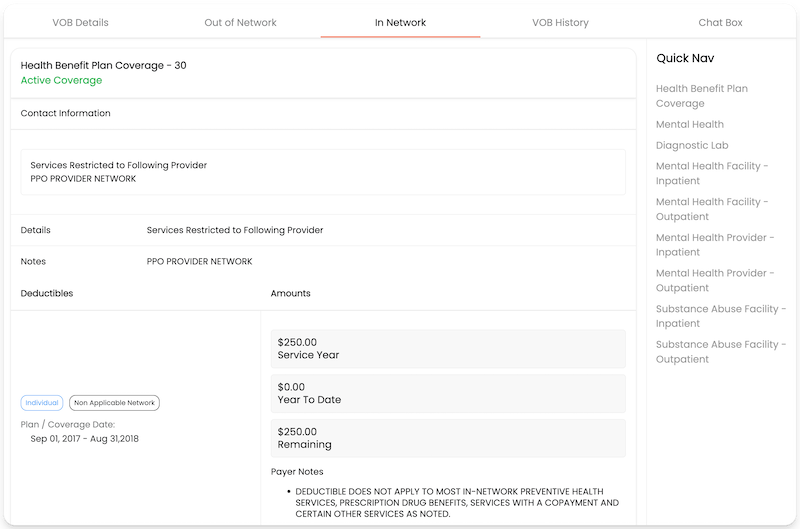
The VerifyTX dashboard gives your team one place to review patient verifications, check their status, and quickly identify records that still need attention.
You can also filter verification records by details such as payer, facility, and coverage status, making it easier to find the information you need without maintaining a separate tracking system.
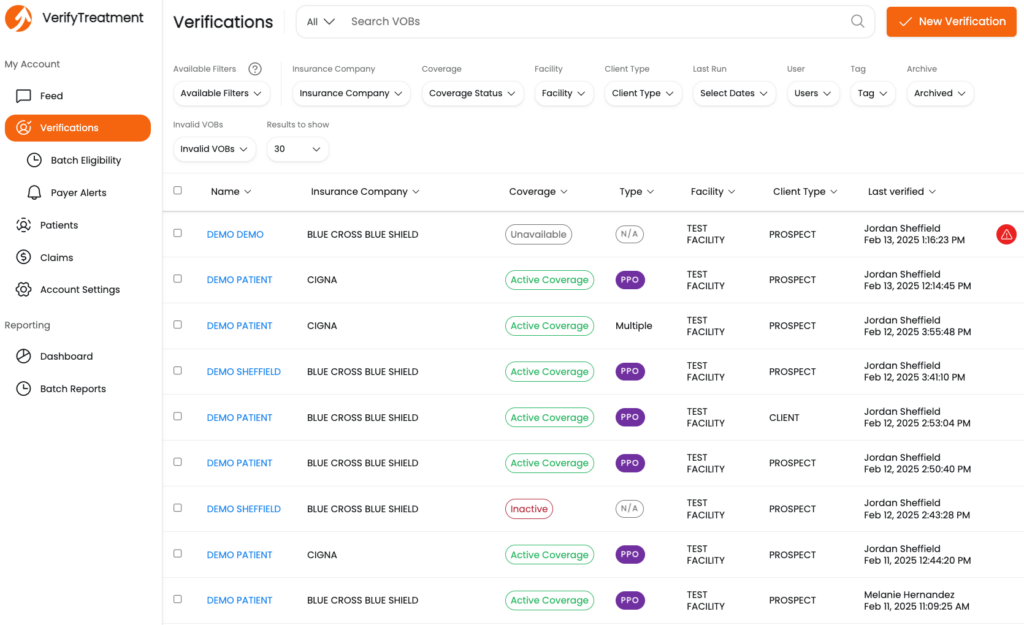
VerifyTX surfaces eligibility, benefits, and payer information while there is still time to act on it. Your team can review coverage details, accumulators, network information, and authorization requirements before those issues move further down the revenue cycle.
Payer alerts can also help flag changes or issues that may need another look.

VerifyTX also lets your team check where a claim stands without repeatedly going back to individual payer portals. Billing staff can quickly see which claims are still processing, paid, denied, or need another look.
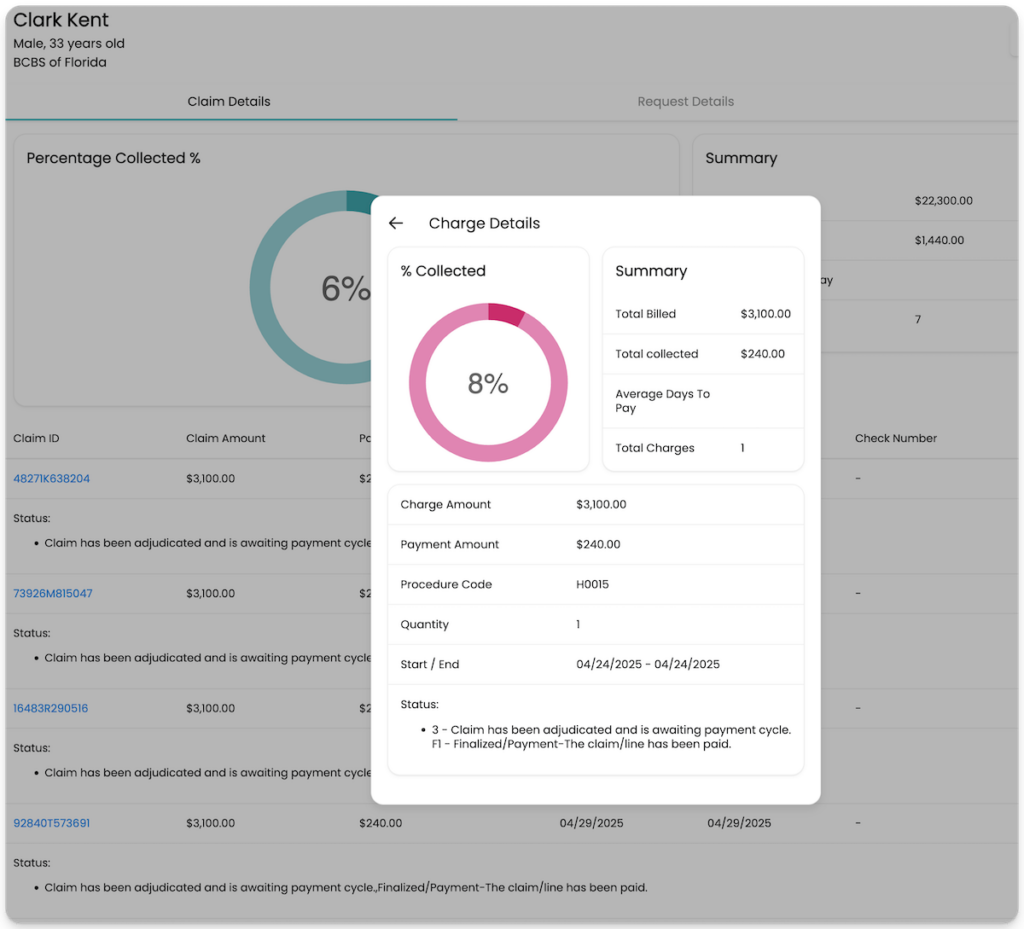
You do not need to rebuild your entire revenue cycle to make it easier for a small team to manage.
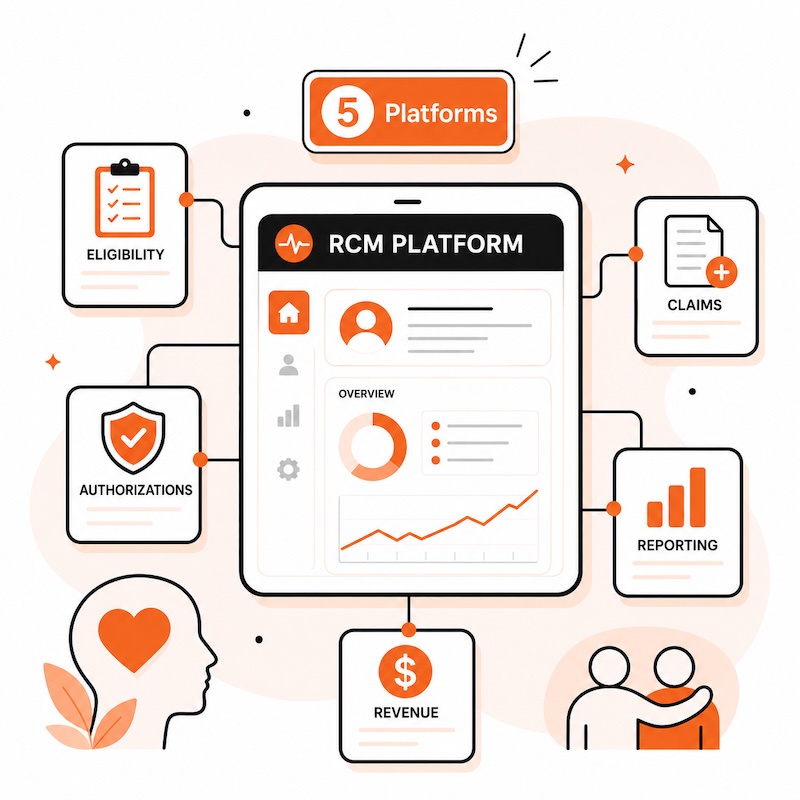
VerifyTX gives you one place to automate key RCM tasks, keep an eye on coverage and payer issues, track claim status, and give admissions and billing teams better visibility into what needs attention.
The result is a leaner RCM workflow that can handle more volume without relying on more manual work at every stage.
Book a VerifyTX demo to see how it can help your team simplify RCM and protect more of the revenue you already earn.
Disclaimer: All trademarks, logos, and brand names are the property of their respective owners. The use of any third-party trademarks, logos, or brand names in this article is for informational and comparative purposes only, and constitutes nominative fair use. This article was published by VerifyTreatment, and while we strive for objective comparisons, VerifyTreatment is included as an option within this list.



Luis Perdomo, Head of Growth, leads go-to-market strategy, demand generation, and growth initiatives at VerifyTreatment. With a background spanning digital marketing, revenue growth, and business strategy, he focuses on connecting the platform’s capabilities to the real operational challenges facing behavioral health providers, helping teams improve admissions, strengthen revenue performance, and make faster, more informed decisions.

Lindsay Morresi, Account Executive, helps healthcare organizations evaluate how VerifyTreatment can improve insurance verification, admissions, and revenue cycle workflows. Bringing a customer-focused approach to the sales process, she works with teams to understand their operational needs, identify opportunities for greater efficiency, and ensure they have the right solutions to make faster, more informed decisions.

Amira Nicol, Account Executive, brings relationship-building, industry knowledge, and a strong connection to the behavioral health community to VerifyTreatment. She works closely with treatment providers to understand the challenges their teams face around insurance verification and access to care, helping organizations identify solutions that reduce administrative barriers and support better operational and financial outcomes.

Matthew Hall, Senior Account Executive, helps behavioral health organizations identify opportunities to simplify insurance verification and protect revenue throughout the patient journey. With a consultative approach and a strong understanding of admissions, billing, and revenue cycle workflows, he works closely with teams to connect their operational challenges with practical solutions inside VerifyTreatment.

Alexander Jones, Product & Integrations Manager, helps translate customer needs into practical product improvements and scalable integrations at VerifyTreatment. With deep experience across Salesforce, APIs, automation, and business operations, he brings a unique ability to connect client workflows with technical execution, helping ensure the platform is both powerful and practical for the teams using it every day.

Nicole is a versatile healthcare professional with a Bachelor’s degree in Health Administration and a solid background in managing healthcare systems and operations. Her experience spans healthcare management, compliance, and regulations, making her adept at navigating complex healthcare environments. In addition to her administrative expertise, Nicole holds certifications in Functional Nutrition and Personal Training, giving her a well-rounded perspective on health and wellness. She is committed to using her skills to improve healthcare settings and ensure effective, patient-centered care.

Tara is a dedicated leader who leverages her Master's degree in Information Technology (Florida Tech) and deep company knowledge (since 2018) to drive our community awareness. She is the central figure for managing social engagement and ensuring the community is immediately and effectively informed of all new product launches and company updates.

JoAnn has a strong background in the mental health and substance abuse industry, with expertise in billing, coding, facility credentialing, and contracting. She is passionate about team education and public speaking, always striving to make a positive impact. With a solid foundation in accounting, JoAnn also holds an Associate of Arts in Biblical Studies from Liberty University, blending her professional skills with her personal values.

For 11+ years, Melanie has been dedicated to helping clients access quality mental health care, with a special focus on grief, loss, and substance abuse. With expertise in healthcare, community outreach, patient advocacy, and leadership development, Melanie is passionate about making a positive impact in the lives of others.