

Waystar Reviews: Features, Pricing, Pros, Cons & Best Alternative
Published Updated
Table Of Contents
Quick Summary
Waystar is a healthcare revenue cycle management platform designed to help organizations manage billing, claims, and payment workflows across high transaction volumes. It primarily serves mid-sized to large provider organizations that need standardized claims processing, denial management, and financial reporting.
This review examines how Waystar performs in real-world settings, particularly for teams evaluating usability, pricing transparency, and workflow fit. It explores where the platform may fall short for intake-focused or behavioral health organizations that depend on real-time eligibility decisions during admissions—and explains why VerifyTreatment may be a stronger choice for teams needing immediate eligibility clarity at first contact.
Why Listen to Us?
VerifyTreatment works directly with behavioral health treatment providers to solve eligibility, coverage, and financial clearance challenges that directly impact admissions and revenue. Our platform supports real-time eligibility checks across payers, payer risk alerts, batch verification, insurance discovery, and admissions-ready exports. With hands-on experience supporting inpatient psychiatric and residential treatment workflows, we understand where general medical RCM platforms often miss the mark for behavioral health teams.
What Is Waystar?
Waystar is a cloud-based revenue cycle management platform that helps healthcare providers manage administrative and payment workflows through claim reimbursement. Formed in 2017 through the merger of Navicure and ZirMed—two established healthcare payment companies founded in the late 1990s—Waystar positions itself as an end-to-end solution covering financial clearance, charge capture, claim submission, payer payments, denial management, and analytics.
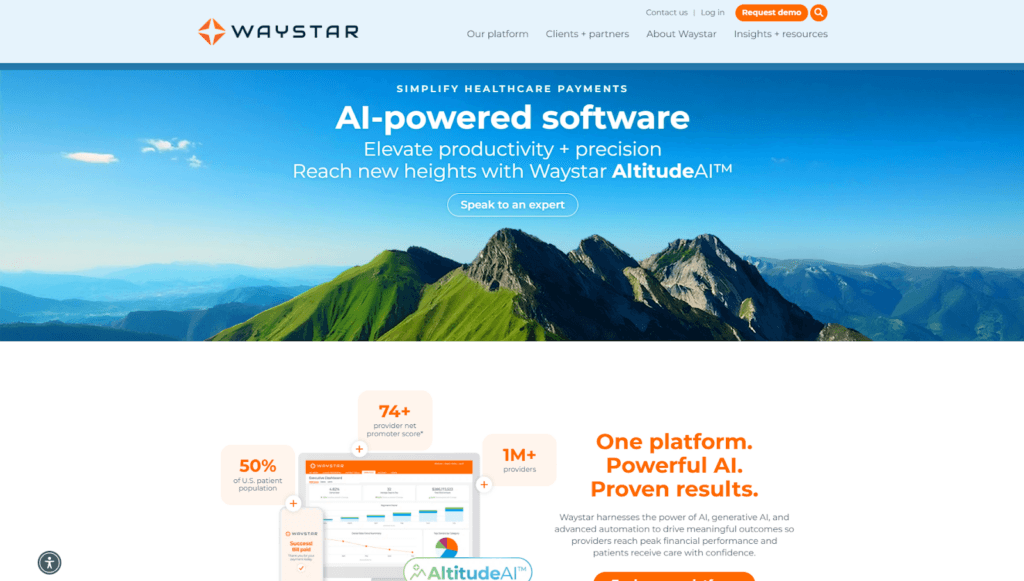
The company serves thousands of clients representing over 1 million distinct providers and processes over 6 billion healthcare payment transactions annually. Waystar’s value proposition centers on reducing administrative burden and improving financial performance through a centralized platform powered by AI and automation, rather than disconnected point solutions.
Who Waystar is Best (and Worst) For
Waystar works well for healthcare organizations processing moderate to high claim volumes that need a centralized platform for billing, payments, and revenue cycle reporting. It’s commonly used by ambulatory surgery centers, clinical laboratories, federally qualified health centers (FQHCs), and home health or hospice providers. Mid-sized to large organizations with dedicated billing teams typically benefit most from its breadth and consolidation capabilities.
Waystar may be less suitable for smaller practices or organizations with specialized, admissions-driven workflows. User feedback indicates that implementation, integration, and optimization can require considerable time and internal resources. Practices relying heavily on real-time eligibility verification during intake or needing fast deployment with minimal configuration may find the platform more complex than necessary.
WayStar Key Features
- Financial clearance tools: Support eligibility checks and upfront patient financial workflows to help determine coverage status and expected responsibility before services are rendered.
- Revenue capture capabilities: Assist with coding and charge capture processes to ensure services provided are accurately reflected and prepared for billing.
- Claim submission and payer payment management: Enable electronic claim submission, track claim status, and manage payments and remittances from payers within a centralized system.
- Denial prevention and recovery workflows: Identify common denial risks, correct claim issues, and manage resubmissions to recover missed revenue.
- Analytics and reporting: Offer dashboards that help teams monitor revenue cycle performance, claim outcomes, and operational trends.
- Centralized RCM dashboards: Consolidate financial clearance, claims, payments, and denial activity into a single view for revenue cycle oversight.
- EHR and billing system integrations: Connect with electronic health records and billing platforms to exchange data and support end-to-end revenue cycle workflows.
WayStar Pricing
Waystar does not publicly disclose pricing on its website, requiring organizations to contact sales for a demo and custom quote.
- Pricing is typically structured around organization size, claim volume, and selected modules, which can introduce complexity and reduce cost predictability.
- For smaller or growing practices, this lack of upfront pricing makes early comparison, budgeting, and ROI evaluation more difficult.
WayStar Limitations
While Waystar offers a broad, end-to-end revenue cycle management platform, several limitations emerge when evaluating real-world usage, pricing transparency, and user feedback. These considerations may affect how well the platform fits certain organizations, particularly smaller teams or those with specialized workflows.
Implementation and Integration Complexity
Some organizations report longer-than-expected implementation timelines, particularly when integrating Waystar with existing EMRs or migrating clearinghouse workflows. This can be challenging for teams without dedicated technical or billing resources.
Pricing Transparency and Cost Predictability
For behavioral health providers, this pricing opacity can be especially challenging. Admissions volume often fluctuates, payer mix varies by state, and verification needs can change rapidly. Without upfront pricing clarity, smaller or growing facilities may struggle to evaluate the total cost of ownership or compare Waystar accurately against verification-first alternatives.
Customer Support Responsiveness
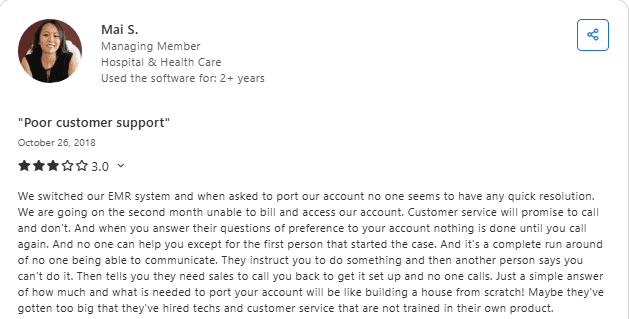
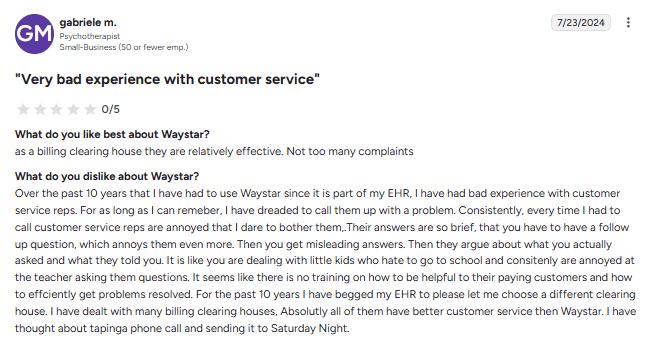
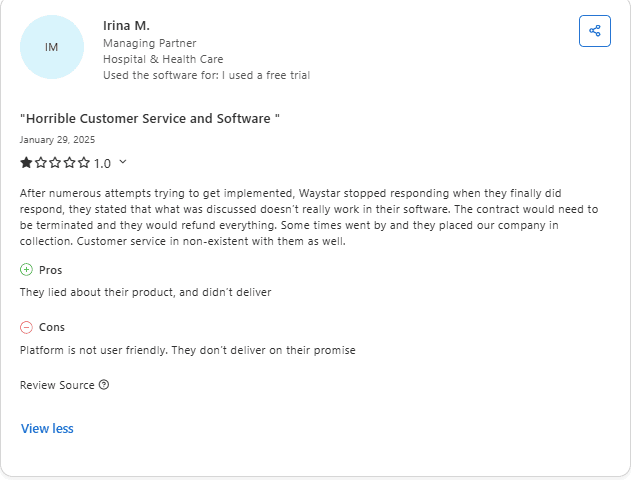
Some reviewers report inconsistent customer support experiences, particularly during implementation, account changes, or urgent billing disruptions.
Usability and Training Depth
While generally considered easy to use, some users note workflow inefficiencies, visibility limitations, and interface behaviors that can slow day-to-day operations.
Coverage Gaps and Workflow Limitations
Behavioral health programs frequently encounter payer-specific carve-outs, managed care rules, and state-level Medicaid variations. When eligibility results lack this depth, teams must revert to manual portal checks or payer calls, reintroducing delays, increasing staff burden, and undermining real-time intake decisions.
Best Waystar Alternative: VerifyTreatment
VerifyTreatment is a verification-first healthcare platform designed to help practices manage eligibility, coverage, and payer risk more efficiently than general revenue cycle solutions. Its tools are built to reduce manual verification work, provide reliable visibility into patient insurance status, and streamline workflows across admissions, billing, and utilization review teams.
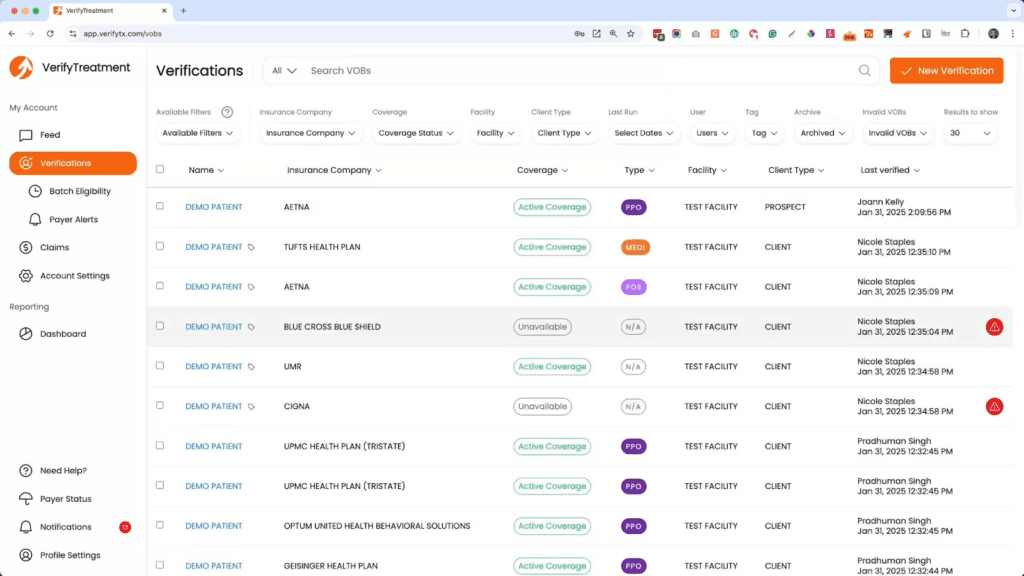
Real-time eligibility checks, insurance discovery, payer alerts, and batch re-verification help prevent denials before they occur and provide teams with clear, actionable financial visibility at the point of intake—when admission decisions are made.
VerifyTreatment Key Features
- Real-time eligibility and coverage checks: Verify insurance benefits instantly across payers, surfacing coverage details needed during intake rather than after admission.
- Payer risk alerts: Automatically flag inactive policies, coverage risks, and payer issues before admission to prevent downstream denials.
- Batch verification and re-verification: Run scheduled or bulk eligibility verification across the active census to catch coverage changes without manual follow-up.
- Mobile and app-based verification: Allow teams to verify insurance from any device, supporting after-hours, remote, and on-call admissions workflows.
- Claim status and ERA visibility (ERA coming soon): Track claim progress and remittance data to provide insight into reimbursement outcomes and payer behavior.
- Native Salesforce and CRM integration: Sync verification data directly into CRM systems used by admissions teams, without relying on retrofitted billing workflows.
- API access and workflow embedding: Embed eligibility and verification logic into existing systems to support custom workflows and operational scale.
Related: Here’s our list of the top alternatives to Waystar for healthcare RCM.
Waystar vs VerifyTreatment: Key Differences
| Criteria | Waystar | VerifyTreatment |
|---|---|---|
| Ease of use and setup time | More complex onboarding; learning curve for non-billing staff | Fast setup; intuitive for admissions teams |
| Support responsiveness and customer experience | Inconsistent support reported by some users | Hands-on onboarding and responsive support |
| Transparency and operational clarity | Data-rich, but often requires interpretation | Clear, admissions-ready benefit summaries |
| Handling of edge cases and exceptions | Manual follow-up often required | Behavioral health–specific flags surfaced upfront |
| Flexibility for smaller or specialized practices | Better suited to larger, billing-heavy organizations | Flexible for small, mid-size, and specialty providers |
| Workflow alignment with admissions and frontend teams | Billing- and back-end–oriented | Built for front-end and intake workflows |
| Integration consistency across systems | Depends heavily on EMR and clearinghouse setup | Works alongside EMRs without dependency |
Waystar excels at back-end revenue cycle operations—claims processing, payment management, and denial recovery after admission. This approach works well for organizations with established billing departments but treats eligibility verification as an early checkpoint rather than a critical intake decision point.
VerifyTreatment prioritizes the intake conversation. It delivers behavioral health-specific coverage details, authorization requirements, and payer risk signals in real time, enabling admissions teams to make confident decisions immediately—even during high-volume periods or after hours.
For behavioral health providers, this distinction matters. Delays or coverage misinterpretations at intake lead to lost admissions, downstream denials, and preventable write-offs. When evaluating platforms, consider not just post-admission workflows, but how quickly and accurately you can make coverage decisions before accepting a patient.
Why Behavioral Health Practices Choose VerifyTreatment Over Traditional RCM Platforms
Intake-First Eligibility Verification
VerifyTreatment allows admissions teams to verify coverage in real time during the first call, reducing delays and lost admits. Teams can see deductibles, copays, carve-outs, and authorization needs immediately, including payer nuances like Medicaid, Medicare Advantage, and BCBS alpha prefix variations.
Fast Setup and Admissions-Friendly Design
Built for admissions teams, not billing specialists, VerifyTreatment requires minimal setup and training. Most facilities can begin verifying benefits within days using only their NPI, without complex configuration or technical overhead.
Clear Financial Visibility
Benefit information is presented in a clear, admissions-ready format that highlights patient responsibility and coverage limits early. This reduces internal handoffs, miscommunication, and financial surprises after admission.
Proactive Denial Prevention
VerifyTreatment flags common eligibility risks before admission, such as inactive policies, out-of-network coverage, behavioral health carve-outs, and missing authorizations—helping reduce denials and protect revenue.
Eligibility Intelligence
Eligibility goes beyond active/inactive status, surfacing behavioral health carve-outs, authorization requirements, plan type distinctions, and payer-specific nuances like Medicaid, Medicare Advantage, and BCBS alpha prefixes, so admissions teams get clear answers at intake.
Final Verdict: Is Waystar Worth It?
Waystar is a solid choice for healthcare organizations that prioritize standardized billing operations, centralized claim management, and back-end revenue cycle optimization. Large multi-specialty systems or providers with established billing departments may find its clearinghouse capabilities and reporting tools reliable for managing high claim volumes across payers.
For behavioral health providers where admission speed, eligibility clarity, and payer nuance directly impact revenue, VerifyTreatment is often the stronger fit. Teams that verify benefits during the first call, operate after hours, or regularly encounter behavioral health carve-outs and authorization issues benefit from a platform built specifically for front-end decision-making rather than retrofitted billing workflows.
The choice ultimately comes down to where revenue protection happens in your organization. If your biggest risk is inaccurate intake decisions that lead to denials, lost admissions, and write-offs, a verification-first platform designed for behavioral health will deliver better outcomes than a general RCM solution built for post-admission workflows.
If protecting revenue at intake is a priority, try VerifyTreatment as a purpose-built alternative.
Disclaimer: All trademarks, logos, and brand names are the property of their respective owners. The use of any third-party trademarks, logos, or brand names in this article is for informational and comparative purposes only, and constitutes nominative fair use. This article was published by VerifyTreatment, and while we strive for objective comparisons, VerifyTreatment is included as an option within this list.

Luis Perdomo, Head of Growth, leads go-to-market strategy, demand generation, and growth initiatives at VerifyTreatment. With a background spanning digital marketing, revenue growth, and business strategy, he focuses on connecting the platform’s capabilities to the real operational challenges facing behavioral health providers, helping teams improve admissions, strengthen revenue performance, and make faster, more informed decisions.
Meet the TeamRelated post:
 Admissions
VOB in Medical Billing: Process, Best Practices & Challenges
Before you bill for a patient’s care, you must know what their insurance will actually cover. That means checking their...
Read the full article → Admissions
Automated Prior Authorization: How Automation Improves the Process
Automated prior authorization helps healthcare teams catch payer requirements earlier, reduce repetitive administrative...
Read the full article → Admissions
How to Verify Insurance Eligibility in Real Time and Why It Matters
Real-time insurance eligibility verification helps healthcare providers confirm coverage and benefits faster, reduce man...
Read the full article →